
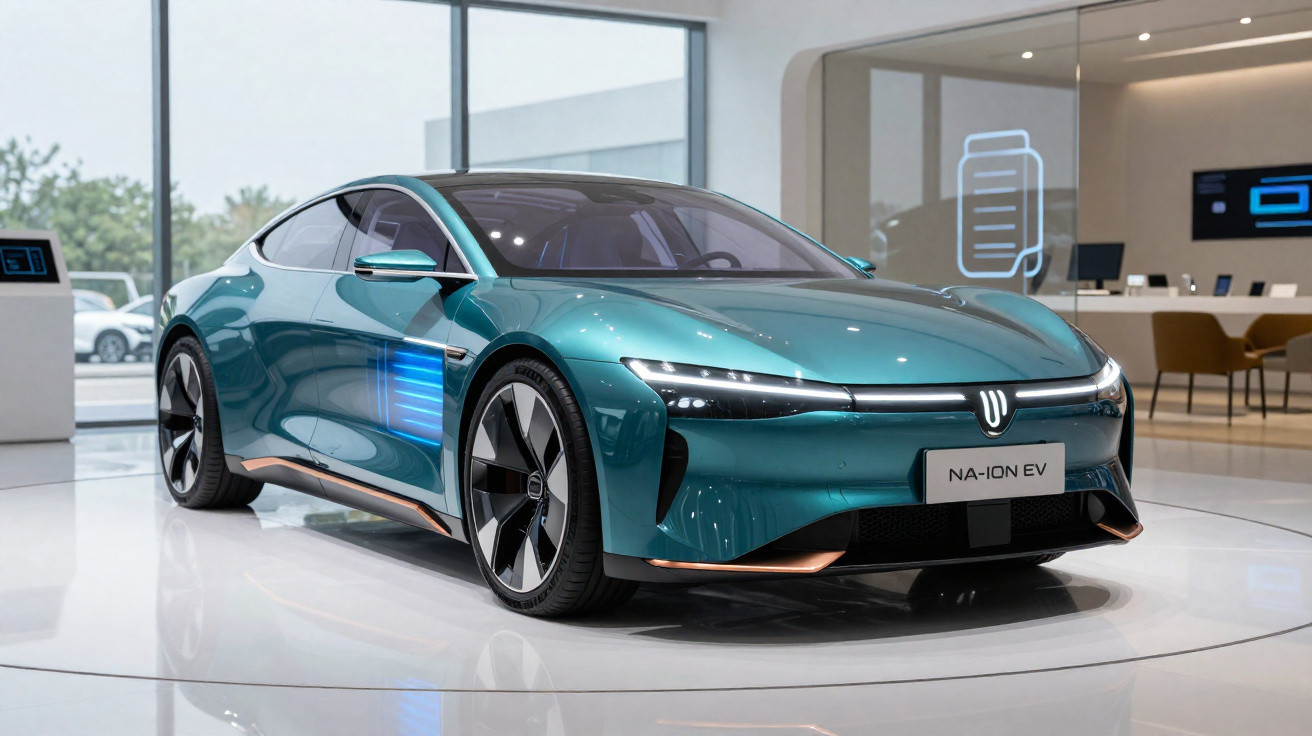
For electric cars to become more affordable, their batteries must become cheaper too. LFP batteries currently appear to be the strongest option, but another, even more affordable alternative could arrive soon: sodium-ion batteries.
Unlike LFP (lithium iron phosphate) batteries, sodium-ion batteries do not rely on lithium. Although LFP packs cost less than the more widespread NMC (nickel, manganese and cobalt) units, they are still lithium-ion batteries. That is where the issue lies.
While the planet has sufficient lithium reserves, demand is heading towards a point where it exceeds supply - meaning many more mines will be needed. This will raise prices, while control of this raw material remains concentrated in a small number of countries, led by China.
Sodium-ion batteries could offer a way to address lithium-related challenges on the road to fully electrified motoring. But are they genuinely viable?
Advantages and drawbacks of sodium-ion batteries
Sodium-ion batteries are broadly similar to lithium-ion units - both elements sit within the same alkali metal group and share comparable properties. Their operating principle is exactly the same: a cathode and an anode are linked by sodium ions, rather than lithium ions, moving between them to generate electricity.
Nor are they an entirely new technology: sodium-ion batteries have existed since the 1980s. However, they have attracted renewed attention only during this century, precisely because of the challenges associated with lithium and the high cost of batteries.
What advantages do sodium-ion batteries have over lithium-ion batteries? Here they are:
- Abundance - sodium, which is also found in salt, is the sixth most abundant material on Earth;
- Cost - its abundance makes it less expensive than lithium, while the other materials needed to produce these batteries are also cheaper; for instance, aluminium can replace copper;
- Environment - sodium-ion batteries do not require rare metals and are easier to recycle;
- Safety - unlike lithium-ion batteries, they can be fully discharged, making them far safer to transport and eliminating the risk of fire;
- Temperature range - unlike lithium-ion batteries, sodium-ion units perform very well in cold weather, retaining 90% of their performance at -20 °C;
- Charging - they can reach 80% of total capacity in under 20 minutes.
If sodium-ion batteries offer so many benefits, why are they not already in use? As expected, they have several drawbacks, significant enough to have prevented their adoption so far:
- Energy density - this is their main “Achilles heel”: it is lower than that of lithium-ion batteries, including LFP units, so more batteries are required for the same capacity;
- Mass - sodium is heavier than lithium and, combined with its lower energy density, could worsen the already substantial weight of electric vehicles;
- Service life - they have fewer charging and discharging cycles than lithium-ion batteries, particularly LFP batteries.
Development of sodium-ion batteries has gathered pace in recent years, and these disadvantages are expected to be reduced. Chinese giant CATL, for example, has already unveiled a sodium-ion battery with energy density and service life that are competitive with LFP batteries.
The table below shows how sodium-ion batteries compare with lithium-ion batteries, both LFP and NMC:
With regard to cost (€/kWh), NMC batteries are the most expensive. LFP batteries are, on average, 20% cheaper, while sodium-ion batteries cost between 10-20% less than LFP units.
However, they could become cheaper still as production scales up. CATL estimates a price of 40 dollars per kWh for its second-generation sodium-ion batteries.
Will sodium-ion batteries replace lithium-ion batteries?
Despite the most recent promising progress in energy density and charging-cycle durability, it is highly unlikely that sodium-ion batteries will completely replace lithium-ion batteries. The latter are continuing to develop as well.
Nevertheless, sodium-ion batteries have room to establish themselves in the market, especially in lower segments where price is crucial.
When will sodium-ion batteries appear in electric cars?
The wait will probably not be long. China recently revealed a test prototype of the city-focused Sehol E10X - a brand created through the joint venture between JAC Motors and the Volkswagen Group - fitted with sodium-ion batteries from HiNa Battery.
Its battery has a capacity of 25 kWh - with an energy density of 120 Wh/kg - and allows the E10X to travel 252 km between charges. This is an excellent figure, provided we overlook the fact that it uses the Chinese test cycle, which is considerably less demanding than WLTP.
It is not known whether it will reach production, but fellow Chinese manufacturer BYD has already promised a version of the small Seagull equipped with a sodium-ion battery. When it arrives, it will have a 30 kWh battery and a range of 305 km - once again, according to the Chinese cycle.





Comments
No comments yet. Be the first to comment!
Leave a Comment