

A research team at the Daegu Gyeongbuk Institute of Science and Technology (DGIST) in South Korea has developed a lithium-metal battery - distinct from the more widespread lithium-ion type - that not only lasts longer but can also self-extinguish if a fire occurs.
Researchers currently face several challenges with conventional batteries, ranging from limited performance to issues such as dendrites, which are chiefly responsible for unwanted fires.
Three-layer solid polymer electrolyte
To tackle this issue, the team led by Professor Lee Jung-ho and Dr Kim Jae-hyun developed a battery using a “three-layer solid polymer electrolyte”. Each electrolyte layer is intended to perform a separate role, substantially improving the battery’s safety and efficiency.
The middle layer provides greater thermal resistance, while the outer layers make it easier for lithium ions to move and help disperse heat.
According to the project team, this arrangement “enables higher energy transfer rates, effectively preventing dendrite formation”.
Dendrites form when “there is not enough time for lithium to diffuse easily to where it needs to go, leaving it ‘at the door’”, resulting in disorganised deposits.
Fire-resistant materials in the lithium-metal battery
However, the layered design is not its only key feature. The battery electrolyte contains several specialist ingredients: decabromodiphenyl ethane (DBDPE), a flame-retardant agent that helps prevent fires; zeolite, which increases the electrolyte’s strength; and a high concentration of lithium salt (LiTFSI), “to enable rapid ion movement”.
Initial testing results
After one thousand charge and discharge cycles, this new battery retained around 87.9% of its performance, an uncommon result. Conventional batteries typically retain only 70%-80% of their performance after comparable use.
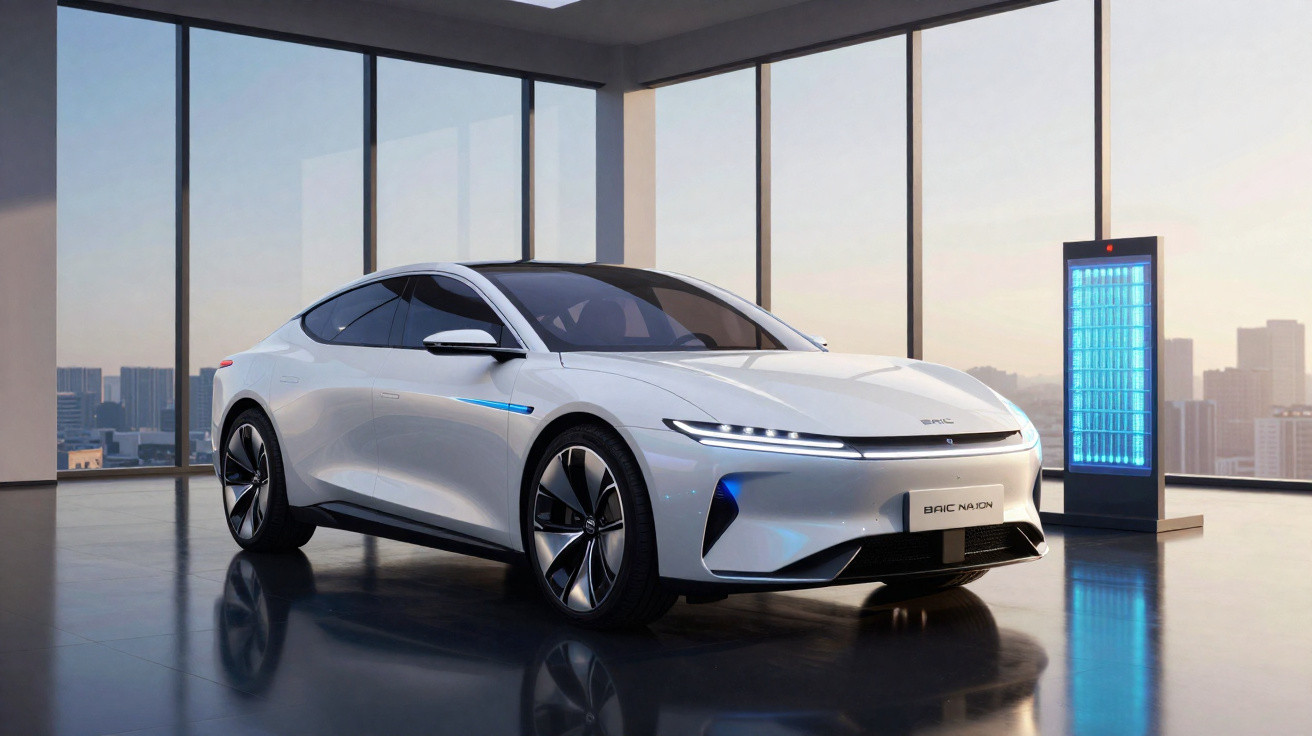
In an electric vehicle with a 500 km range (WLTP cycle), this would mean that, after travelling 500,000 km, the battery could still provide a range of up to 439 km.
These batteries are expected to be suitable not only for cars, but also for smartphones and large-scale energy storage systems.
“This research is expected to make a significant contribution to the commercialisation of lithium batteries using (solid polymer) electrolytes, while delivering greater stability and efficiency for energy storage devices.”
- Dr Kim Jae-hyun




Comments
No comments yet. Be the first to comment!
Leave a Comment