
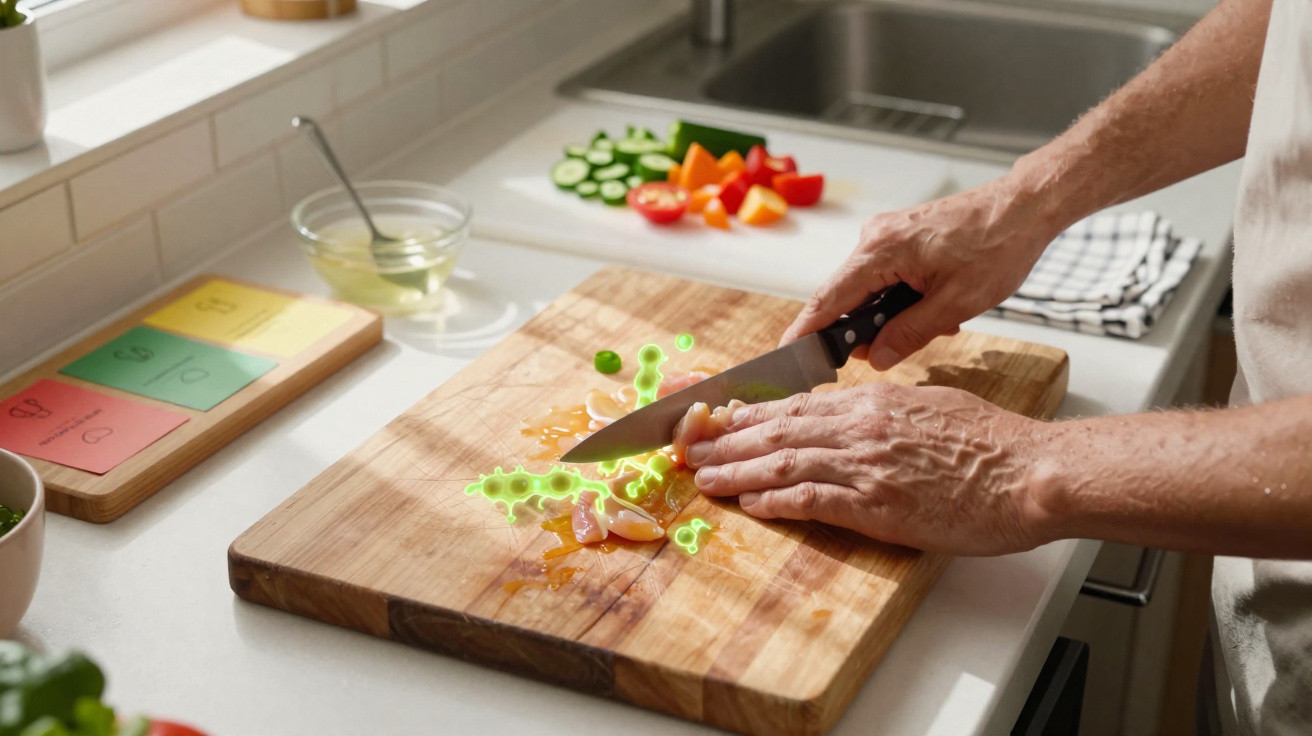
Contamination in the kitchen is an unseen hazard that often goes unnoticed while everyday meals are being prepared at home. Utensils such as an old wooden chopping board require extra care from cooks to prevent the serious growth of harmful bacteria.
How can a wooden chopping board contaminate food?
Food remnants can easily become lodged in the porous surface of wood, creating ideal conditions for harmful micro-organisms. As dirt builds up over time, impurities may be transferred to clean worktops and contaminate other cutlery used when handling everyday ingredients.
Many people use the same utensil to cut raw meat and then place ready-to-eat food on it without thoroughly cleaning it first. This risky habit greatly raises the likelihood of intestinal infections caused by lethal pathogens, such as feared staphylococci, particularly in people with low immunity.
Note the main identified hazards:
- Trapped residues: Small pieces of food become embedded in the wood fibres.
- Cross-contamination: Bacteria are transferred from the board to worktops, cutlery and food.
- Intestinal infection: Dangerous micro-organisms multiply quickly on a poorly washed utensil.
- Vulnerable groups: Older people and children face greater risks when hygiene is inadequate.
- Inappropriate use: Wood is not recommended for an everyday cutting routine.
What do specialists on YouTube recommend?
Professional kitchen organisation guidance advises reserving wooden boards for particular occasions, such as a barbecue, and using them only to slice cooked meat. Keeping this material in an everyday routine involving heavy cutting can seriously compromise the food safety of the whole family.
To address these persistent issues, cleaning specialists outline effective deep-cleaning methods using the right chemical products. Learning suitable disinfection techniques improves the home environment and prevents unwanted invisible dirt from spreading through the food preparation area.
Watch the full details of the techniques presented on the Revista | TV Meio Norte YouTube channel:
Does vinegar really disinfect utensils?
Many people mistakenly believe that white vinegar has disinfecting properties capable of removing dangerous germs from wooden surfaces. In reality, this kitchen ingredient works only as a bleaching and descaling agent, leaving micro-organisms completely alive and active.
The real chemical action of vinegar
The vinegar myth
Vinegar acts as a bleaching and descaling agent that removes visible surface dirt.
It has no disinfecting properties and must never replace suitable products intended to combat bacteria.
To achieve genuine and effective disinfection, the specialist recommends covering the board with paper towel and applying purified Lysoform. This powerful mixture should be left to work for twenty minutes before the utensil is washed thoroughly with plenty of running water and ordinary soap.
Follow the correct cleaning process:
- Cover the entire surface of the board with sheets of paper towel.
- Apply the Lysoform product evenly and leave it to act for twenty minutes.
- Wash the utensil very thoroughly using soap and plenty of water.
What are the best chopping board alternatives?
Although glass boards are considered highly hygienic because they do not retain organic residues, they have the major drawback of quickly dulling knife edges. For this reason, plastic boards are excellent practical and safe options.
One effective organisational approach is to separate these plastic utensils by specific colours for each type of food. This sensible division stops impurities from moving between ingredients, preserving complete organisation and protection in the kitchen.
Use the suggested colour-separation system:
- Red boards should be kept exclusively for handling raw proteins.
- Green boards are ideal for chopping vegetables, salad vegetables and fresh fruit.
- White boards are best for cutting soft bread and a variety of cheeses.
How can cross-contamination be prevented in practical ways?
A particularly serious mistake often made in homes is washing meat, chicken or fish directly under running water in the sink. This unsuitable habit spreads contaminated droplets across the worktop, reaching tea towels and other utensils left exposed in the environment.
In addition, planning meals properly helps prevent unsuitable defrosting on unprotected surfaces. To support your everyday care, explore other cleaning solutions that help remove odours and maintain a much healthier routine.

Comments
No comments yet. Be the first to comment!
Leave a Comment