
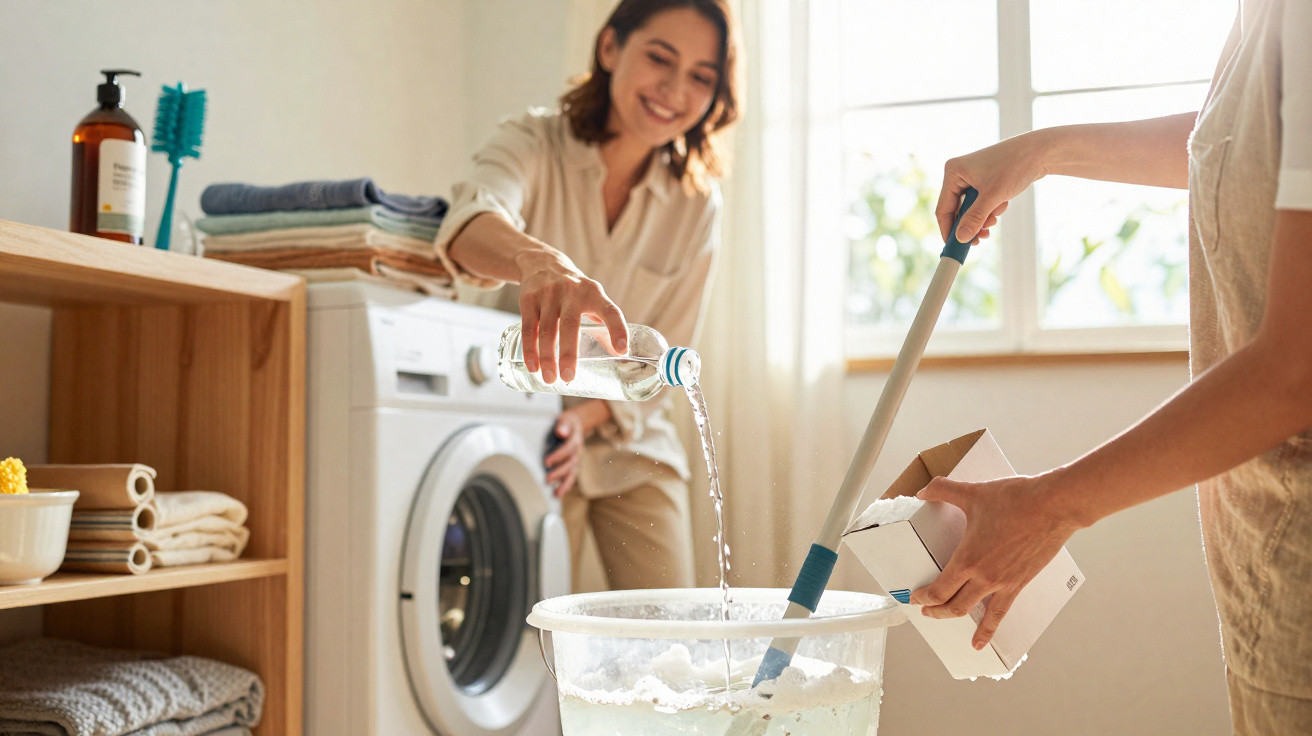
A mop can look spotless yet still carry that sour, muddy smell. You rinse it, wring it out and do it all again, but the odour lingers. It needn’t.
I saw my mum sort it out on a wet Tuesday-the sort of day when shoes gather by the door and the kettle seems to be constantly on. She opened the window, poured a kettle of hot water into a bucket, then added a splash of white vinegar and a spoonful of baking soda, which fizzed like a miniature thunderstorm. She lowered the mop head in, lifted it out once and smiled as people do when a favourite story reaches its best bit.
Steam drifted across the window as she hummed, keeping a steady grip on the handle, and the sour odour just disappeared. It was not covered up. It was gone. The room felt lighter than something as everyday as a bucket should allow. She did not make a grand speech; she simply said, “Give it ten minutes.” Soap was not the secret.
The hidden cause in your cleaning routine
Unpleasant smells do not begin in the bucket. They start during the hours when a mop remains damp, shoved into a corner with no airflow. It is essentially a small swamp on a stick. Warm water, traces of soap and whatever has come off the floor create an ideal home for odour-producing microbes.
Most of us know the moment: you have wiped a floor clean, only for the room to suddenly smell stale. I noticed it most at weekends, just after a thorough kitchen clean. The tiles looked fresh in the bright light, yet there was a faint gym-bag smell that had not been there before. Once you detect it, it seems to fill the entire house in your mind.
There is nothing mysterious about it. Bacteria flourish in residual moisture and the films left behind by detergents. Grease and minerals cling to fibres, particularly cotton and thick microfibre strands. As the pH changes, odours develop. Unless the mop is properly refreshed, each clean simply restarts the issue. Stop that cycle, and the smell has nowhere to stay.
Mum’s white vinegar and baking soda mop reset
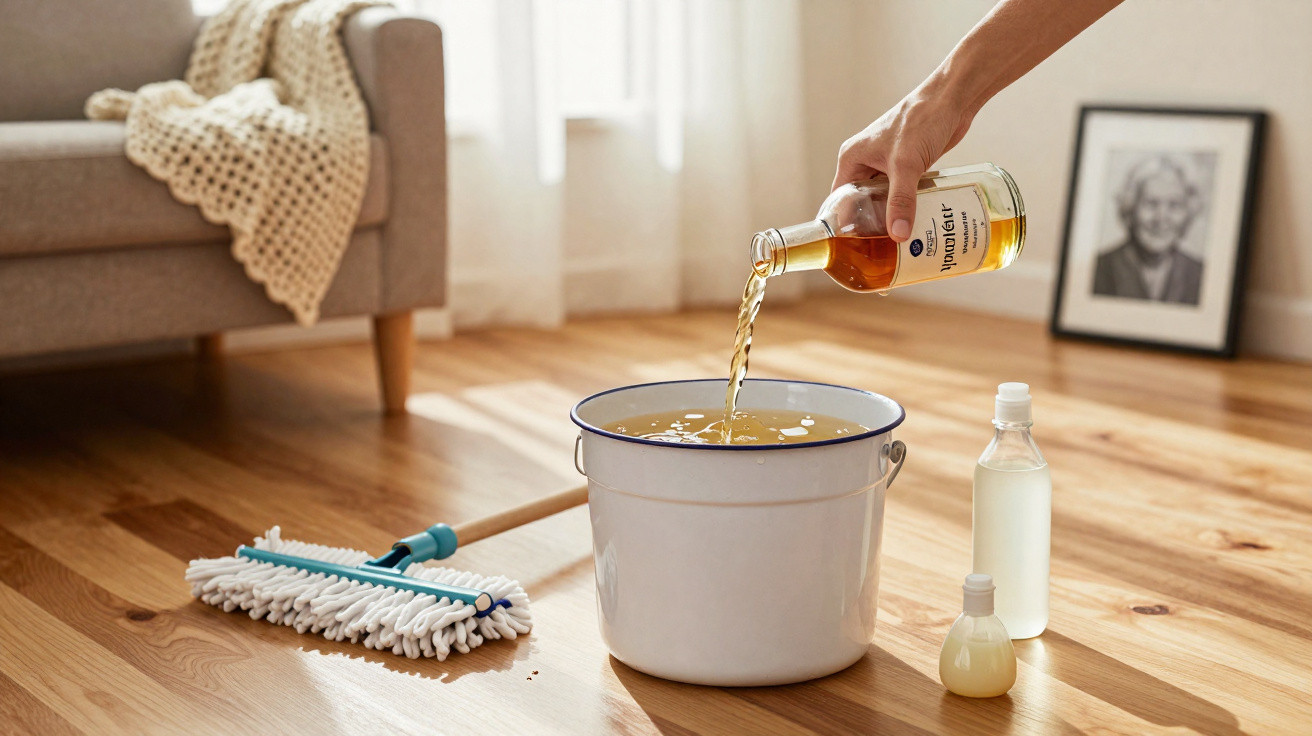
This is my mum’s method exactly as she taught it to me. Fill a bucket with hot water that you can comfortably touch, around 2–3 litres. Stir in 1/4 cup of white vinegar and 1 tbsp of baking soda. Allow the fizzing to settle for a few seconds. If the mop head comes off, remove it; otherwise, fully immerse the strands and move them around using the handle. Leave it to soak for 10–15 minutes, agitating it twice. Rinse under cold running water until the water runs clear, then wring it out firmly. Finally, air-dry in sunlight or somewhere breezy, with the head facing upwards and the fibres spread out.
For a more intensive refresh after a day of sticky spills, use the same soak before adding one quick extra stage: place it in a 3% hydrogen peroxide bath for 5 minutes, then rinse it once more. Avoid this if the mop head is coloured or delicate. Cotton and removable microfibre heads can also go through a washing machine: put them in a laundry bag, use a small amount of standard detergent and select a warm 40–60°C wash, without fabric softener. Sunlight offers a subtle additional benefit. UV helps neutralise odours, while moving air completes the drying process.
Errors tend to happen when life gets busy rather than because anyone is careless. Do not soak the mop overnight, as extended soaking can loosen adhesive or damage threads. Never mix vinegar with bleach or chlorine-based cleaning products. Fabric softener reduces microfibre’s absorbency, so avoid it. Where a mop has a metal screw base, do not use lengthy acidic soaks, as this can encourage rust. Honestly, no one needs to do this every day. Find a routine that suits everyday life-after major cleaning days, or weekly if you have pets, crumbs or plenty happening on the floor.
Whenever I pick up a freshly cleaned mop, I still hear my mum’s words: a clean mop should smell of nothing. The method is not elaborate. It is affordable, repeatable and forgiving. It restores the pH balance, removes films and helps the fibres dry quickly and cleanly. That is all there is to it.
“You don’t mask a smell you earned. You wash the story out of it.” - Mum
- Ratio to remember: 1/4 cup vinegar + 1 tbsp baking soda per 2–3 L hot water
- Timing: 10–15 minute soak, rinse until clear, dry fully
- Upgrades: brief peroxide bath for stubborn smells, sun + breeze for finish
- Never: mix vinegar with bleach, use fabric softener on microfiber
- Storage: hang mop head up, let air circulate, avoid closets right after use
What remains once the smell has gone
There is a quiet comfort in ordinary things that do their job. A mop that does not work against you. A room that smells of absolutely nothing. You start trusting your routine again, and the floor becomes somewhere conversations can linger, children can sprawl, pets can flop down and the day can breathe out without a sour undertone bothering your nose.
This is not about perfection or cleansing your spirit through grout. It is simply a small change that can alter the feel of a home. Pass the recipe on to a neighbour. Keep it on a note inside the cleaning cupboard. When the bucket gives off steam and the fizz softens the air, you may remember that some of the best tips are shared in passing and never presented as secrets.
| Key point | Detail | Benefit for the reader |
|---|---|---|
| Vinegar + soda reset | 1/4 cup vinegar + 1 tbsp baking soda per 2–3 L hot water, 10–15 min soak | A straightforward, inexpensive way to remove odours and residue quickly |
| Rinse, wring and dry properly | Cold rinse until clear, firm wring, sun or airflow drying, head up | Prevents bacterial growth and leaves the mop smelling of nothing |
| What to avoid | No bleach with vinegar, no fabric softener on microfiber, no overnight soaks | Protects fibres, retains absorbency and keeps cleaning safe |
FAQ:
- How often should I clean my mop? After days of heavy use, use the quick vinegar–soda reset. In typical households, a weekly reset is sufficient. If you mop every day, doing it every second or third day helps prevent smells.
- Can I machine wash the mop head? Yes, provided it is removable and marked as machine-washable. Put it in a laundry bag, use mild detergent and a warm cycle, and do not use fabric softener. Hang it up to dry rather than using a tumble dryer, unless the label confirms tumble drying is safe.
- What if the smell comes back fast? Rinse for longer and improve how thoroughly you dry it. Check that the bucket is clean as well. After soaking, add a short 3% hydrogen peroxide bath. If the fibres are frayed or grey, the head may need replacing.
- Is bleach safe for mop heads? Over time, bleach may weaken cotton and harm microfibre. If you use it occasionally, never combine it with vinegar or ammonia. Rinse thoroughly and dry completely so no residue remains.
- Which mop materials work best? Microfiber captures fine dust and dries rapidly. Cotton is durable and absorbent, but it can retain odours when left damp. Sponge heads require more drying time and occasional peroxide resets.

Comments
No comments yet. Be the first to comment!
Leave a Comment