
Grease marks, tomato splashes, a dull grey film: in many kitchens, even freshly washed tea towels look tired and dirty.
A nearly forgotten household classic can restore them to sparkling cleanliness.
During the colder months, the kitchen is working flat out: stews, bakes, roasts and sauces. Although that sounds delicious, it puts tea towels under constant strain. They become grey, no longer smell fresh and look uncared for even after washing with biological detergent. Yet there is a third option between harsh bleach and costly specialist chemicals: an unassuming white powder that was once commonplace in many laundry rooms and is now making a remarkable return.
The powder that makes bleach look outdated
The product is sodium percarbonate, usually sold simply as “percarbonate” or “oxygen bleach”. It looks unimpressive: a white, slightly granular, odourless powder without flashy branding. Yet it can return many tea towels to a white that recalls their first day of use.
Unlike conventional chlorine bleach, percarbonate barely attacks cotton fibres. It acts as a solid form of hydrogen peroxide. Once dissolved in water, it releases active oxygen. This breaks down colour pigments and organic residues without damaging the fabric’s structure.
“Active oxygen removes grease, coffee, tomato and tea from the fibres – deep within the fabric, not merely from the surface.”
The powder also compares far more favourably environmentally than many modern specialist cleaners. It breaks down into water, oxygen and soda, substances that do not leave problematic residues in wastewater.
Why tea towels stay grey despite biological detergent
Many households rely on powerful biological detergents containing optical brighteners. These deceive the eye by coating fabric with a bluish film that visually masks the grey appearance. The actual dirt often remains partly embedded in the fibres.
Percarbonate works differently. It:
- breaks down the colour pigments in coffee, tea and red wine stains;
- loosens grease and sauce residues;
- reduces odours by removing the conditions bacteria need;
- clears the chalky grey film that develops over repeated washes.
Tea towels in particular suffer from a combination of grease, starch, tomato sauce, spices and limescale. Standard detergents quickly reach their limits with old, dried-on stains. This is where percarbonate comes into its own – provided it is used correctly.
Active oxygen needs heat to work
One common mistake is to tip the powder into the washing machine and then run a quick 30°C cycle. Much of its effect is lost this way.
Percarbonate remains largely inactive in cold or lukewarm water. The oxygen only begins to release at around 40°C, while the reaction reaches full strength at roughly 60°C. Heat ensures that the granules dissolve completely and that active oxygen is distributed evenly through the water.
“The combination of hot water and active oxygen works like a deep-cleansing bath for your tea towels – just an invisible one.”
During this reaction, oxygen oxidises organic dirt. Put simply, it chemically works away at the residue until it detaches from the fibres and can be rinsed out. The fabric also becomes noticeably more hygienic, as many germs cannot survive under these conditions.
Step-by-step: making grey tea towels white again
1. Soak rather than hope
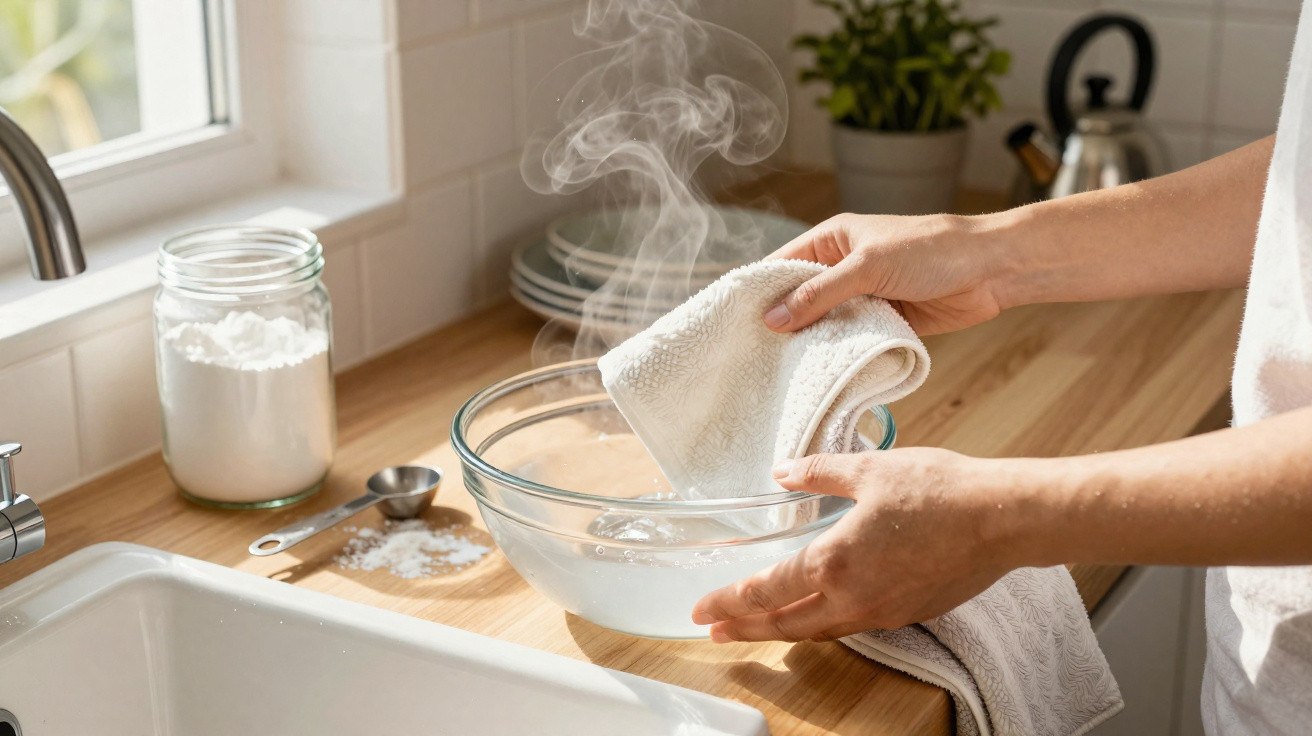
A hot soaking bath before putting the towels in the machine is most effective. This makes full use of the power of active oxygen.
| Step | What to do |
|---|---|
| 1 | Shake out loose dirt and briefly rinse the towels with hot water. |
| 2 | Fill a large bowl or bucket with very hot water (at least 40°C; 60°C is ideal for white cotton). |
| 3 | Add 1–2 tablespoons of percarbonate per litre of water and stir thoroughly with a wooden spoon until no granules are visible. |
| 4 | Immediately submerge the tea towels fully, so they are treated from the start of the reaction. |
| 5 | Leave to soak for at least 2 hours; for heavy soiling, soak for 4–6 hours or overnight. |
| 6 | Wring out the towels, then machine-wash them with ordinary detergent. |
2. How much powder should you use?
The right dose depends on how soiled the towels are:
- lightly greyed tea towels: 1 tablespoon per litre of water;
- old grease and tomato stains: 2 tablespoons per litre;
- to boost a machine wash: add 1–2 tablespoons directly to the detergent drawer for the main wash (only with programmes at 40°C or above).
Anyone treating a heavily greyed set of tea towels for the first time will usually notice a clear difference after just one application. A second treatment can be worthwhile if the towels have been washed only at 30°C for years.
Where percarbonate should not be used – and where it excels
For all its benefits, this powder is not suitable for every textile. Delicate materials in particular can be damaged.
- Not suitable for: wool, silk, cashmere and other animal fibres – the alkaline pH and oxidation attack the fibres’ protein structure.
- Use with caution on: intensely coloured fabrics with uncertain colourfastness. Always test first in an inconspicuous area.
- Ideal for: white cotton and linen towels, tea towels with firmly fixed colours, napkins, tablecloths and cloths made from durable materials.
“Percarbonate is one of the toughest opponents of kitchen dirt – but only when the fabric itself can take it.”
Safety: a powerful product with clear rules
When dry, percarbonate can irritate skin and eyes. It is therefore best to use ordinary household gloves and avoid breathing in the dust. Do not hold your face directly over the bowl while mixing it.
It is also important to consider combinations with other household remedies. Many people like to mix together anything that cleans, without much thought. With percarbonate, do not do this:
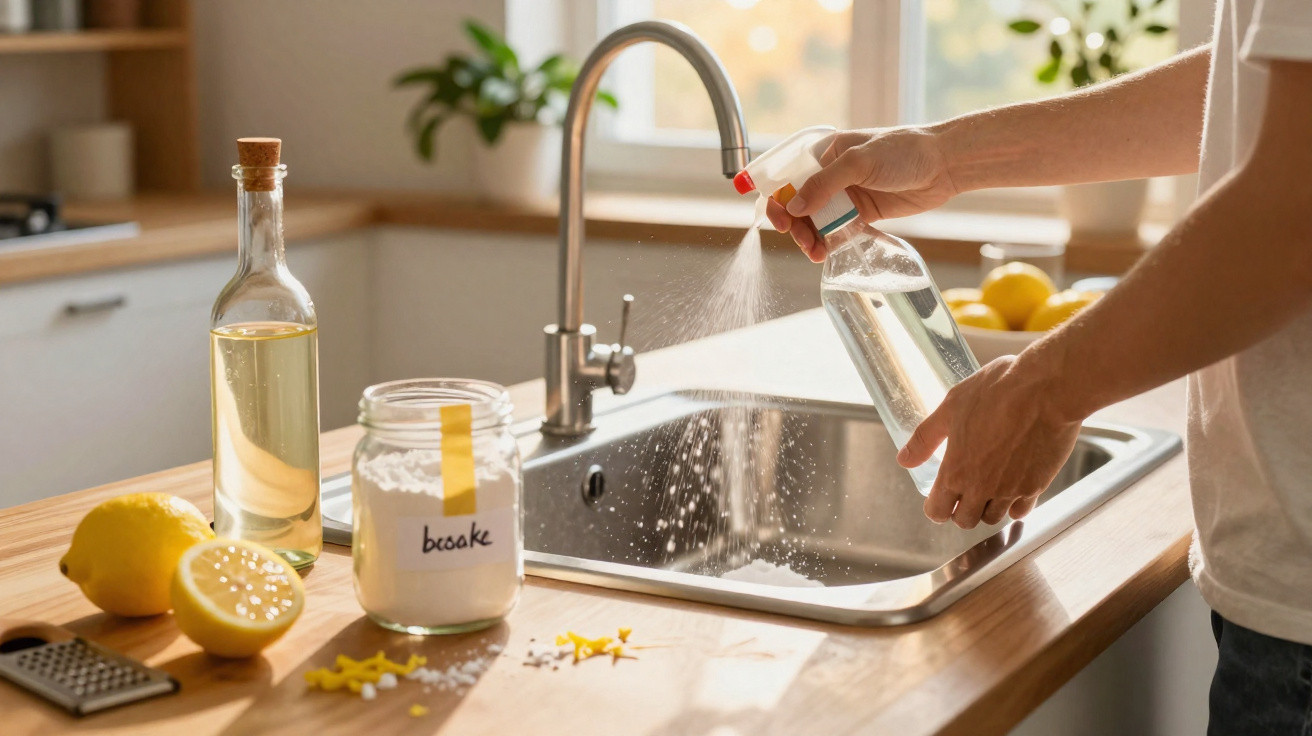
- do not use it together with vinegar or citric acid in closed containers;
- always dissolve the powder in water first, then add the textiles;
- do not prepare it in airtight containers, as pressure may build up.
Those who follow these simple rules will have a highly dependable, predictable cleaning product that has endured for decades because it simply works.
Why this “old” method is worth using
Many households only realise how full their cleaning cupboard is when they look inside: degreaser, stain remover, hygiene rinse, specialist cleaner for white laundry, bathroom, kitchen and tiles. Some of these can be replaced with a few basic products, with percarbonate being one of the most versatile.
It is particularly suited to people who:
- can wash their laundry at higher temperatures;
- do not want simply to accept grey tea towels;
- can do without fragrances and colourful additives when the product works effectively;
- are looking for more environmentally friendly alternatives to aggressive chlorine bleach.
Alongside tea towels, percarbonate is also suitable for white bed linen, flannels, fabric handkerchiefs and sports towels that need to look fresher and brighter again. For isolated, especially stubborn stains, a small concentrated soaking bath in a bowl is worthwhile, with only the affected section of fabric left to soak.
People using the powder for the first time are often surprised by the difference between “washed but somehow grubby” and “genuinely clean”. Especially for tea towels, which are handled several times a day and often come into contact with food, this effect provides a clear benefit not only visually but also hygienically.
Comments
No comments yet. Be the first to comment!
Leave a Comment