
Leaving a hotel shower, the room often feels clean and crisp, with air that is almost imperceptible. There are usually no plug-in diffusers buzzing in a corner or overpowering fragrances. This understated freshness comes from practices concerned with damp, microbes and materials rather than perfume. Most of those practices work remarkably well in everyday homes too.
Why hotel bathrooms don’t actually “smell of anything”
When hotel housekeepers are asked about their aim, many give a similar reply: a bathroom should have no smell at all. That neutral air suggests that mould, stagnant water and body odours have been removed rather than covered with fragrance.
Neutral air, not a strong perfume, is the real signature of a well‑kept bathroom.
Out of sight, hotels address three main areas: damp fabrics are removed, surfaces and drains are kept clear of biofilm, and humidity is reduced promptly after each shower. Any fragrance is added afterwards, if it is used at all, and generally only very lightly.
The textile rule: why towels are public enemy number one
In many homes, the toilet is not the biggest cause of bathroom odours. More often, it is laundry left sitting in the room.
Towels, bath mats and dressing gowns behave like sponges, retaining water in their fibres. Warm shower air then creates an ideal small-scale environment for bacteria. These bacteria do more than remain there: they give off volatile compounds that the nose recognises as a damp or musty smell.
A single damp towel can act like a slow‑release diffuser for bad smells in a small bathroom.
Hotels deal with this firmly. Used towels are taken away quickly, while replacements arrive dry, soft and thoroughly aired after high-temperature washing and powerful drying. Housekeepers do not normally leave stacks of partly damp fabric over radiators or behind doors.
How to copy the hotel approach at home
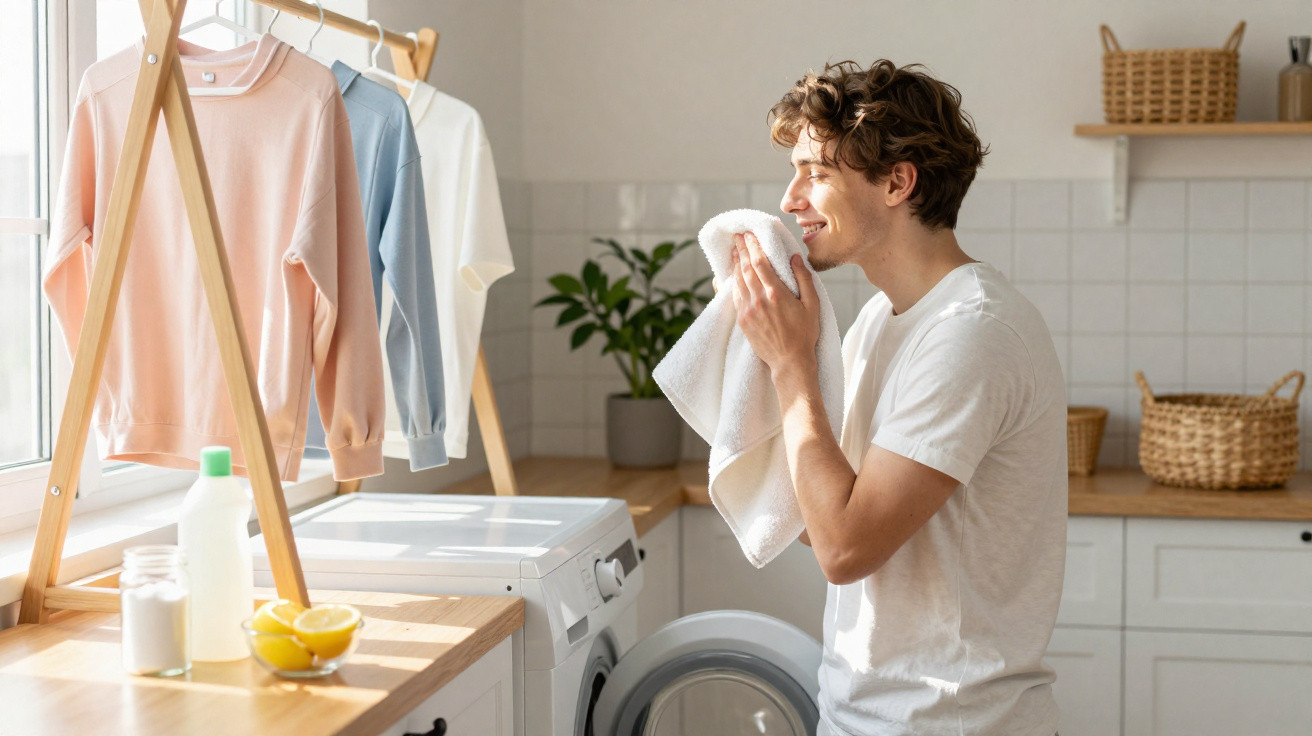
- Dry used towels outside the bathroom, either on a heated towel rail or in a well-ventilated hall.
- Choose quicker-drying bath mats instead of heavy cotton styles, and wash them using hot cycles.
- Replace household towels more regularly than seems necessary, particularly during winter.
- Where the care label permits, wash towels at 60°C; this helps to reduce odour-causing bacteria.
If you do not have a garden or balcony, a folding drying rack in a bedroom with the window open is still preferable to leaving textiles in a humid bathroom for the whole day.
The quiet science behind hotel-style freshness
Hotel groups do not generally depend on elaborate chemistry to keep bathroom air fresh. Instead, they remove the conditions that allow odours to develop in the first place.
Dry air beats any spray
Unpleasant smells are often closely linked to humidity. Shower steam is warm, but when it meets cooler tiles, mirrors and ceilings, it turns into condensation. Those droplets provide moisture for mould spores and bacteria in corners and grout lines.
- With a window: open it wide for 5–10 minutes after showering, and leave the door slightly open to produce a brief but effective cross-draught.
- Without a window: keep the extractor fan running for 15–20 minutes and leave internal doors open.
- An inexpensive digital hygrometer can reveal when humidity remains above 60% for too long.
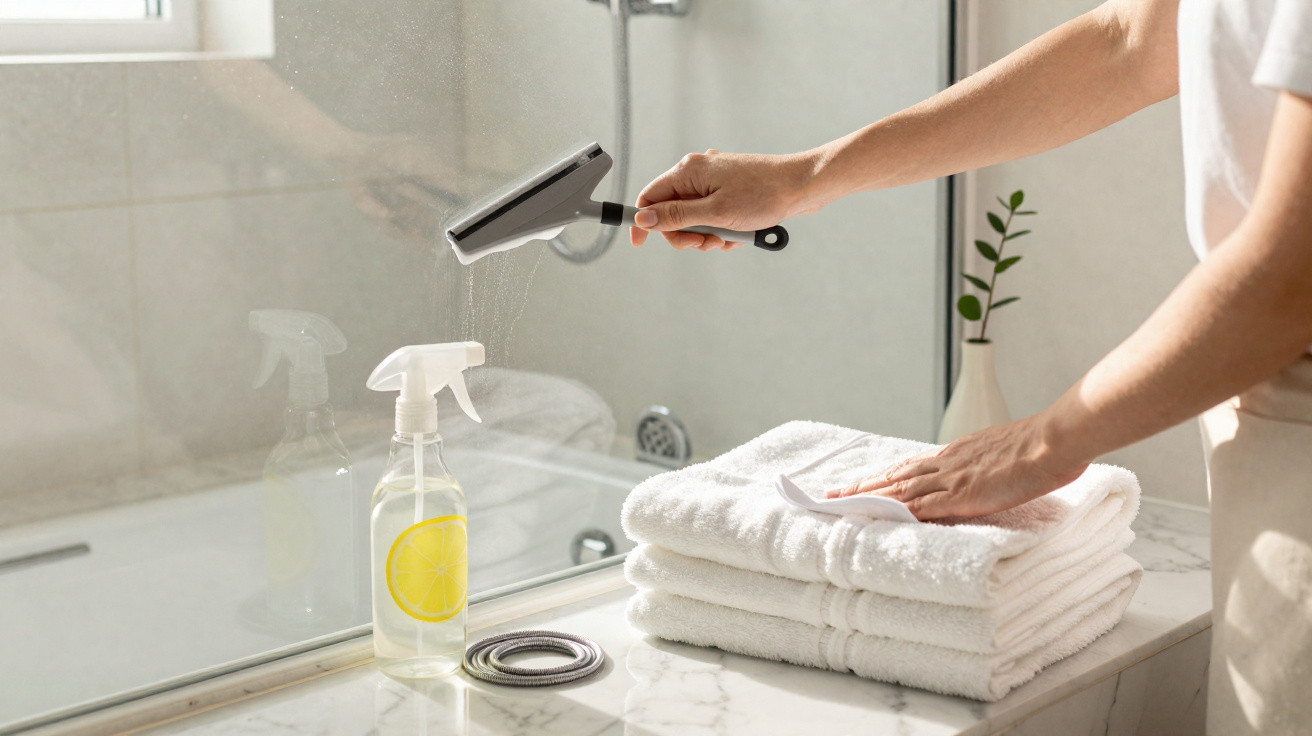
Hotels also use basic equipment such as squeegees. Removing water from glass and tiles immediately after showering can greatly reduce surface moisture, limiting the places where microbes can establish themselves.
The war on invisible biofilm
Bacteria and fungi can create thin coatings known as biofilms in drains, grout and on shower curtains. These films attach firmly to surfaces and are not easily removed by light cleaning. They can also produce the subtle “old water” odour often linked with poorly maintained bathrooms.
Hotel cleaning schedules are designed to break up this film often. In practice, this usually involves regular scrubbing with mildly acidic or alkaline cleaners, instead of infrequent intensive cleans with very harsh products.
Natural helpers hotels and cleaning pros actually use
Many professional cleaners continue to use a small selection of basic products that neutralise odours rather than mask them.
| Product | Main purpose | Practical note |
|---|---|---|
| Bicarbonate of soda | Neutralises odours and helps remove deposits from drains | Rinse using hot, rather than boiling, water |
| Lemon | Gives a light scent and helps loosen limescale film | Apply to taps and tiles, but avoid leaving it on metal for long periods |
| Vinegar solution | Helps slow mould growth and dissolves soap residue | Keep it away from natural stone and never mix it with bleach |
| Activated charcoal | Absorbs lingering odours in compact spaces | Replace it every few weeks for the best results |
Practical drain routine for home bathrooms
Hotel guests seldom stay long enough for drains to dry out, whereas this can become an overlooked issue at home. If water in the trap, or siphon, evaporates, gases from the sewer side may escape back into the room.
- Tip half a cup of bicarbonate of soda into an odorous drain, then add hot water.
- If the odour remains, run water for a few seconds to fill the trap again.
- For drains that are used very rarely, a thin layer of cooking oil over the water can slow evaporation.
Bathroom bins respond to the same approach. Putting a teaspoon of bicarbonate of soda in the base and cleaning the lid regularly stops smells accumulating between rubbish collections.
Subtle scent instead of clouds of aerosol
Hotels that choose to scent their bathrooms normally do so with restraint. The purpose is to suggest cleanliness in the background, rather than create an obvious blast of “ocean breeze” or “vanilla”.
Fragrance should feel like an accent, not like a desperate attempt to cover something up.
Low-key ways to add a pleasant note
- A pleasantly scented bar of soap left uncovered can release a mild fragrance and refresh a little whenever it is used.
- A small candle lit briefly before visitors arrive may help, provided it is never left burning unattended.
- Homemade glycerine soaps containing a few drops of essential oil allow you to control both the strength and the ingredients.
Strong essential oils can cause unpleasant reactions in people with pets, asthma or migraine. Hydrosols, which are plant-based water distillates, offer a softer fragrance with less intensity. Even so, only a little is usually needed in an enclosed bathroom.
Surfaces, grout and the quiet role of vinegar
Tiles, grout lines and silicone seals collect soap film and skin oils. In time, these fine layers hold dampness and tiny organic particles that provide food for microbes. This is when a subtle “wet locker room” odour can develop, even in rooms that look clean.
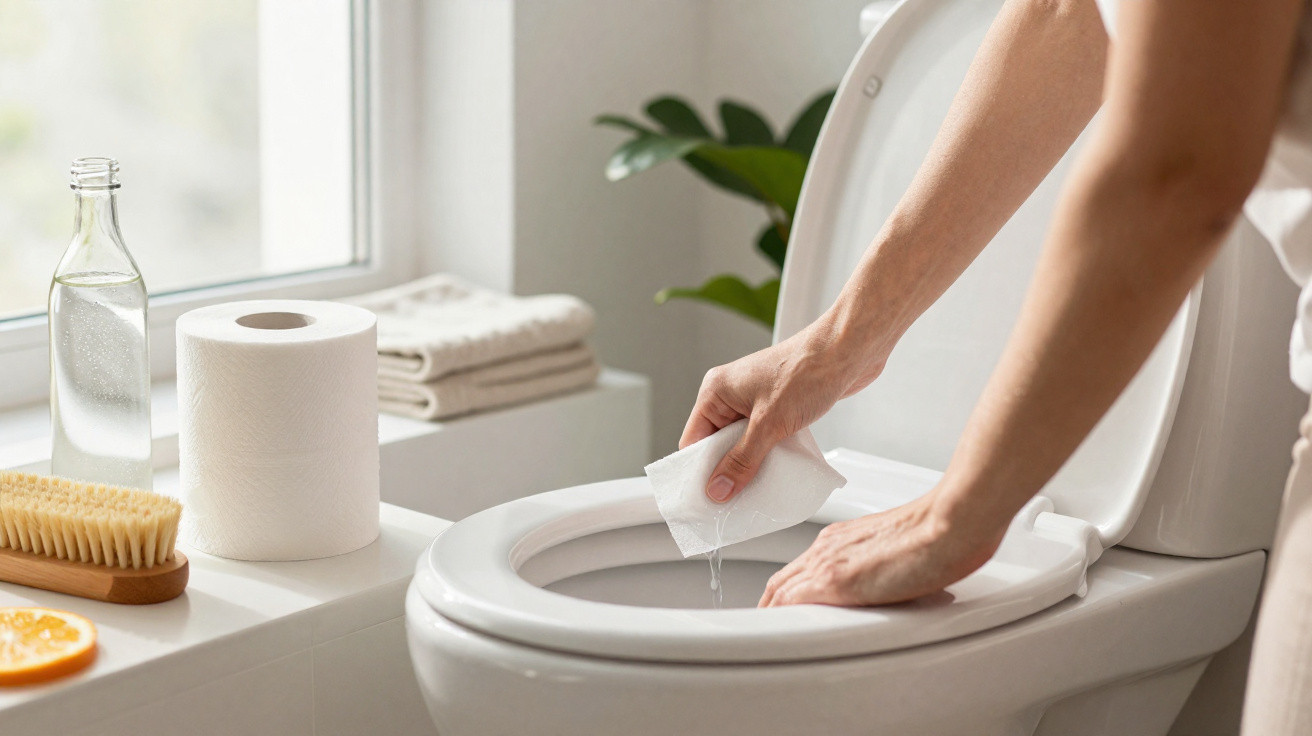
A 1:1 solution of household vinegar and water in a spray bottle can break down that film and slow mould on surfaces other than stone. Fast daily or weekly routines are more valuable than occasional vigorous scrubbing.
- Spray grout and shower walls after use, leave the solution for a couple of minutes, then wipe the area dry.
- Do not use vinegar on slate, limestone or marble; choose pH-neutral products instead.
- Never mix vinegar with chlorine-based cleaners, as dangerous fumes may be produced.
By limiting film accumulation, these small actions simplify later cleaning and help the room smell more like nothing at all.
Hidden culprits hotels always check
If a housekeeper detects a questionable odour, the checks usually follow a familiar order. The same method is useful in household bathrooms.
- Drains: inspect filters for trapped hair and ensure that water is still present in the traps.
- Toilet base: look for minor leaks or loose fittings that may allow odours to escape.
- Bin: wash the bin itself and clean beneath its lid, rather than only changing the liner.
- Shower curtain: launder it regularly, or opt for a quick-drying fabric alternative.
- Washing machine: clean the detergent drawer and rubber door seal, and occasionally run a hot maintenance cycle.
- Air circulation: do not press storage furniture tightly against external walls, where damp can collect out of view.
Turning hotel habits into a home routine
For a busy household, maintaining a bathroom to a “hotel-level” standard may sound impractical. However, once these measures become routine, many take only a few minutes.
Fifteen focused minutes a week often does more for bathroom air than shelves full of fragranced products.
A straightforward weekly checklist might involve using a squeegee on tiles and glass, emptying and rinsing the bin, inspecting drains, washing or changing towels and mats, and ventilating the room properly at least once following a day of hot showers.
Guest bathrooms need additional attention because they are often unused. Letting water run in the shower and basin every few days keeps the traps full. Adding a teaspoon of oil to seldom-used drains slows evaporation, helping to keep sewer gases sealed out.
Why this matters beyond pleasant smell
A bathroom that smells fresh does more than make visitors comfortable. Lower moisture levels and less biofilm can reduce mould spores and dust mites in the home, potentially helping people with allergies or asthma. Washing towels regularly at high temperatures also reduces the bacteria and fungi that come into direct contact with skin.
There is a financial benefit too. Focused ventilation and moisture management can protect paint, silicone and grout from premature deterioration, reducing renovation costs. Better use of extractor fans or a dehumidifier can also lower the likelihood of concealed damp patches inside walls, which are often not found until black mould emerges.
For tenants in older properties with poor extraction, a small plug-in dehumidifier or a more powerful timer-controlled fan may achieve more than continually buying fragrance refills. The hotel method points to a broader change in mindset: think like a building engineer, not a perfume designer.
The same principles also apply beyond bathrooms, including shared houses and small city flats. Deal with moisture promptly, keep fabrics dry, clean areas where water collects, and add a subtle scent only if you still want one. The room will not smell of a “holiday resort”, but the air will feel cleaner; that quiet, almost invisible freshness is precisely what good hotels seek.
Comments
No comments yet. Be the first to comment!
Leave a Comment