
Wood is considered natural, durable and hygienic in the kitchen – provided it is cared for correctly. That is precisely where the issue lies: a cleaning trend currently enjoying plenty of attention may seem sensible at first glance, yet in everyday use it causes more harm than good. An expert from a television morning programme has now strongly criticised the practice and explains how to keep wooden utensils genuinely clean and safe.
Why cooking enthusiasts are cleaning their wooden spoons incorrectly
Many home cooks see it as an especially thorough method: simply boil wooden spoons, spatulas or chopping boards in a saucepan of water to make certain that bacteria are killed. Videos promoting this approach are circulating repeatedly on social media, often presented as a “brilliant deep-cleaning trick”.
This is exactly the method the expert takes apart. His central point is that boiling wood damages the material while doing little to solve the actual hygiene issue. Instead, it alters the wood’s structure, leaving it soft and spongy and making it look unappetising after a short time.
Boiling wood in a saucepan may look thorough – but it actually attacks the material and makes the surface problematic in the long term.
When wood is heated in boiling water, natural tannins are released. They turn the water brown, while the spoons appear leached and dull. More worryingly, if too much water penetrates the wood, small cracks and loose fibres can develop. These are exactly the places where germs may later take hold.
What really happens when wood is boiled in the kitchen
Wood is not a sterile block of plastic but a living, porous natural material. Those qualities make it pleasant to hold, but they also leave it vulnerable to improper care.
The harmful effects of boiling water
- Swelling and warping: Wood fibres absorb water, causing the material to expand and potentially lose its shape.
- Cracks and fibres: As the wood dries, its fibres contract again, creating small cracks or rough patches.
- Residues within the wood: Old food particles, fats and odours can seep further into the softened structure.
- Short lifespan: Rather than remaining smooth and sturdy, the wood soon looks old, grey and floppy.
Many people take the brown colour of the boiling water as proof: “All that dirt is really coming out.” In reality, it is mainly the wood’s own substances that are dissolving. The supposed deep clean may therefore look dramatic, but it is questionable from a professional perspective.
The expert-recommended cleaning routine for wooden utensils
Rather than using an aggressive heat treatment, the expert on the programme recommends combining gentle cleaning with mechanical refreshing. The aim is to keep the wood clean, smooth and free from odours without weakening the material.
Step 1: Everyday care with a mild cleaner
After each use, an ordinary wash is generally enough:
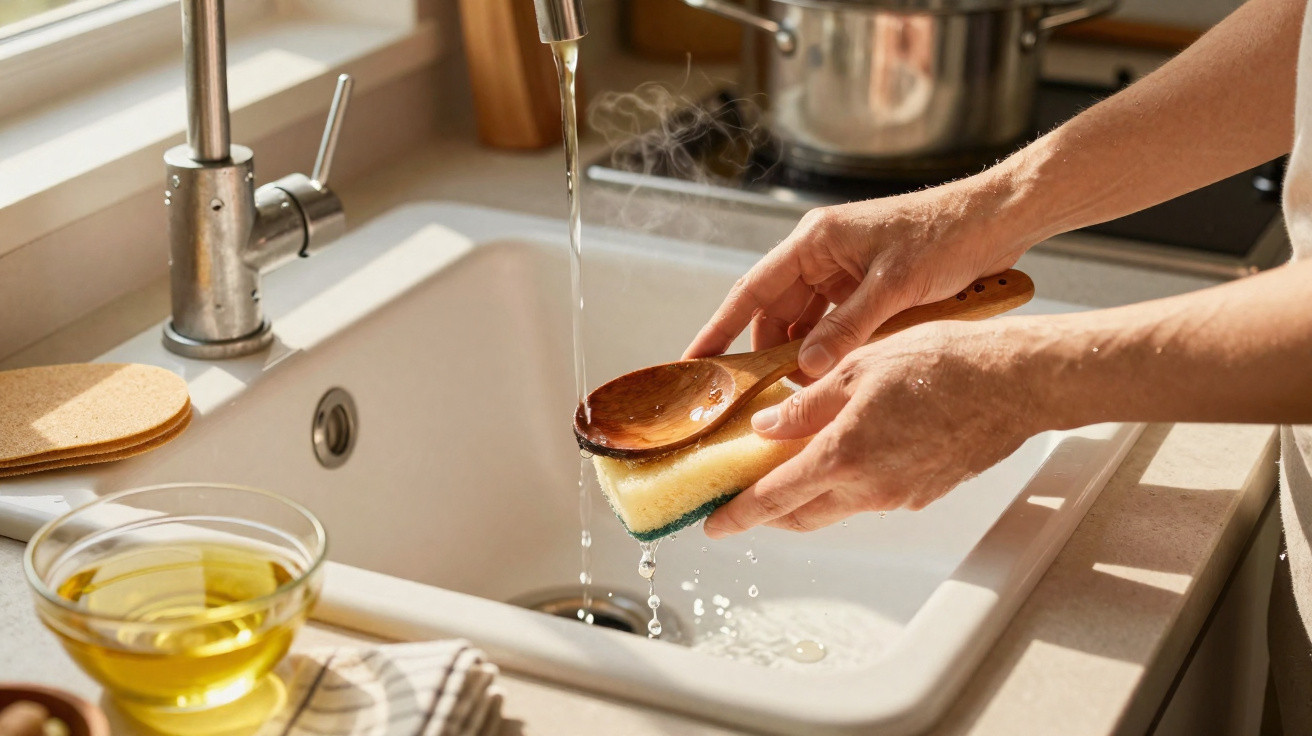
- Rinse the wood with warm water.
- Rub it with a little washing-up liquid or mild soap.
- Clean it using a soft brush or sponge – never metal scouring pads.
- Dry it thoroughly straight away, rather than leaving it in washing-up water.
Those who prefer household remedies can add a little white vinegar to the washing-up water. This provides a mildly disinfecting effect and helps remove odours, such as those left by onions or garlic.
Step 2: Deep cleaning with fine sandpaper
At regular intervals – every few weeks or months, depending on use – the expert recommends a small treatment for the wood:
- Allow the wooden item to dry completely.
- Lightly sand the surface with fine sandpaper (approximately 180 grit).
- Work only along the grain and do not press too hard.
- Briefly wipe the wood to remove dust.
Light sanding reveals fresh, smooth wood – sticky, soft and discoloured layers disappear.
Sanding removes a thin, worn layer where grease, colourings and germs may have accumulated. The surface becomes smooth again, while sauce stains and lingering odours are removed.
Step 3: A protective layer of cooking oil
After sanding, the expert advises applying a modest oil finish:
- Put a few drops of neutral vegetable oil (for example sunflower or rapeseed oil) onto a clean cloth.
- Rub a thin layer into the dry wood, especially in heavily used areas.
- After a few minutes, remove any excess with a fresh cloth.
This oil layer makes it harder for water and dirt to penetrate deeply. The wood stays supple, does not dry out and regains a rich, well-maintained colour.
Why wood is better than plastic in the kitchen
Alongside the cleaning debate, another issue is becoming more significant: the health implications of kitchen materials. For years, several doctors and environmental health specialists have warned about plastics in direct contact with food, particularly where heat is involved.
A doctor known from television recently made clear that many plastic spatulas, ladles and scrapers contain substances that may be released at high temperatures. They can then pass into sauces, soups or pan-fried dishes. Some of these substances are suspected of disrupting hormonal balance.
- Increased risk of certain birth defects in male babies.
- Earlier onset of puberty in girls.
- Higher risk of hormone-dependent cancers such as breast or prostate cancer.
His advice is drastic but clear: remove as many plastic kitchen tools as possible, particularly those that come into direct contact with hot food. Wood is an obvious alternative – natural, pleasant to use and heat-resistant.
Advantages of wooden utensils at a glance
| Advantage | What it means in everyday use |
|---|---|
| Gentle on pans | Does not scratch non-stick coatings or enamel. |
| Comfortable to handle | Feels warm in the hand, slips less and makes very little noise. |
| No melting edges | Does not melt against pan rims and leaves no sticky residue. |
| Less chemical contact | No abrasion of plastic particles into food. |
| Sustainable | Wood is renewable and can be recycled or composted. |
Mistakes to avoid when using wood in the kitchen
Boiling is not the only everyday mistake that can drastically shorten the lifespan of wood.
Do not put it in the dishwasher
Hot water, harsh detergents and prolonged soaking in modern dishwashers are especially tough on wood. The result can be cracks, discolouration and a loose handle. It is better to wash wooden items by hand every time and dry them promptly.
Do not soak it in the sink for hours
Leaving wooden spoons in a full sink after cooking produces a similar effect to boiling them, only more slowly. Water works its way deep into the material, causing the wood to swell and soften.
Replace severely damaged items
If a chopping board has deep grooves or a spoon has visible cracks, sanding will no longer be enough. Germs can settle permanently in such gaps. In this case, it is best to replace the item and, in future, sand and oil it earlier.
How often wooden utensils should be maintained
The right frequency depends heavily on how they are used. Anyone who cooks daily and does a lot of chopping or stirring should inspect their wooden items more closely every few weeks. As soon as the wood looks grey, feels rough or absorbs odours, it is time for sandpaper and oil.
In kitchens where they are used only occasionally, refreshing them every few months is often sufficient. The key is consistency: a gentle treatment carried out regularly is preferable to an occasional drastic measure such as boiling in a saucepan.
Practical examples of sensible uses for wood
Wood is not limited to cooking spoons. Many professionals deliberately choose this natural material for these items too:
- Large chopping boards for bread, vegetables and fruit.
- Thick butcher’s blocks for meat, which can be sanded effectively.
- Spatulas for non-stick frying pans and woks.
- Salad servers that do not leave metal dents in bowls.
Those who keep different foods separate can use several boards: for instance, a sturdy wooden board for meat and fish, and another for bread and vegetables. This makes it easier to stay organised and prevents odours from mixing as much.
Conclusion for everyday kitchen use: clean gently instead of “sterilising by boiling”
The well-intentioned idea of making wooden utensils especially hygienic by boiling them leads nowhere useful. The material suffers, the surface weathers more quickly and new hygiene risks are more likely to arise over time. A combination of mild cleaning, occasional sanding and sparing oiling is the more sensible approach.
Anyone gradually replacing plastic in the kitchen with wood and caring for it properly not only protects pans and pots, but also reduces exposure to problematic plastics. In the end, the slightly more mindful maintenance pays off twice: for personal health and for durable, dependable kitchen tools made from natural materials.



Comments
No comments yet. Be the first to comment!
Leave a Comment