
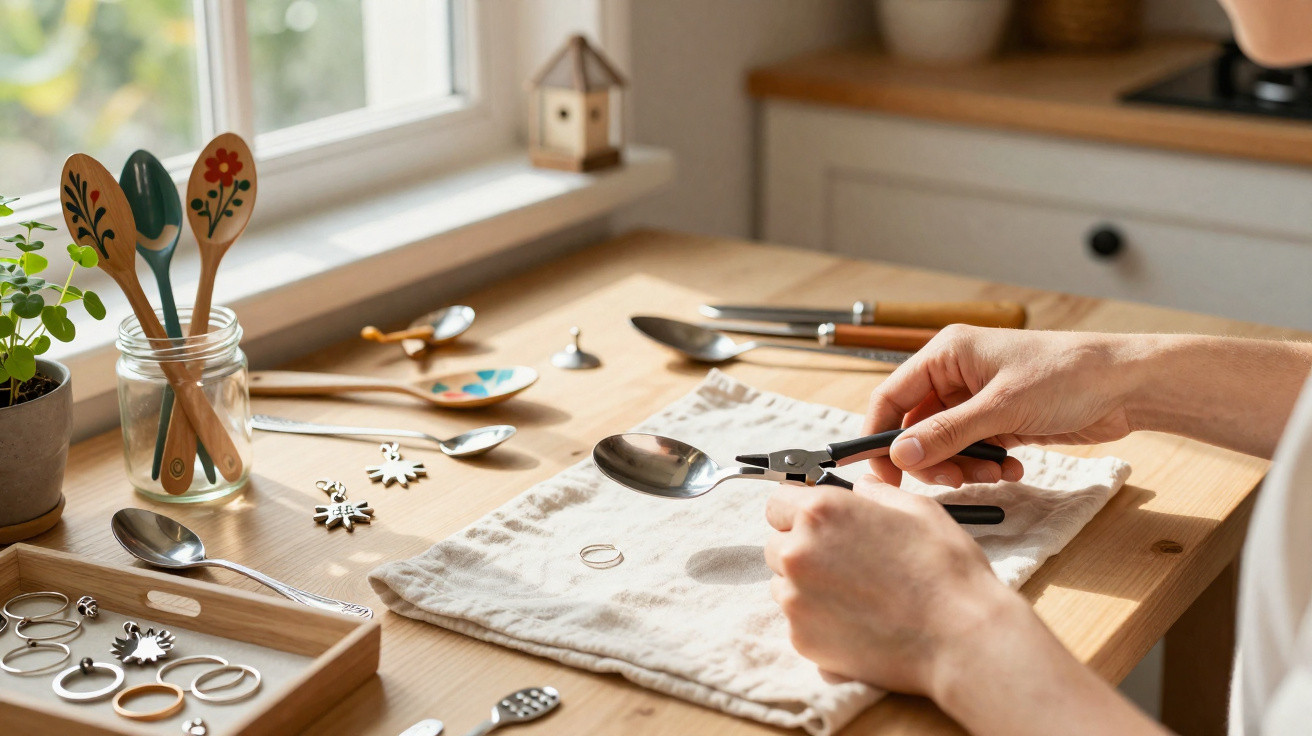
When browsing a bric-a-brac or second-hand shop, it is easy to walk straight past the cutlery box and miss its real decorative potential. Plain, bent or slightly tarnished spoons in particular can be turned into distinctive home accessories, jewellery or useful aids for the kitchen and garden with just a few simple steps – all for very little money.
Why old spoons are such an exciting material
Second-hand cutlery may look unremarkable at first glance. Spoons, however, offer several useful qualities:
- metal that can be bent, cut and drilled with relative ease
- attractive detailing on their handles, making them ideal for jewellery
- sturdy shapes suited to hooks, handles and labels
- a nostalgic look that fits perfectly with vintage or country-style décor
“Upcycling spoons saves money, reduces waste and brings one-of-a-kind pieces into the home that nobody else has.”
On closer inspection, an old soup spoon becomes far more than a kitchen utensil: it is a blank for creative projects, from wall hooks to jewellery rings.
Choosing the right material: silver, stainless steel or wood?
Before starting a craft project, take a close look at the material. Different types of spoon are better suited to different ideas:
Silver spoons for jewellery and delicate décor
Solid silver spoons, or models made from a good silver alloy, are easy to bend and shape. They are particularly suitable for:
- rings made from spoon handles
- pendants for pendant lights or necklaces
- finely made keyring charms
A quick test can help identify the material: hold a magnet against the spoon. If it sticks firmly, the spoon is not solid silver. A magnet has no effect on genuine silver.
Stainless steel for durable hooks and handles
Stainless steel is harder, but also exceptionally long-lasting. It is mainly suited to practical pieces such as:
- coat hooks
- handles for trays or drawers
- robust labels for the garden
It takes more force and sturdier tools to bend stainless steel, but a hook made from it will not give way under the first winter coat.
Wooden spoons as a canvas for colour
Wooden spoons cannot be forged, but they can be painted, labelled and carved beautifully. Popular uses include:
- brightly painted kitchen décor
- spring bouquets made from wooden spoons in a vase
- labelled stirring spoons as gifts for keen cooks
Preparation: clean, smooth and secure
Before spoons are mounted on the wall or turned into rings, a little preparation is needed:
- Cleaning: Soak them in warm soapy water, clean with a soft brush, rinse thoroughly and allow them to dry completely.
- Flattening: To create flat pieces, place the bowl of the spoon on a hard surface and gently tap it flat using a rubber mallet or soft-faced hammer.
- Cutting and drilling: Use a hacksaw or heavy-duty side cutters for handles, and metal drill bits for holes. Wear safety glasses and gloves, and clamp the spoon securely in place.
“A secure hold in a vice and safety glasses are not optional when sawing and drilling; they are essential.”
Twelve creative ways to give old spoons a new life
With a few tools and some imagination, a pile of old metal can become an entire collection of home accessories. Here are twelve projects that beginners can tackle too:
1. Wall hooks from bent spoons
Screw the spoon handle to the wall and bend the bowl forwards to create a hook. It is ideal for:
- mugs in the kitchen
- keys in the hallway
- lightweight jackets or scarves
Several different spoons mounted side by side on a wooden board look especially appealing.
2. Serving tray with spoon handles
Take a simple wooden board and fit two sturdy spoons on each side as handles to make a personalised serving tray. Stainless steel spoons offer the greatest stability for this project.
3. Bird feeding station
A small jar or screw-top jar, a holder and a wooden spoon can become a bird feeding station. The spoon acts as both a perch and feeding platform, while the jar keeps the seed dry.
4. Wind chime for the balcony or garden
Hang several spoon bowls from string or fine chains, adding glass beads if desired. Once outside, the wind creates quiet sounds and reflections in the sunlight.
5. Plant labels for the flower bed
Flattened spoon bowls can be marked with letter punches, metal stamps or a waterproof pen. That way, even after the next downpour, you will still know where the thyme is growing in the herb bed.
6. Painted wooden spoons as kitchen décor
Paint the handles in bright colours, add patterns, sayings or little faces, then seal them with clear varnish. A bundle of these spoons brings character to any kitchen rail or utensil corner.
7. Refresh spoons with epoxy resin
The handles of metal or wooden spoons can be coated in coloured epoxy resin. Glitter, dried flowers or tiny pictures set into the resin give the cutlery a completely new appearance.
8. Pendants made from spoon bowls
Cut off the spoon bowl, smooth it, curve it slightly if needed, drill a hole and decorate it with small stones, engraving or paint. The result is an individual necklace pendant or keyring charm.
9. Rings made from spoon handles
Jewellery created by bending a decorated handle around a finger is especially popular. Depending on the thickness of the metal, the finished ring can be substantial or more delicate. Each ring quickly reuses 30 to 50 grams of metal.
10. Pull handles for lamps or fans
Small spoon handles can be attached as grips to ceiling fans or lamps with pull chains. Decorated ends turn an everyday detail into a small design statement.
11. Jewellery holders from old spoon display racks
Old wall-mounted display racks for collector spoons can often be found cheaply at flea markets. With sandpaper, paint and a few hooks, they become holders for necklaces, bracelets and earrings.
12. Personal place cards for the dining table
Lightly hammered spoons bearing stamped or painted names make reusable place cards. They are a small detail with lasting sentimental value, especially for weddings or milestone birthdays.
How to find the best pieces in a second-hand shop
When searching, focus less on complete sets and more on character:
- decorated or patterned handles for jewellery
- large serving spoons for handles and hooks
- pieces that are already slightly bent for bending projects – another bend will not matter
If you carefully test whether a handle can bend slightly while in the shop, you will quickly see whether the metal is too brittle. Cracks or heavy discolouration can indicate material fatigue, so it is best to leave those pieces behind.
Practical advice on tools, safety and effort
A basic set of tools is enough for most projects:
- a hammer, ideally a soft-faced hammer
- a hacksaw or heavy-duty side cutters
- a cordless drill with metal drill bits
- sandpaper or files for removing sharp edges
- safety glasses and work gloves
Many of these ideas can be completed in an afternoon. Anyone who wants to explore ring-making or more elaborate jewellery in greater depth will benefit from specialist jewellery tools and a little practice – but the result can be pieces that also make excellent gifts.
Benefits beyond décor: sustainability and creativity
Upcycling spoons does more than lower the cost of decorative items; it also reduces metal waste. Every spoon that is reused saves resources that would otherwise be needed for new material. This matters even more at a time of high raw-material prices.
Working with metal and wood also develops practical skills: you learn how to assess materials, use tools safely and put your own designs into practice. Many people begin with a simple wall hook before progressing to refined jewellery collections or personalised gift sets featuring spoon rings, painted wooden spoons and individual plant labels.
If children are involved, keep them away from cutting and drilling work, but let them help with cleaning, painting and decorating. The result is not only new décor, but also a shared project that continues the story of every spoon – from flea-market find to cherished individual piece.


Comments
No comments yet. Be the first to comment!
Leave a Comment