
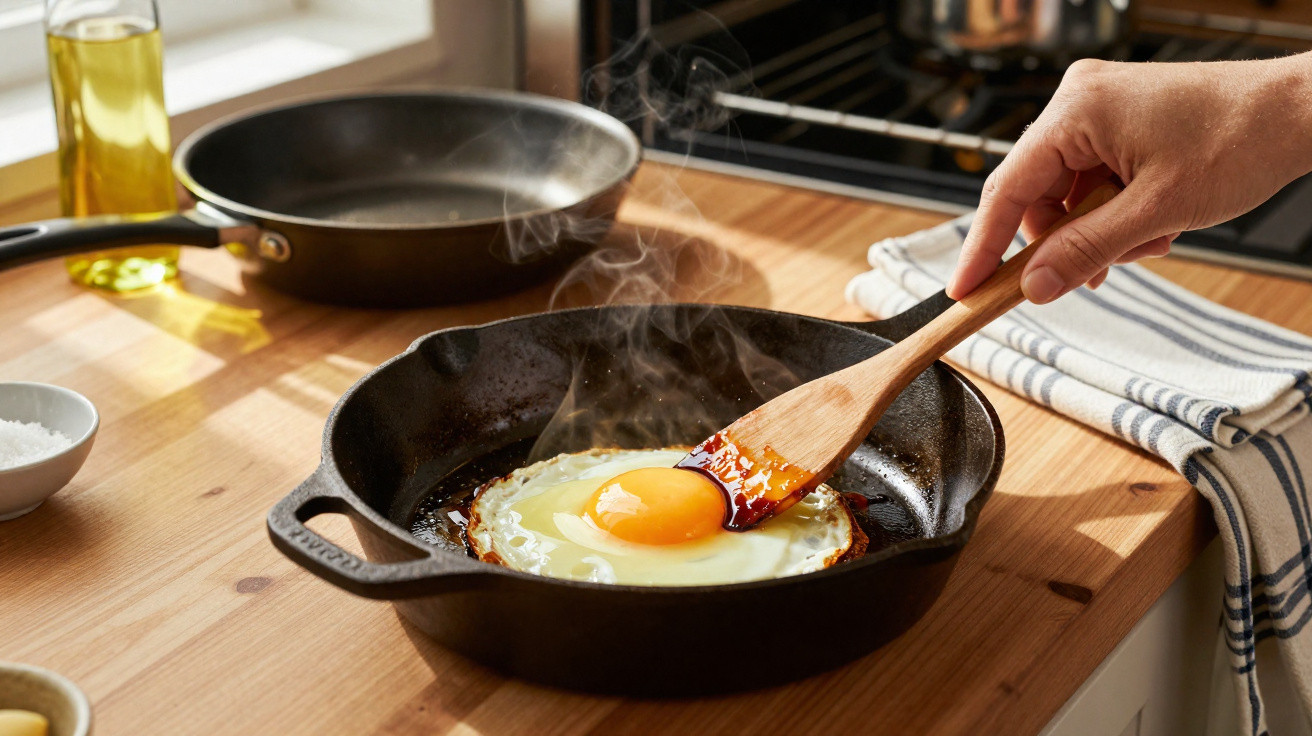
Many people still have a heavy, dark cast-iron pan tucked away somewhere – inherited, forgotten or dismissed as “impractical”. Yet treating it properly can produce a surprising result: a fried egg suddenly glides across the surface as it would in an expensive professional pan. There is no secret chemistry involved, just an old technique that has largely been forgotten.
Why cast iron is making a comeback in the kitchen
Cast iron is fashionable again. Professional chefs have relied on it for years, and home cooks are following suit. The material retains heat exceptionally well and spreads it evenly. Steaks develop a rich crust, vegetables roast deeply and slow-cooked dishes can turn out like those served in a restaurant.
Even so, many people quickly put the heavy pan back in the cupboard. It can seem rustic and rather cumbersome – and, above all, food keeps sticking. Anyone used to a modern non-stick pan can become frustrated very quickly.
The “sticking effect” is not a fault in the pan, but a missing step.
That is where the forgotten method comes in: it turns bare cast iron into an almost non-stick surface, without Teflon or specialist products, using only oil and heat.
The forgotten technique: what seasoning actually does
In the past, seasoning new cast-iron pans before using them for the first time was standard practice. Old pots were also regularly refreshed. As modern pans became widespread, this step – and the knowledge behind it – largely disappeared.
Seasoning transforms a plain iron surface into a smooth, dark layer that works like a natural non-stick coating. It is not magic but a chemical process: at high temperatures, oil polymerises and bonds permanently to the metal.
The result is a hard, slightly glossy surface on which eggs, pancakes and fish are far less likely to stick, while also protecting the pan from rust.
Why unseasoned cast iron sticks so badly
Use an untreated cast-iron pan and the problem becomes obvious quickly: food sticks, while the base can soon look worn. This is due to two characteristics of the material.
- Cast iron is porous: Its surface contains tiny indentations. When heated, these pores open and food residue and protein particles can become lodged in them.
- Cast iron rusts easily: Without protection, iron reacts with water and oxygen. Brownish marks can appear quickly after washing and air-drying.
During seasoning, hardened oil fills these pores. The surface becomes denser, water-repellent and less prone to rust. This is precisely the layer that lets food slide so easily across the pan.
Well-seasoned cast iron is both a non-stick surface and rust protection – entirely without a coating from a chemical factory.
How to season a cast-iron pan properly
The process sounds more difficult than it really is. Essentially, it has four stages: clean, dry, oil and heat intensely. Several rounds are needed for the best result.
Step 1: Clean it thoroughly
- New pan: Give it a vigorous wash with hot water and a little washing-up liquid to remove protective wax or factory residue. Rinse it well afterwards.
- Old pan from a car boot sale or the cellar: Scrub away rust and old, resinous grease layers with coarse salt and a stiff brush or steel wool. Repeat if necessary until the surface looks as even as possible.
Step 2: Dry it completely
Moisture is cast iron’s greatest enemy. Once cleaned, place the pan briefly on the hob or in the oven so that it dries fully. A few minutes at around 100°C will usually be enough.
Step 3: Choose the right oil
An oil with a high smoke point is best for seasoning. Suitable choices include:
- rapeseed oil
- refined sunflower oil
- grapeseed oil
- linseed oil (very effective, but more expensive and stronger-smelling)
The key is to apply only an extremely thin layer. A few drops of oil are sufficient. Use kitchen paper to spread it evenly over the entire inside and outside of the pan. Then wipe it almost completely dry again with fresh paper, so that no visible film of oil remains. Too much oil creates sticky, uneven patches.
Step 4: A hot oven and plenty of patience
Put the oiled pan into an oven preheated to 230–250°C. Ideally, place it upside down on a rack, with a baking tray beneath it to catch any oil that drips off.
Leave it in the oven for around an hour. During this time, the oil starts to smoke and bonds with the metal surface. Once the oven has been switched off, allow the pan to cool completely inside the closed oven.
For a genuinely good finish, two to four rounds are worthwhile. Each round makes the surface darker, smoother and more resilient.
Once properly seasoned, a cast-iron pan feels almost like a high-quality non-stick surface – only far more robust.
Everyday cast-iron care: what matters most
Once the pan has been successfully seasoned, the enjoyable part begins: cooking, frying and enjoying the results. A few simple habits will help the protective layer last.
- Avoid harsh washing-up liquid: Hot water and a brush are enough in many cases. Washing-up liquid can gradually thin the seasoned layer.
- Do not soak it: Cast iron should never be left sitting in water for hours.
- Dry it straight away: After rinsing, put it briefly on the hob until all remaining moisture has evaporated.
- Apply a thin film of oil: If desired, rub the still-warm pan with a trace of oil at the end. This guards against rust and strengthens the patina.
- Use wood or silicone: Metal turners can scratch the layer while it is still developing. Softer utensils are especially preferable at the beginning.
If something does stick and burn on, a simple trick can help: bring a little water to the boil in the pan, gently loosen dried-on residue with a wooden spatula, then dry the pan thoroughly and lightly oil it again if needed.
Benefits of a seasoned cast-iron pan
Anyone prepared to put in the effort of seasoning is rewarded in several ways.
- Long service life: With good care, a cast-iron pan can ideally last a lifetime and can even be passed down.
- Less waste: Unlike many coated pans, it does not need to be thrown away every few years.
- Tough performance: High heat, the oven and the barbecue are all easily handled by cast iron.
- Natural surface: No artificial coating can flake off. Many value this especially for a more “pure” approach to cooking.
- Appearance: The deep-black, glossy patina makes a statement about enjoyment and craftsmanship in many kitchens.
Those who care for cast iron properly avoid expensive pans with short-lived coatings while still cooking with virtually no sticking.
Getting started: dishes particularly suited to cast iron
Straight after seasoning, the protective layer is still fresh. At this stage, it is worth choosing dishes that contain some fat and continue building the patina.
- fried potatoes in ghee or oil
- well-seared steaks
- sausages or bacon
- pan dishes with a slightly higher fat content
Highly acidic foods, such as very tomato-heavy sauces or wine reductions, can attack a fresh layer. Stainless steel or enamel is a better choice for these dishes, at least during the first few weeks after seasoning.
Common mistakes – and how to avoid them
Many people give up on cast iron in frustration because a few small things go wrong. Three issues occur particularly often:
- Using too much oil while seasoning: This causes sticky, uneven areas. The remedy is to apply it thinly, rub it out thoroughly and repeat the process.
- Cleaning too quickly with washing-up liquid: Strongly degreasing the pan after every use gradually destroys the patina. Use it sparingly, or avoid it altogether.
- Storing it damp: Residual moisture leads to rust. Always dry the pan completely and do not store it in a damp cupboard.
Why it is worth reaching for that old cast-iron pan
In many kitchens, there is still a heavy, dark pan that nobody really wants to use. Anyone willing to season it gains not only a versatile tool for frying, braising and baking, but also a small ritual.
The pan changes with every use, becoming smoother and more reliable over time. Cast iron is a dependable partner on the hob, especially for anyone who values long-lasting products and wants to buy less disposable cookware. Often, the best moment is when the first egg slides free without sticking from the very pan that had sat unused in the cupboard for years.
Comments
No comments yet. Be the first to comment!
Leave a Comment