
You open the fridge in search of something nice, only to be met by it. That sour, damp, faintly rotten scent that seems to hang in both the chilled air and your nostrils. You shut the door, then open it once more, as though a second try might somehow improve things. It is still there. Perhaps even stronger.
You begin investigating. Was it the cheese? Last week's leftovers? That unclaimed Tupperware container? You throw out a few items, give a shelf a quick wipe and leave the door ajar for a moment, hoping the smell will simply drift away.
The following day, it returns. More intensely.
There is one quiet habit that hardly anyone follows – and it is the one that prevents this cycle from starting.
Why your fridge smell keeps coming back
Fridge odours do not simply “appear”. They develop gradually through tiny, overlooked incidents that accumulate over days and weeks. A few tomato seeds slipping from their container, a yoghurt pot left partly open, a cucumber decomposing in the salad drawer like a green ghost. The smell you notice one morning is, essentially, the result of everything that escaped your attention for a while.
Odours are like gossip in a small town: they travel quickly and linger.
A Paris-based food scientist once demonstrated a straightforward test to me. He opened a fridge that looked reasonably clean, then used his fingers to pull back the door seal. Tucked into the rubber creases were sticky orange juice marks, a drip of coffee and greyish crumbs that no longer even resembled food. The shelves were immaculate, yet the smell was living in these neglected corners.
“You can throw away every leftover here,” he said, “and the odor will still come back within 48 hours.”
That is the frustrating part. We often approach fridge smells as a one-off crisis rather than the result of an ongoing habit. So we respond in a rush: scattering bicarbonate of soda everywhere, using scented wipes and leaving the door open in the hope of letting in “fresh air”. The odour eases, before quietly building up again in exactly the same spots.
The real cause is generally a small routine we have failed to establish: a regular, almost unconscious check of what is in the fridge and where it may be leaking. It is not a deep clean. It is a micro-habit.
The weekly fridge reset that stops odours
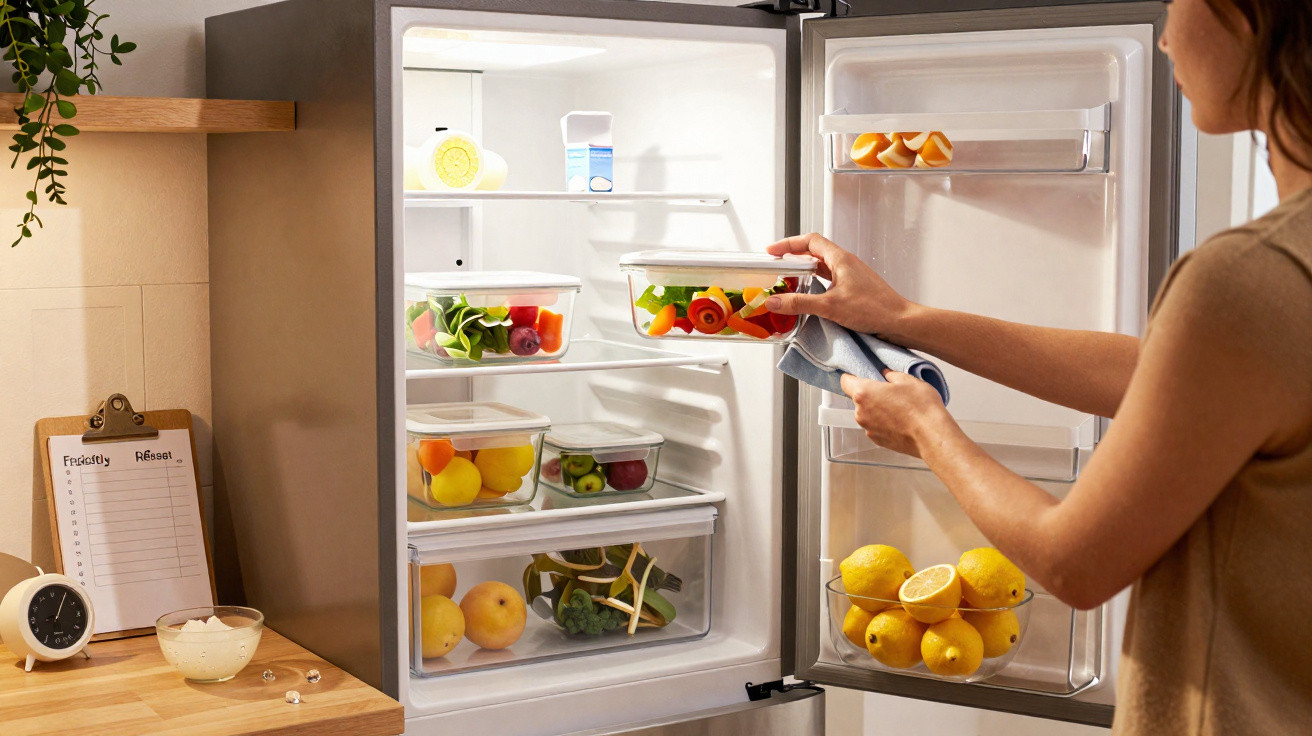
Here is the habit that makes the difference: a five-minute “Friday fridge reset”. Once a week, on the same day, open the fridge with only one purpose. Not to clean it. Not to reorganise your entire life. Simply to do three things: throw away, wipe down, reset. Nothing more.
Look for “orphans”: half an onion wrapped in cling film, opened feta, mystery jars you no longer trust. Wipe just two areas with a basic solution of water and white vinegar: the door shelves and the edges of the vegetable drawer. Then close the door. Five minutes, no grand effort required.
A family I interviewed put this into practice for a month. Their starting point was familiar: a fridge that carried a light blend of old ham and yoghurt every three or four days. They repeatedly bought fridge deodorisers, replacing them obsessively, but still complained about the smell.
The mother set a timer every Sunday evening before beginning dinner. She never cleaned the entire fridge in one go. Instead, she completed her “throw away, wipe down, reset” routine while the pan warmed up. Three weeks later, she noticed something unexpected: she had stopped noticing any fridge smell at all. It had simply never been given enough time to settle in.
There is a simple truth beneath this: smells don’t win against consistency. Rotten odours are caused by bacteria feeding on minor spills, forgotten scraps and uncovered food. Interrupt that feast weekly and you end the party early.
From a scientific perspective, regular wiping with a mild acid such as vinegar reduces the pH of surfaces, making it more difficult for odour-producing microbes to flourish. From a psychological perspective, the routine changes how you relate to your fridge. It stops being an enigmatic cold cupboard and becomes part of your weekly rhythm, much like brushing your teeth at night.
Build the habit without becoming a cleaning robot
The approach itself is almost absurdly easy. Choose a set “fridge day”: Friday before ordering a takeaway, Sunday before meal preparation or Monday after work. Attach it to something you already do, so you are not trying to remember it from scratch every time. That connection is what sustains the habit.
Then use this short script:
First, throw away. Anything furry, sour or so old that you cannot remember when you made it should go in the bin or compost. No guilt and no fuss.
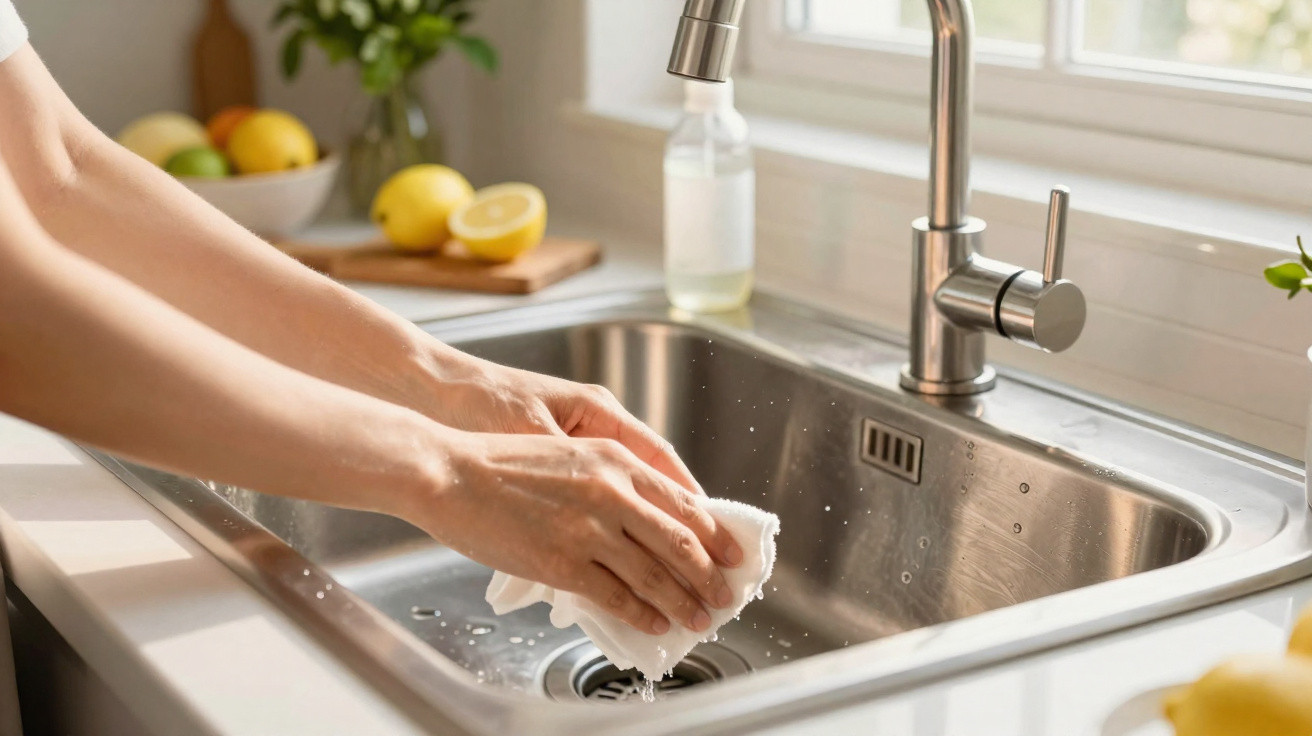
Second, wipe down. Use one small sponge or cloth dipped in a bowl containing one part white vinegar and three parts warm water. Only clean:
- the edges of the vegetable drawers
- the inside of the door shelves
- any clearly visible spills
Third, reset. Put lids back on, cover bowls and move raw meat to a lower, colder area. Shut the door and leave it alone. That’s the whole ceremony.
Many people struggle because they see fridge maintenance as an all-or-nothing job. Either they remove everything and scrub every corner twice yearly, or they do nothing for months and hope deodorising boxes will rescue the situation. That is tiring, and it does not fit the reality of everyday life.
Let us be honest: nobody truly manages this every day. Children leave yoghurt partly open, housemates forget leftovers and busy work weeks take over. The goal isn’t perfection, it’s rhythm. A brief, dependable routine is better than heroic deep cleans saved for “when I have time” – which usually means never.
Psychologists refer to this as a “keystone habit”: a small behaviour that quietly improves many other areas. Once the weekly reset becomes automatic, people often begin storing food more carefully, spotting use-by dates earlier and wasting less. The fridge smell is merely the first obvious benefit.
As one home organiser told me:
“People think they have a bad fridge. They don’t. They just have no recurring date with it. Once that date exists, the odors simply don’t have a chance to become a story.”
To make the process simpler, keep a small “fridge kit” ready in the kitchen:
- A small spray bottle containing diluted white vinegar
- A dedicated sponge or microfibre cloth
- Two or three lidded glass or plastic containers for quick transfers
- A marker for writing dates on jars or containers
When this kit is in sight, the routine stops feeling like a chore you dread and becomes a quick task you can manage while water boils, coffee drips or a podcast plays.
A fresher fridge comes from paying attention differently
Once you begin this weekly ritual, another change often follows. Opening the fridge stops feeling like visiting a storage unit; instead, it feels like checking in on a small ecosystem you understand. You recognise the leftovers, remember when you made that soup and notice the lone apple before it becomes a science experiment.
Odours are often simply evidence that the fridge has become a blind spot.
A fresher-smelling fridge also alters small parts of your day. You are more inclined to eat the food you already own and less inclined to order food merely because the fridge feels “sad” or questionable. You throw less away, save a little money and no longer dread that sour rush of air whenever you open the door.
The habit is almost unnoticeable to anyone else. Nobody will praise your “Friday fridge reset”. Yet its effects reach your food, your budget and even your mood when cooking after a long day.
So, if your fridge smell keeps returning regardless of what you spray, perhaps the answer is not more powerful products. Perhaps it is this quiet, repeated action that breaks the cycle before it starts: a five-minute appointment with the cold heart of your kitchen, once a week, at the same time.
Your nose always notices when you have kept that appointment.
| Key point | Detail | Value for the reader |
|---|---|---|
| Weekly “fridge reset” ritual | Five minutes to throw away, wipe down and reset on a fixed day | Prevents smells before they develop while keeping effort low |
| Focus on hidden odour zones | Door shelves, drawer edges, seals and small spills | Targets the places where bacteria and odours actually live |
| Simple vinegar solution | One part white vinegar, three parts warm water | An inexpensive, food-safe way to neutralise odours and bacteria |
FAQ:
- How often should I really clean my fridge? Carry out a deep clean every 2–3 months, but rely on the weekly five-minute reset as your main protection against unpleasant smells.
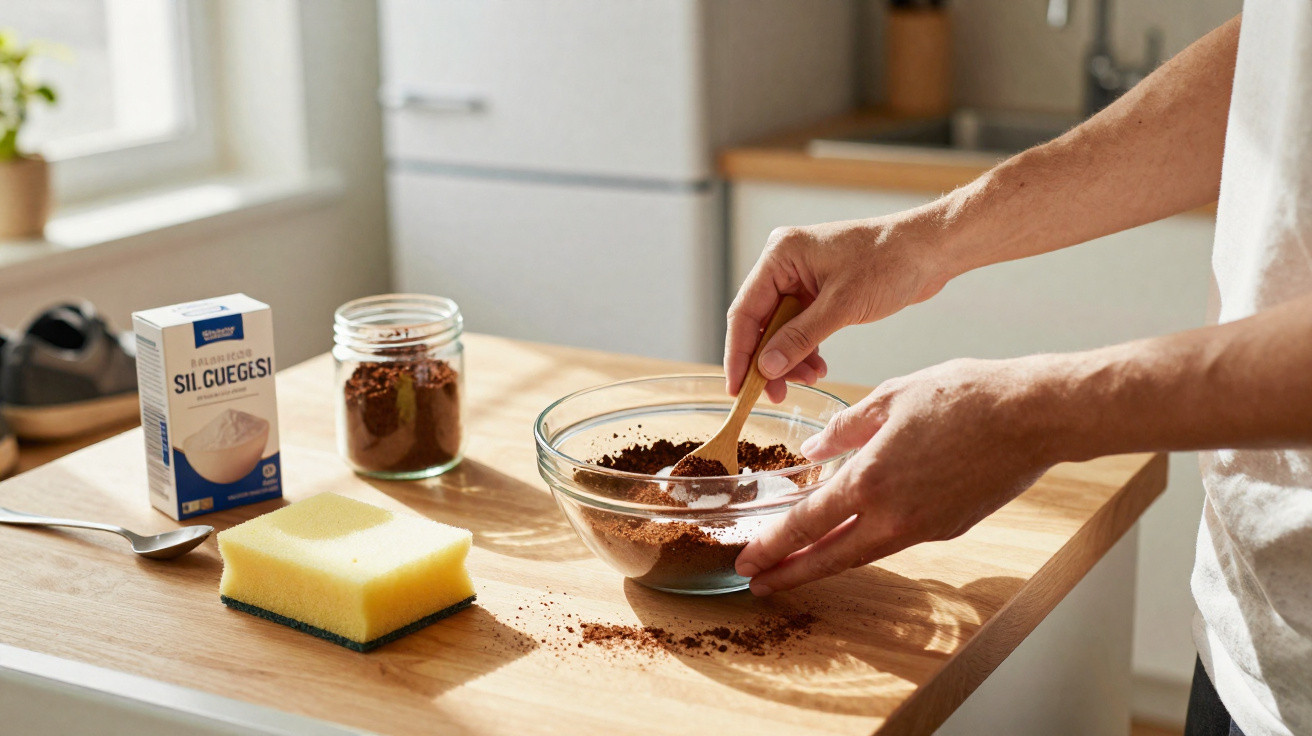
- Does baking soda in the fridge actually work? Bicarbonate of soda absorbs some odours, but without the weekly throw-away-and-wipe routine, the smell will still return sooner or later.
- What foods cause the strongest fridge odors? Uncovered cheese, fish, onions and forgotten vegetables in the salad drawer are the usual culprits, particularly when their packaging is torn or left open.
- Is vinegar safe to use inside the fridge? Yes, diluted white vinegar is food-safe for surfaces and evaporates rapidly, without leaving a lasting flavour on food.
- My fridge is new and still smells plastic. What can I do? Wipe every surface with vinegar water, leave the door open while unplugged for a few hours and put an open box of bicarbonate of soda inside for several days.



Comments
No comments yet. Be the first to comment!
Leave a Comment