
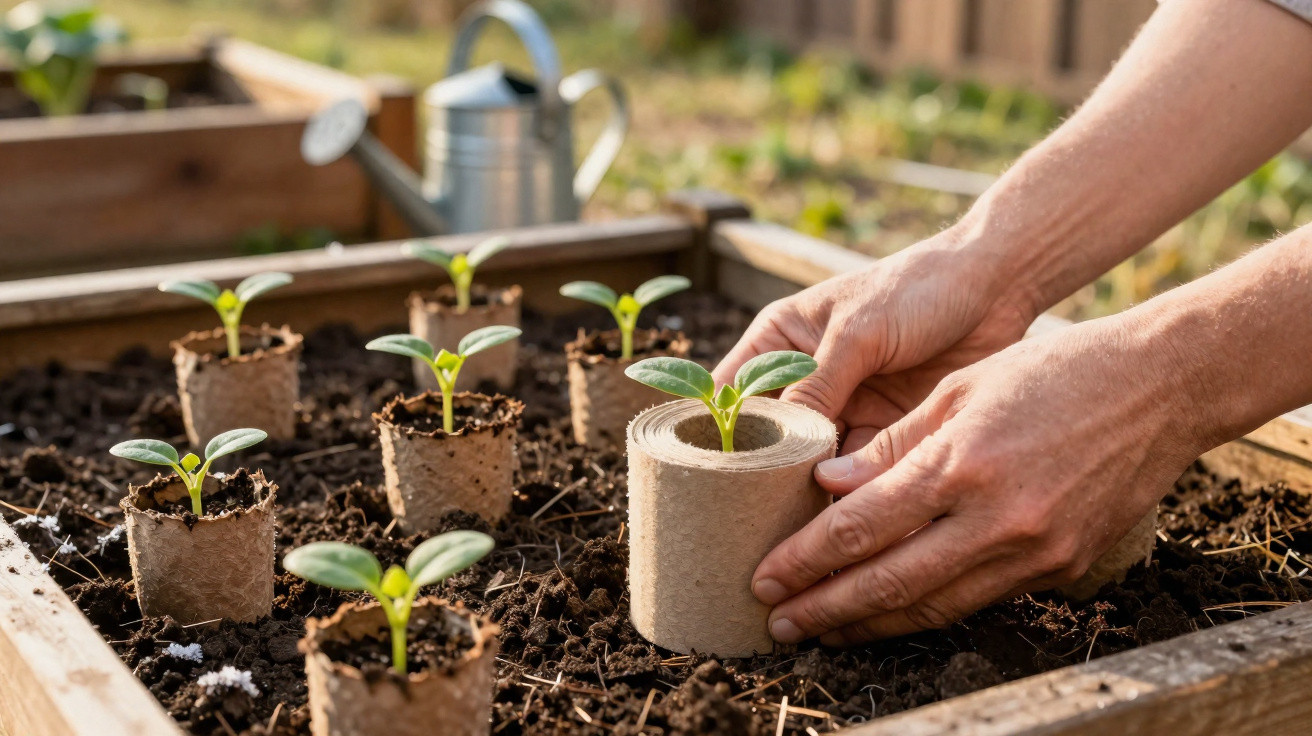
In spring, just a handful of nights can often determine whether a vegetable garden brings success or disappointment. Tomatoes, lettuce, peas and flowers struggle to germinate, only to be wiped out by cold weather or slugs overnight. Increasing numbers of home gardeners now swear by something that would otherwise be thrown away without a thought: empty toilet-roll tubes. What may initially sound like an online gimmick proves to be remarkably effective protection for young plants – as well as a practical recycling trick.
Why toilet-roll tubes suddenly appear in beds in spring
In early spring, young plants are exceptionally vulnerable. The sun may shine during the day, yet overnight temperatures can quickly drop towards 0°C. That is when delicate leaves are scorched by frost or seedlings simply collapse. At the same time, slugs feast on anything fresh and tender.
Many gardeners therefore spend money on mini greenhouses, cloches or costly polythene tunnel covers. Anyone wishing to avoid this can use a straightforward alternative: the cardboard core from a toilet roll becomes a type of protective collar for each individual plant.
"The cardboard creates a small protective casing: less wind, moderated temperatures, fewer slugs – all at no cost."
The tubes are made from thin cardboard. Over time, it softens, gradually breaks down in the soil and allows water to pass through without difficulty. At the same time, it reduces draughts at ground level and shields the plant's most sensitive point: where the roots meet the stem.
How to use toilet-roll tubes outdoors as protective shields
The method is remarkably easy and takes only a few minutes. All that is needed is a pair of scissors and the cardboard tubes collected from the bathroom.
Step by step: a protective collar for young plants
- Cut the cardboard tube in half if it is particularly tall.
- Plant the seedling in the bed and water it thoroughly.
- Carefully place the tube over the stem without trapping any leaves.
- Push the tube 2–3 centimetres into the soil, until it stands securely.
- Firm the soil gently around it so that no gap remains.
This creates a cardboard cylinder around the young shoot. Slugs must first climb a dry, vertical surface before they can reach the fresh foliage. For many species, particularly in dry weather, that is already too much effort.
It also forms a small sheltered area at ground level. On clear nights, the air there does not cool quite as sharply. Combined with mulch or straw around the outside, the plants gain surprisingly effective “light insulation”.
Extra protection when overnight frost is forecast
If the weather app predicts temperatures around or just below freezing, the arrangement can be reinforced further:
- Spread a hand-width layer of straw or dry leaves around the tube.
- If a harder frost is expected, loosely lay a thin horticultural fleece over the bed and tubes in the evening.
- Remove the fleece again in the morning as soon as temperatures rise, so that nothing turns mouldy.
The cardboard prevents the fleece from resting directly on fresh leaves, where it could freeze onto them in frosty conditions. This creates a small mini-tunnel effect without the need to erect additional supports.
More than frost protection: other uses for the tubes
Once gardeners begin using toilet-roll tubes in the garden, they soon discover further uses. The cardboard core is not only suitable as a protective collar in a bed.
Biodegradable planting pots from the bathroom
Many home gardeners begin sowing seeds on the windowsill. Instead of using plastic or peat pots, cardboard tubes can easily be turned into homemade seedling containers:
- Cut each tube into two or three shorter sections.
- Make four small cuts at one end and fold the flaps inwards to create a base.
- Fill with seed compost and add the seeds.
- Place on a tray or in a shallow container, and water regularly.
The plants stay in these containers for around three to four weeks. The whole “pot” can then be planted in the bed. Roots grow through the damp cardboard, which gradually decomposes. This avoids the risky task of potting on, during which delicate root balls are often damaged.
"The major benefit: no pricking out, no plastic, no peat pellets – and the roots remain undisturbed."
A mini barrier against weeds
Seedlings in row sowings, such as carrots or beetroot, can quickly disappear beneath a sea of weeds. By cutting toilet-roll tubes lengthways and shaping them into small cuffs, they can be placed like collars around individual plants. The immediate area stays weed-free for longer because very little light reaches the soil.
For delicate perennials or young trees, the cardboard also creates a type of “buffer zone”, making it less likely that a lawnmower or strimmer will get too close.
How the tubes eventually become valuable compost feed
By the time plants have grown strong, the tubes in the bed will begin to soften. They can either be crumbled where they are or collected. In either case, they should ideally end up in the compost heap.
Cardboard belongs to the so-called “brown” compost material. It provides carbon, which balances damp “green” matter such as grass cuttings and kitchen scraps. Tearing the cardboard cores into small pieces and adding them in layers can often produce noticeably looser compost within a few months.
- Tear them into pieces to increase the surface area.
- Mix with grass, vegetable leftovers or coffee grounds.
- Keep the compost slightly damp, but do not soak it.
- Turn it from time to time so that air can reach the material.
Worms and microorganisms break down the cardboard quickly. The result is humus-rich compost that makes beds more resilient during dry spells the following year and improves soil structure.
What to check before putting the tubes into the bed
As clever as the trick is, a few points require attention. Not every type of cardboard is fully suitable for the garden. Toilet-roll cores are generally fairly untreated, but they are still worth checking briefly.
- Do not use tubes with a glossy coating.
- It is better to avoid coloured or heavily printed cardboard.
- Store them somewhere dry before use to prevent mould developing.
- If tubes are heavily waterlogged, add them only to the compost instead.
In very wet soil, a cardboard collar may remain damp for longer and sit more tightly against the plant. It is then worth checking: does the stem still sit loosely inside the “protective ring”? If not, slit the tube slightly or remove it earlier.
Who benefits most from this toilet-roll tube trick
Three groups in particular can benefit from the toilet-roll tube method:
- Beginners in vegetable gardening who do not want to invest in expensive equipment straight away.
- Gardeners in colder areas, where late frosts in May are not unusual.
- People with slug problems, particularly in rainy locations or shady gardens.
Anyone who collects plenty of tubes can also run their own comparison: one bed with cardboard protection and one without. Differences in plant losses and growth speed are often clear. Children in particular enjoy placing the “cardboard soldiers” around tomatoes, courgettes or sunflowers – while also learning about recycling and plant protection.
The environmental aspect is interesting too: every reused cardboard tube replaces a purchased product made from plastic or peat, saving both money and resources. At a time when many gardeners want to work more sustainably, such simple, free ideas fit the picture remarkably well.
Comments
No comments yet. Be the first to comment!
Leave a Comment