
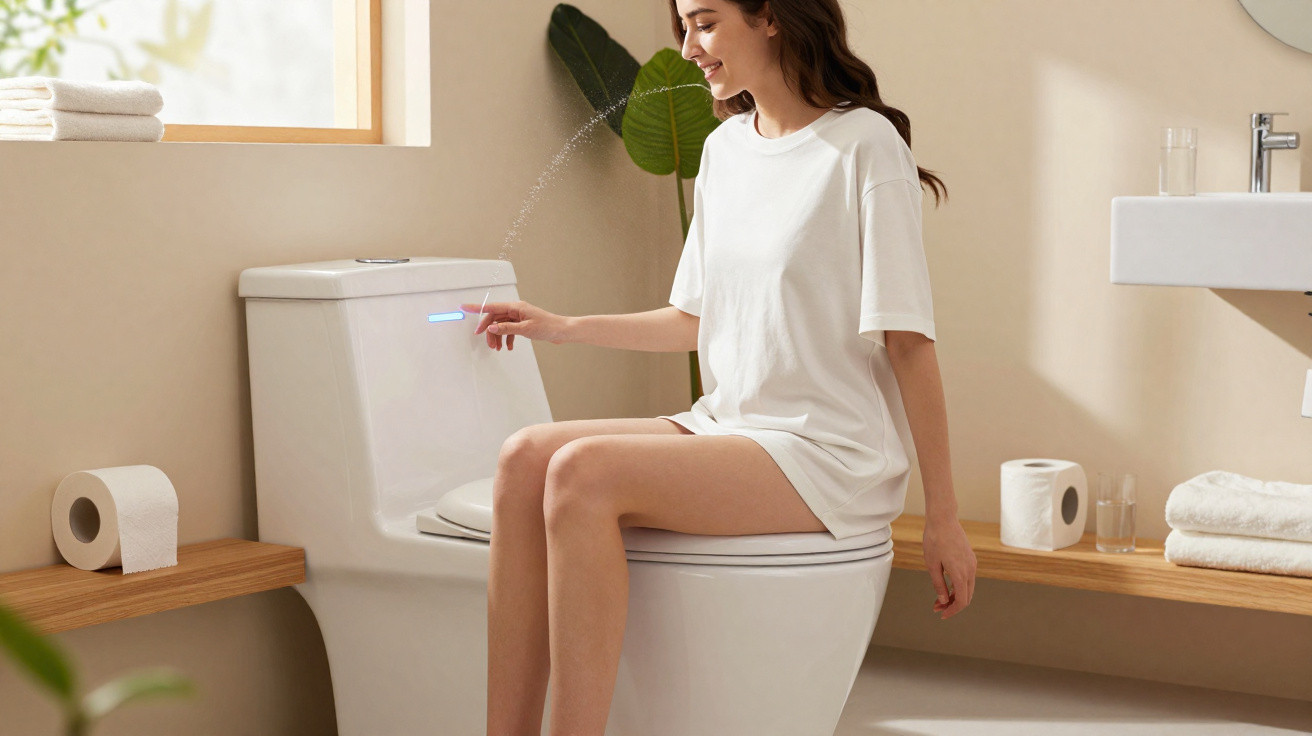
In a growing number of households, the pyramid of toilet rolls is disappearing from the cupboard. Instead, people are choosing water-based cleansing systems such as bidets and so-called Washlets. What once sounded like a luxury found in Japanese hotels is proving to be practical for everyday use, more hygienic and, over time, even more affordable.
Why water really cleans your bottom more thoroughly
When you think about it honestly, dry wiping with paper is not a particularly logical cleaning method. We would not treat any other part of the body this way. No one would wipe a dry cloth across their face after exercise and say: “Done, clean.”
Yet that is precisely what happens after using the toilet. Toilet paper mainly wipes, shifts and spreads residue around. Microscopic traces remain on the skin, creating an ideal breeding ground for bacteria and irritating an already sensitive area.
Water rinses away residue instead of rubbing it in – that is the crucial difference compared with paper.
Doctors repeatedly report that people with persistent burning, itching or small tears around the anus often either do not clean thoroughly enough or clean too aggressively. Water removes residue without friction and without tiny paper fibres sticking to the skin.
Especially gentle on sensitive skin
People with haemorrhoids, anal fissures or those recovering from surgery know the issue well: every visit to the toilet can become painful because paper further irritates inflamed skin. Even a few wiping movements can cause considerable discomfort.
A gentle stream of water noticeably relieves this area. There is no longer any need to rub the skin, as cleansing is virtually contact-free. Many people who have switched to a bidet report that symptoms they had simply accepted for years suddenly disappeared.
There is another consideration too: modern systems operate largely without contact. Hands come into contact with potentially contaminated surfaces less often, reducing the risk of spreading germs around the home – particularly relevant during flu outbreaks or stomach bugs.
What modern bidets and Washlets can do
Today, a bidet no longer means a separate porcelain basin beside the toilet, which would simply take up space in many bathrooms. The technology is now built directly into the toilet seat or fitted as an attachment to an existing WC.
- Adjustable water pressure – from very gentle to a stronger jet
- Temperature control – lukewarm water instead of a cold shock
- Warm-air dryer – dry completely without paper
- Self-cleaning nozzles – hygienic cleaning after every use
- Eco mode – low electricity and water consumption in daily use
These features may initially sound technical, but they quickly feel entirely normal in everyday life. Children, older people and those with limited mobility benefit particularly: they need to twist and stretch less, can reach difficult areas more easily and remain more independent.
Many users report: After a few days, toilet paper alone suddenly feels old-fashioned and inadequate.
The environmental impact of toilet paper – an uncomfortable subject
The humble toilet roll may seem harmless in the bathroom, but it has a considerable environmental footprint. Billions of rolls are produced worldwide every year, then need to be packaged and transported.
What goes into a roll of toilet paper
| Aspect | Impact of toilet paper |
|---|---|
| Raw material | Millions of trees felled each year |
| Water consumption | Large quantities of water used in paper production |
| Chemicals | Bleach, additives and colourants |
| Transport | Lorry transport, lengthy supply chains and packaging waste |
Bleaching is particularly problematic because it produces substances that pollute rivers and lakes and accumulate in ecosystems. The softer, whiter and more “luxurious” the paper, the more intensive the process often is.
Switching to water largely eliminates this entire production chain. Water already used for flushing also handles the cleansing. Studies show that, over a bidet’s lifespan, households save significant amounts of water and energy compared with the continual production of paper.
How Japan reinvented the bathroom
Washlets have been part of daily life in Japan for decades. In many homes, a high-tech toilet is as commonplace as a kettle is in the UK. Hot water, precisely directed nozzles, heated seats and warm-air drying all come from one unit.
Japanese manufacturers have demonstrated that hygiene, comfort and sustainability can work well together. What initially sounded like a gimmick is now setting standards around the world. In new-build homes across Asia, as well as in North America and parts of Europe, toilets with an integrated bidet function are increasingly included from the outset.
Retrofit rather than renovate completely
There is no need to refurbish an entire bathroom for anyone who does not want to miss out. Most bidet attachments fit standard WCs and are simply installed between the ceramic bowl and the seat. Often, a T-piece at the isolation valve is all that is needed to connect the water supply.
For electric models with warm water and a dryer, in many cases only a nearby socket is required. Anyone comfortable with DIY can complete the installation in around an hour. Those who are unsure can ask a plumber – the work remains manageable.
The real obstacle is rarely the technology, but rather taking the step of questioning a long-established habit.
Does it really make financial sense?
There is also the question of cost. At first glance, a bidet attachment or Washlet may seem like an expensive gimmick. However, looking at toilet paper spending over several years changes the picture considerably.
Many households use several rolls each week, especially where children live at home. Over a year, this can quickly add up to a three-figure sum. Premium paper, scented paper or recycled products – all of it costs money and goes down the drain within seconds.
A basic non-electric bidet often costs less than a larger supermarket shop. Even high-quality Washlets pay for themselves within a few months to a few years, depending on household size and previous consumption.
- No more stockpiling rolls
- Less storage space needed
- No supply problems during times of crisis
- Permanently lower running costs
What does the switch feel like in everyday life?
The biggest concern for many interested people is: “Isn’t that strange?” Experience from countries where bidets are widely used shows a clear pattern: after a short adjustment period, water no longer feels unfamiliar, but logical.
Most users say that they find their preferred pressure and temperature settings within a few days. Cleansing takes scarcely any longer than using paper, while the fresh feeling lasts noticeably longer.
Some people initially still use a small piece of paper for drying, but many later switch entirely to warm air or a separate towel for intimate areas. In every case, consumption drops dramatically.
What should beginners bear in mind?
Anyone considering a switch can make the start easier by keeping a few points in mind:
- Choose an entry-level model with easily adjustable water pressure and spray direction
- Ease into it: first test the system using low pressure
- Give children brief explanations, ideally in a playful way
- Select lukewarm temperatures for sensitive skin
- Flush the nozzles regularly and clean the unit according to the instructions
For particularly sensitive skin, it is worth speaking to a GP or proctologist. Many specialists welcome the switch to water and can offer advice on further relieving symptoms.
More than a trend: a new understanding of cleanliness
When it comes to the toilet, we often rely on habits we barely question. Toilet paper feels natural because we grew up with it. Anyone who compares the two deliberately will find that water cleans more thoroughly, is gentler on the skin, reduces waste and saves money in the long term.
In a way, moving to a bidet or Washlet fits into a broader development: many people are paying closer attention to ingredients in food, indoor air quality and sustainable household products. Intimate hygiene is a logical part of this: fewer chemicals, less friction, fewer disposable products – and more genuine cleanliness.
Those willing to question old routines will find one of the most effective ways to improve everyday comfort, hygiene and sustainability in the bathroom. Moving away from toilet paper alone is therefore less a radical break than a logical next step.
Comments
No comments yet. Be the first to comment!
Leave a Comment