
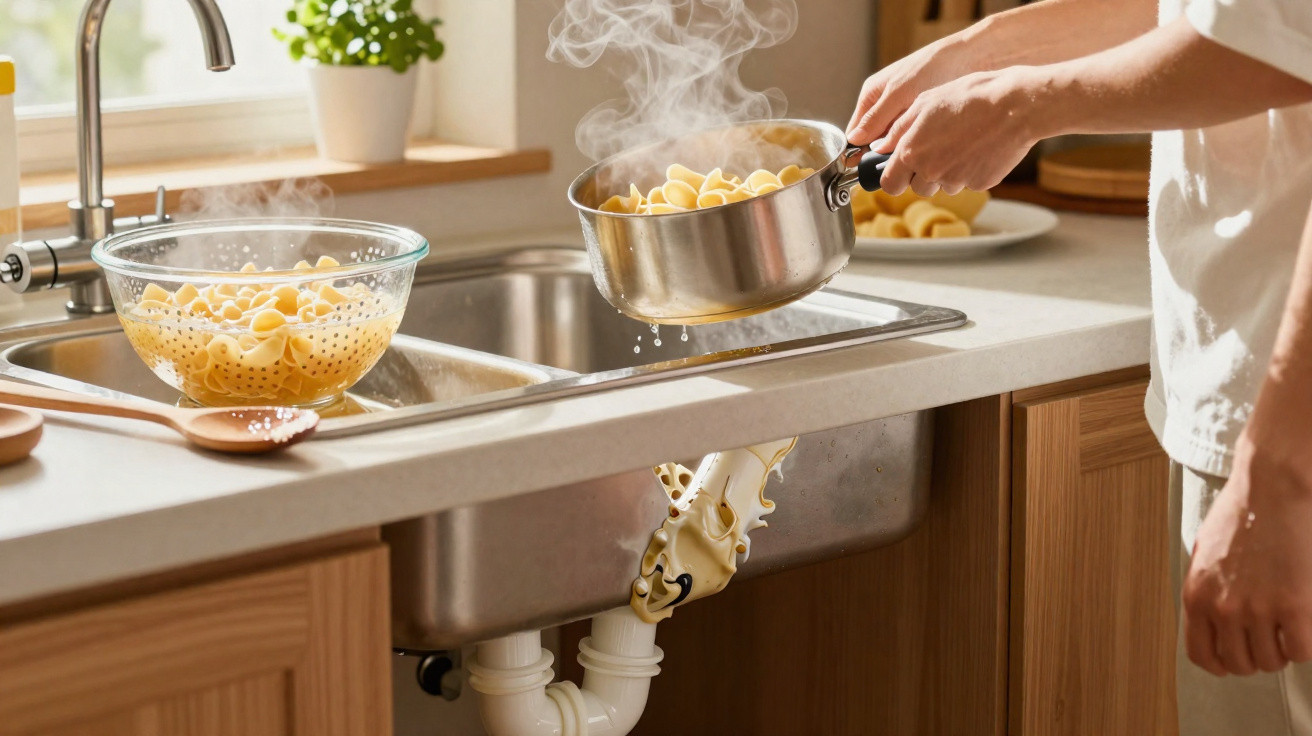
In countless kitchens, the same routine plays out: the pan comes off the hob, the pasta goes into a colander, and the boiling water is poured straight down the drain. Job done. It is quick, convenient and apparently harmless. What is not visible, however, is what happens beneath the worktop. Down there, heat, starch and fat quietly work against seals, pipes and, ultimately, your household budget.
How boiling pasta water weakens plastic pipes
Most homes now have PVC waste pipes beneath the sink. Although this material is light, inexpensive and rustproof, it is sensitive to high temperatures. PVC can start to soften at around 60 to 70 degrees. When pasta is drained, its water is often still close to 100 degrees.
Regularly tipping this water down the drain in one powerful rush puts the pipes through a severe test. The particularly vulnerable areas are:
- Bends and elbows – heat remains trapped here for longer.
- Joints – connecting sections are more prone to distortion.
- The trap beneath the sink – this is where hot and cold water meet directly.
Repeated temperature changes – cold water already in the pipe followed suddenly by a surge of boiling water – continually place small stresses on the material. Over time, pipes can warp slightly, seals may become brittle and tiny leaks can develop.
Even a few drops escaping unnoticed over several months can be enough to make wood swell, encourage mould and permanently damage kitchen units.
The issue often only becomes apparent once the front of the base unit has swollen, a musty smell emerges or dark marks appear on the wall. At that stage, a simple plunger is unlikely to solve it. Professional drain cleaning can easily cost £80 to £200, while water damage requiring replacement furniture or flooring can quickly push the bill into the mid-hundreds.
Starch and fat: the invisible concrete mixture in the drain
Temperature is only half of the risk. The other part lies in what the pasta water contains. During cooking, starch is released from pasta, rice and potatoes. It gives the water its cloudy, slightly milky appearance and makes it mildly sticky.
As this starchy water travels through the pipework, it leaves a thin, slippery coating on the inner walls. That coating acts as glue for anything that follows, including:
- bread remnants and crumbs washed from plates;
- small pieces of pasta or grains of rice;
- sauce leftovers containing fat;
- coffee grounds and tea residue.
When this combines with fat from frying pans and roasting tins, the coating becomes progressively thicker. Initially, it narrows the pipe only slightly. Eventually, though, it can turn into a hard blockage that allows barely any water through.
Many households assume they are cleaning their pipes by regularly pouring boiling water down the drain, sometimes deliberately after a greasy meal. At first, the idea appears logical: the fat melts and runs away. In practice, this is what happens:
- The fat dissolves in the hot water and travels several metres further along the pipe.
- As it moves, the temperature gradually falls.
- The fat solidifies again, this time at a lower point in the system.
- Starch acts as a binding agent, allowing further debris to stick.
This is how a mixture of starch and fat gradually grows into a blockage that plumbers often describe as “concrete in the pipe”.
The deeper inside the drainage system the blockage forms, the more complicated and costly it is to remove. In blocks of flats, such a build-up can even affect entire pipe runs – and, in the worst case, several households may end up paying.
How to drain pasta without damaging the drain
The good news is that there is no need to completely change your pasta routine; it simply needs a small adjustment. The key step is straightforward: do not send a large volume of boiling water directly into the sink.
Gentler ways to drain pasta
- Catch the water first: Place a heat-resistant vessel, such as a large pan or bowl, in the sink and pour the pasta and water into it. Put the colander on top of, or across, the vessel.
- Allow it to cool: Leave the collected water for a few minutes until it has cooled noticeably. Around 50 degrees is a useful guide: it is still warm, but no longer fiercely hot.
- Dispose of it in stages: Pour the water away gradually while running cold water. This prevents extreme temperature shocks inside the pipe.
Anyone who regularly cooks for several people may find it useful to buy a large metal colander and pan to use as a “collection station”. This protects the sink, while the hot water is kept somewhere it cannot cause damage.
Useful ways to reuse pasta water
Pasta water does not necessarily have to end up in the drain. It can still be put to practical use:
- To thicken sauces: Its starch content lightly thickens tomato or cream sauces.
- As cooking water for vegetables: Once brought briefly back to the boil, it can be used again provided it has not been heavily salted.
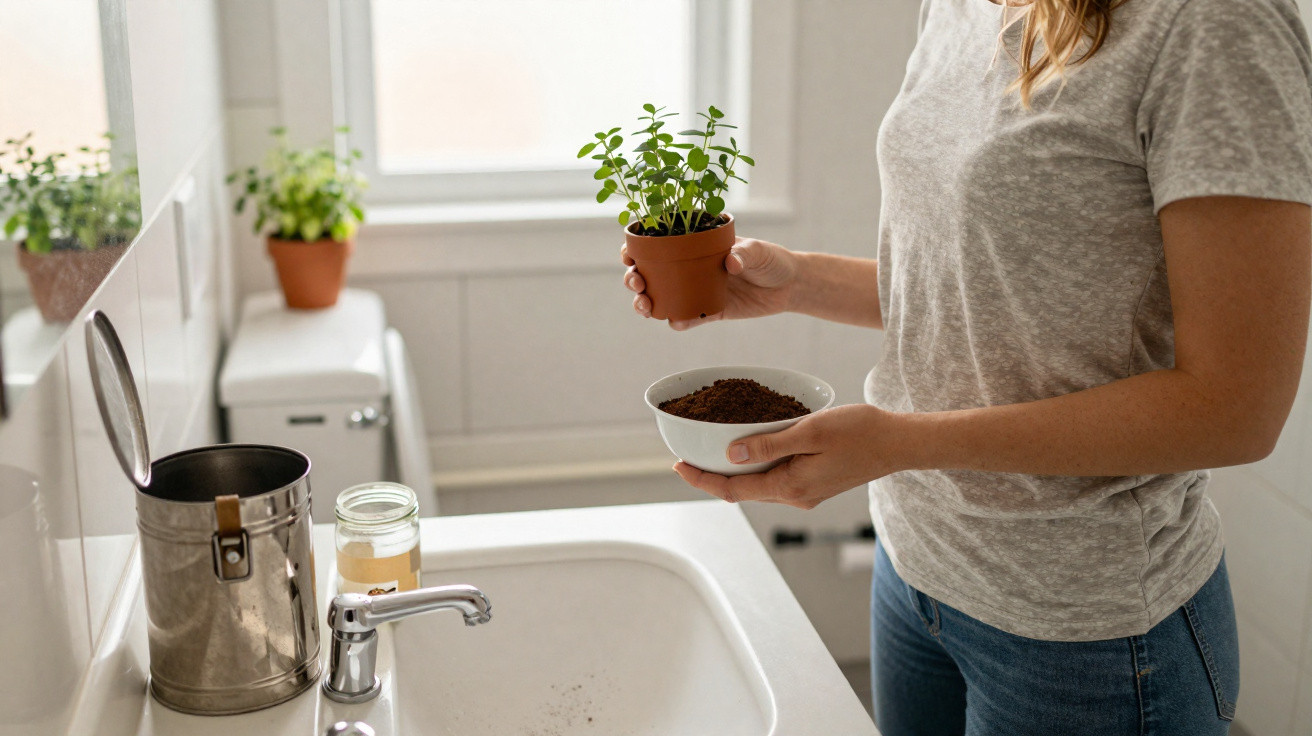
- For plants (only if unsalted): Once fully cooled and free from salt, it can be used to water balcony plants.
If you frequently cook with salt, take care when reusing pasta water for plants. Excess salt harms roots. In that situation, the drain is the better option – but pour it away slowly and mix it with cold water.
Gentle maintenance for kitchen pipes
Pasta water is not the only factor affecting the lifespan of a drain. Everyday care matters too. Harsh supermarket chemicals may promise rapid results, but they can also attack seals and pipes, particularly when used often.
Gentle measures that are easy to incorporate into daily life include:
- Rinse regularly with hot, rather than boiling, water: Once a week, let a pan of very hot water – not water at a rolling boil – flow slowly through the drain.
- Use coarse salt: Put a handful of coarse salt down the drain, followed by a little warm water; this can mechanically loosen light fat deposits.
- Use household staples: A mixture of bicarbonate of soda or baking powder and vinegar works through minor blockages with a fizzing action.
- Collect fat residues separately: Store oil and cooking fat in a jar or tin, then dispose of it with general waste rather than pouring it into the sink.
Every litre of fat that does not enter the pipe could save you a call to the plumber later.
What really causes pipe damage
At first glance, pasta water seems harmless. In reality, it creates a combination of material stress, chemical exposure and ordinary habits. PVC is vulnerable to sudden spikes in temperature, seals suffer from constant temperature changes, and starch combined with fat gradually but reliably creates obstructions in the pipe.
Damage that develops slowly is especially deceptive: first, there may be an unnoticed drip behind the plinth; then the chipboard in the base unit becomes soft; eventually, a musty smell appears. By then, the damage is usually far greater than the visible area suggests.
Practical everyday examples
Typical household situations repeatedly reported by plumbing firms include:
- A family that cooks pasta every day and believes a “cleaning flush” of boiling water after washing up is doing some good – after one or two years, the trap is completely blocked.
- A single-person kitchen with a cramped base unit, where a small leak goes unnoticed for years because cleaning is infrequent – the outcome is a completely swollen floor and mould in the wall.
- A shared house where cooking fat regularly ends up in the sink – the actual blockage is later found not directly beneath the sink, but several metres further along in the soil pipe.
These cases show that it is not one huge mistake that ruins everything, but many small routines that accumulate. That is exactly why it is worth changing your approach slightly when draining food and handling fats.
Catching pasta water, allowing it to cool, disposing of it in portions and avoiding large amounts of fat in the sink protects more than just pipes and seals. It also helps avoid the trouble of tradespeople, drying equipment and walls being opened up. A few extra minutes of care in the kitchen can ultimately pay for themselves.
Comments
No comments yet. Be the first to comment!
Leave a Comment