
The first winter after buying a light-coloured fabric sofa, I learned a painful lesson. It was a freezing Sunday, and a subtle yet unmistakable trace of the previous night’s spag bol was drifting from the cushions. Following internet advice, I fetched the steam cleaner, filled the tank and waited for it to start hissing… only to see the upholstery turn dark in uneven patches that refused to dry properly. Although the heating was on, the room seemed freezing, the windows had misted up, and I felt increasingly dismayed as the fabric remained damp for hours. You know that slow panic when you suspect your own over-enthusiasm may have ruined something costly? Exactly that.
If you have ever looked at a cold sofa and thought, “I really shouldn’t be steaming this right now, but it’s disgusting,” you are far from alone. Chilly upholstery, deep-cleaning and water are not always a successful combination. Fortunately, there is a safer method for deep-cleaning a sofa when it is too cold to steam – although it looks rather different from the TikTok clips.
The winter sofa shame no one talks about
A particular sort of quiet embarrassment can take up residence in the living room. You have someone round, they take a seat, and suddenly all you can see is the faint ring left by a mug that sweated through its coaster, or the slightly deeper-coloured area where the dog always sleeps. During summer, you would simply open the windows, bring out the steam cleaner and feel very productive while everything dries in a few airy hours. In winter, however, the fabric can feel almost frozen under your hand, and flooding it with hot moisture seems… dangerous.
Most of us have sat on our own sofa, caught an indistinct smell and wondered where it came from – not dreadful, exactly, but thoroughly lived-in, like old perfume, crisps and yesterday’s socks. Search “deep clean sofa” online and you will find countless highly assured people practically boiling their upholstery. What they usually leave out is that steaming cold fabric in an unheated room can keep it wet for days, creating precisely the sour, musty odour that no candle can properly disguise.
Then there is the anxiety prompted by stories of water marks, running dye and cushions that dry as hard, crunchy slabs. When upholstery is already cold, its fibres contract, stains grip more firmly and water can behave unpredictably. Realistically, hardly anyone gives their sofa a genuinely thorough clean every week, so when the time finally comes, we often attack the task with excessive energy: everything or nothing. That is generally when the trouble starts.
Why cold fabric and steam don’t get along
In theory, steam seems like the answer. It is hot, removes grime and feels almost like hitting reset on a dirty sofa. Yet textiles can be temperamental, and cold fabric is essentially in a sulk. The fibres become tighter and less yielding, while the filling may be considerably colder than the surrounding room. Hit it with intense heat and a burst of moisture, and it may not recover neatly.
Drying is another issue. In winter, radiators usually warm the air immediately around them rather than the centre of the room where the sofa sits. Steam forces moisture deep into cushions, and when the air is cold and motionless, it stays there. This can leave big, ghostly “water shadows” that appear worse than the stain you began with and are notoriously difficult to blend out without soaking the upholstery all over again. It is a miserable cycle: adding more water to solve the water mark you created.
There is also an awkward truth about odour. Warm, damp air meeting cold filling and old dust can bring years of trapped smells to the surface. A cold sofa may smell more like wet dog after steaming than it did before, particularly if pet hair, split milk or forgotten snack crumbs are lurking inside. By then, it is no longer merely a dirty sofa – it is a regret.
The gentle deep-clean: starting dry, not wet
The safest winter sofa-cleaning methods can seem almost underwhelmingly mild. There are no theatrical plumes of steam or gratifying streams of brown water flowing from a machine. It is simply you, your hoover and some patience. Still, this is where the genuinely “deep” element of deep-cleaning begins: removing unseen debris before moisture is even considered.
The slow, thorough vacuum that no one films
The unexciting reality is that most sofas are not covered in wet grime; they are full of dry debris, including crumbs, pet hair, skin flakes, dust and grit that gradually damages the fibres. A strong vacuum fitted with an upholstery attachment can remove much more than you might expect, especially if you allow yourself to be a little obsessive. Remove every loose cushion possible, vacuum both sides, then tackle the frame and every gap where coins and popcorn go to retire.
Use the crevice nozzle along the seams, beneath the back cushions and directly beside the arms. Forgotten Lego pieces will rattle and old batteries will ping as they vanish into the hose, like tiny confessions. Once that grit has gone, the upholstery immediately looks smoother and feels lighter, even without a single drop of water. You are doing more than cleaning; you are allowing the fabric to breathe again.
The baking soda trick that actually works
After vacuuming, scatter a light, even layer of baking soda across the sofa, paying particular attention to the seats used most often and any corners that smell slightly “lived-in”. Do not heap it on; this is not a snowy scene, but a delicate covering. Leave it in place. Make a cup of tea, look at your phone and forget about it for at least an hour – longer if you can cope without using the sofa.
Baking soda is not miraculous, but it can gently take in odours and some surface oils while drawing out a little mustiness. Its faint powdery scent will invariably be preferable to the stale smell that was there before. Vacuum it up extremely thoroughly and you will often find that the fabric appears a little brighter and smells more neutral – not fragranced, simply less “oh”. It is a modest reset that works whatever the room temperature.
Spot-cleaning: tiny circles, not tidal waves
Once dry methods have made the sofa as fresh and neutral as possible, you can turn your attention to real stains. This is the stage that worries people, because it is where it feels easiest to cause damage. The urge is to drench, scrub and hope. That is exactly the approach that produces tide marks and uneven colour.
The cold-weather stain formula
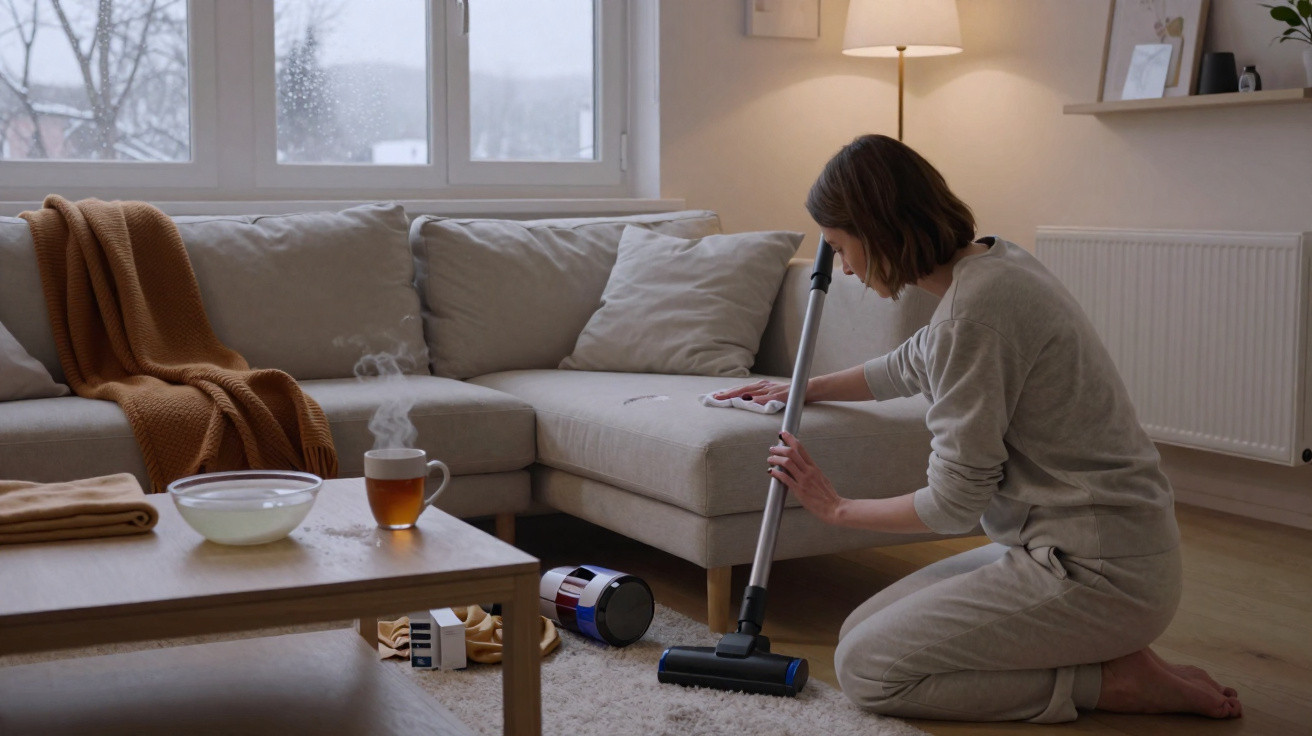
For a winter-safe deep clean, follow one principle: work in small areas, stay fairly dry and take your time. Fill a bowl with just-lukewarm water – neither hot nor ice-cold – and add a tiny amount of mild, clear detergent or a suitable upholstery cleaner. Dip a clean white cloth into the solution, wring it out until it is only barely damp, then test it on an unobtrusive section of the sofa. If no dye transfers to the cloth, you can continue.
When treating the mark, blot rather than rub. Gently press the damp cloth into the stain, lift it away and repeat, moving from the outer edge towards the middle so that you do not spread it further. Treat it as though you are persuading the stain to leave, rather than fighting it. After lifting as much as possible, take a second clean, dry cloth and blot once more to remove surplus moisture before it travels deeper into the filling.
Where the care label says “S” or “dry clean only”, avoid detergent and water altogether. Instead, use a specialist solvent-based upholstery product, again applying it lightly and using plenty of clean cloths. It is slower than blasting the whole sofa with a steamer in minutes, but the chance of misshaping the material or leaving it saturated in a cold room is far smaller. This is micro-surgery, not open-heart.
Heat without steam: the almost-cheat that saves winter sofas
If the upholstery is too cold for a full wet clean, controlled, mild warmth is more useful than hot vapour. That does not mean holding a hairdryer two centimetres from the fabric, or aiming a fan heater at one cushion until it becomes crisp. Instead, gently raise the room temperature and increase airflow just enough to help damp patches dry and odours disperse without startling the fibres.
If possible, pull the sofa a little way from the wall to let air move around it. Increase the heating by one setting for a couple of hours, then open a window slightly on the other side of the room. That narrow flow of cooler air gives moisture somewhere to go, rather than allowing it to linger in the upholstery. Opening a window while paying for heating may feel wasteful, but it is worth the trade-off if it helps the sofa dry quickly enough to prevent sour smells.
For areas made damp by spot-cleaning, a hairdryer on its lowest heat and airflow settings can speed up drying if it is held well back and kept moving. The aim is to warm the fabric, not cook it. You want the upholstery to feel only faintly warm against the back of your hand, then leave it undisturbed to finish air-drying. It is a quiet, unremarkable step, but it is often what stops that feared musty smell from settling in.
When to say no to DIY and call in backup
Sometimes the safest way to deep-clean a cold sofa is to accept that it is not a job you should handle yourself. A large, old or unidentified stain that has penetrated the cushions, or a spill of red wine or curry on pale upholstery, calls for professional help, particularly in the middle of winter. Cleaners using extraction equipment can regulate heat and suction far more accurately, and can often dry the sofa much faster than home methods allow.
A smell that returns the day after cleaning is another warning sign. It usually indicates that the source is deeper in the filling rather than on the surface, and adding extra water or cleaning product will not resolve it. In this situation, a professional may be able to flush and extract the upholstery correctly, or at least advise whether the sofa has discreetly reached the end of its noble life. Nobody wants that verdict, but it beats living with a permanent cycle of damp-dog smell.
There is an emotional benefit to outsourcing the work, too: it can remove a burden. You can stop fixating on every mark, blaming the children, dog or your own clumsiness, and pass the task to someone who deals with sofas every day and has no judgement about yours. That bit of distance can be unexpectedly reassuring. You are not failing to clean; you are simply acknowledging that winter, cold upholstery and domestic tools have limits.
Keeping it “clean enough” until steaming season
After completing a safe winter deep clean – vacuuming, baking soda and gentle stain treatment – perfection is not the goal. You only need a sofa that is pleasant enough to sit on in your dressing gown with a hot drink, without recoiling. Small routines matter more than a dramatic annual overhaul. A two-minute weekly vacuum of the main seating area, removing pet hair before it works its way in, and turning cushions so they wear evenly are all unglamorous habits that make a real difference.
A few easy shortcuts can also protect your sanity: put a washable throw over the most-used seat, place a blanket beneath the dog, and introduce a quiet rule that drinks belong on the coffee table rather than the cushions. This is not about turning your home into a showroom; it is about avoiding the role of forensic cleaner whenever somebody spills tea. Real homes are messy, and real sofas carry a soft record of the lives lived on them.
Eventually, when spring finally remembers the UK exists, you may open the windows fully and bring out the steam cleaner again with more confidence. Until then, the safest approach to deep-cleaning a sofa during cold months is to be patient, use mild products and warm everything gradually instead of shocking it. Your living room doesn’t need to smell like a hotel lobby to feel fresh; it just needs to smell like a place you actually want to be.


Comments
No comments yet. Be the first to comment!
Leave a Comment