
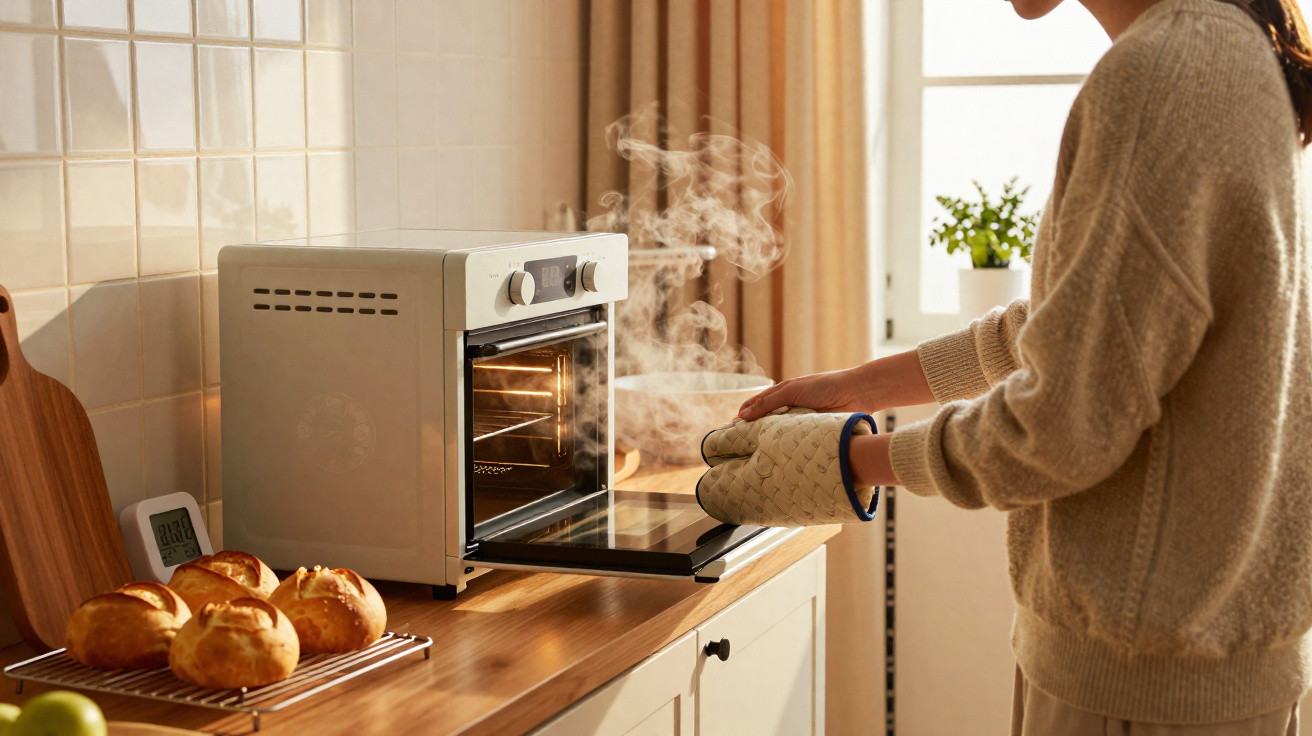
Many households are seeking straightforward, low-tech ways to keep warm without turning the thermostat up. One unexpectedly useful approach centres on an everyday kitchen appliance used several times each week, though seldom considered a source of warmth.
The old-fashioned kitchen trick
Before smart thermostats and triple glazing became commonplace, households needed to make the most of every bit of energy they had paid for. Preparing food did more than feed the family; it could also contribute warmth to the house.
The best-known example is in the heart of the kitchen: the oven. Once a chicken had been roasted or a tray of potatoes baked, previous generations would leave the oven door slightly ajar after switching it off. Rather than remaining inside the metal appliance, the stored warmth could then enter the room.
Using your oven’s residual heat, with care, can gently warm the kitchen and nearby spaces while your heating stays off.
In a small flat or a well-insulated property, this warmth after dinner can reduce the chill for an hour or two. When handled responsibly, it is simply a no-cost benefit of cooking, rather than an alternative to adequate heating.
How residual oven heat works
An oven holds a considerable amount of energy. Its metal casing, shelves and internal air remain warm well after the appliance has been turned off, and that heat must eventually disperse. When the door stays shut, it gradually escapes through the oven cavity and nearby surfaces. Leaving the door ajar allows more of it to enter the room directly.
This basic principle is why a kitchen can feel pleasantly warm after a Sunday roast. In effect, the energy paid for has provided both cooking and a brief period of room heating.
What this method can actually achieve
The residual-heat approach will not make the kitchen feel like a sauna. At most, it may raise the local temperature by a couple of degrees, depending on:
- How long the oven was used and at what temperature.
- The size and arrangement of the kitchen and adjoining rooms.
- How effectively the property retains heat.
- The outdoor temperature and wind conditions.
In a large, draughty home, the difference may be slight. In a compact, insulated flat, however, it may noticeably postpone the point at which you feel you need to put the heating on.
Think of residual oven heat as a short, local top-up that makes existing warmth linger, rather than a full heating system replacement.
Using residual oven heat safely
Both safety and sensible energy use are important. Home-energy and fire-prevention specialists broadly agree on a number of rules for treating an oven as an occasional source of additional warmth.
Step-by-step: using residual heat safely
- Turn the oven fully off first: Never leave its door open while it is still heating actively. Doing so wastes energy and raises the risk.
- Leave it for a few minutes: Allow the temperature to fall a little, so the rush of heat is less likely to burn hands or faces, particularly those of children and pets.
- Open the door just slightly: A narrow opening releases warm air without leaving the whole hot interior exposed to accidental contact.
- Remain close by: Treat an open oven door as you would a burning candle. Do not leave home or go to bed while it is open.
- Clear the surrounding space: Keep tea towels, cardboard packaging and plastic utensils away from the front and sides of the oven.
Gas ovens demand particular care. Burning gas creates fumes, including carbon monoxide. Current safety guidance is unambiguous: a gas oven must never be operated with the door open in order to heat a room. Using remaining warmth once the gas is completely off is one matter; treating a lit gas oven like a “fireplace” is quite another.
Why ovens should not be used as heaters
Energy professionals and safety bodies distinguish between making use of leftover warmth and wrongly relying on an oven as the main heat source. A number of risks are repeatedly highlighted.
| Risk | What can happen |
|---|---|
| Carbon monoxide (gas ovens) | Operating a gas oven to warm a room can allow hazardous, invisible fumes to build up. |
| Fire hazard | Hot surfaces and open doors may set fire to nearby paper or fabrics. |
| Burn injuries | Pets, children or adults could touch hot metal or lean into the opening. |
| Excessive energy use | Using an oven solely for warmth generally costs more than using a modern heater. |
This combination of health, safety and financial concerns is why authorities advise against treating an oven as anything beyond a small, short-lived boost after cooking that was necessary anyway.
Pair kitchen habits with better insulation
Warmth left over from oven use only has value if the home can retain it. Advice that promotes sensible kitchen habits also tends to return to the importance of insulation and controlling draughts.
Everyday steps to reduce heat loss
- Maintain steady room temperatures: Many energy organisations recommend around 19°C in living areas. Consistent settings prevent large spikes in energy use.
- Air rooms quickly: Open windows fully for five to ten minutes instead of leaving them tilted all day. Drier air is easier to warm.
- Block gaps: Basic draught excluders beneath doors and foam strips around window frames prevent warm air from escaping.
- Use textiles as insulation: Heavy curtains and carefully positioned rugs retain warmth overnight and reduce cold from uncovered floors.
A warm kitchen does little good if heat escapes through leaky windows and poorly sealed doors within minutes.
These measures are much cheaper than fitting a new boiler or heat pump, but can still provide clear improvements in comfort, particularly in older properties.
How much can kitchen habits save?
The amount saved financially will vary according to energy prices, your tariff and the way you use appliances now. Even so, certain trends are clear.
If you cook with the oven several evenings each week already, making use of its residual heat adds no extra cost. The energy has already been paid for; you are merely letting the warmth reach the area where you notice it. Across a whole winter, this may reduce heating use by a few hours each week.
In practical terms, you might switch the heating on at 7pm rather than 6pm on several nights, or lower the thermostat by one degree during early evenings because the kitchen remains comfortable. Energy modelling frequently indicates that reducing the thermostat by only 1°C can lower seasonal heating consumption by roughly 5 to 7 percent in many homes.
The situation is different if the oven is turned on purely “to heat the house”. In that case, the running cost will usually be higher than that of dedicated heaters, particularly when electricity is used at peak prices. Ovens are built to achieve high cooking temperatures, rather than to provide efficient, consistent space heating.
Other low-tech ways to support your heating
A range of simple actions work towards the same aim as the oven method: helping every unit of heat achieve more.
- Bleed radiators: Releasing trapped air allows hot water to circulate properly, meaning the whole radiator warms rather than only its upper section.
- Move large furniture: Sofas positioned against radiators hold warmth behind them. A gap allows hot air to rise and circulate.
- Reflect warmth from outside walls: Slim reflective panels placed behind radiators on external walls direct warmth back into the room.
- Shut internal doors: Keeping heat within the rooms you use stops it from drifting into empty rooms and hallways.
No single measure is especially dramatic by itself. Combined, they help heat stay in the home for longer and reduce cold areas. As a result, any extra warmth from the kitchen becomes easier to notice.
When it is best to avoid the oven trick
In some circumstances, using oven warmth-even residual warmth-does not make sense. Households with very young children, inquisitive pets or people with limited mobility may judge the chance of contact with an open, hot door to be too great.
Anyone with an old gas oven and no functioning carbon monoxide alarm should instead prioritise insulation, draught-proofing and efficient heating appliances. Those with respiratory conditions may also choose to minimise additional heat sources and fumes, focusing instead on gentle, controllable warmth from radiators or electric panels.
Energy advisers make a further point: feeling comfortable involves more than air temperature. Lighting, humidity, layers of clothing and how long you spend sitting still can all alter how warm you feel. A wool jumper and thick socks may sometimes provide the same difference as two additional degrees on the thermostat, for a fraction of the price.
Together, the long-standing kitchen practice of leaving the oven door ajar after cooking, sensible safety precautions and basic efficiency measures give households more options during cold spells. Applied with care, the ordinary appliance in the kitchen can form one small element of a wider plan for keeping bills manageable and rooms comfortable throughout winter.

Comments
No comments yet. Be the first to comment!
Leave a Comment