
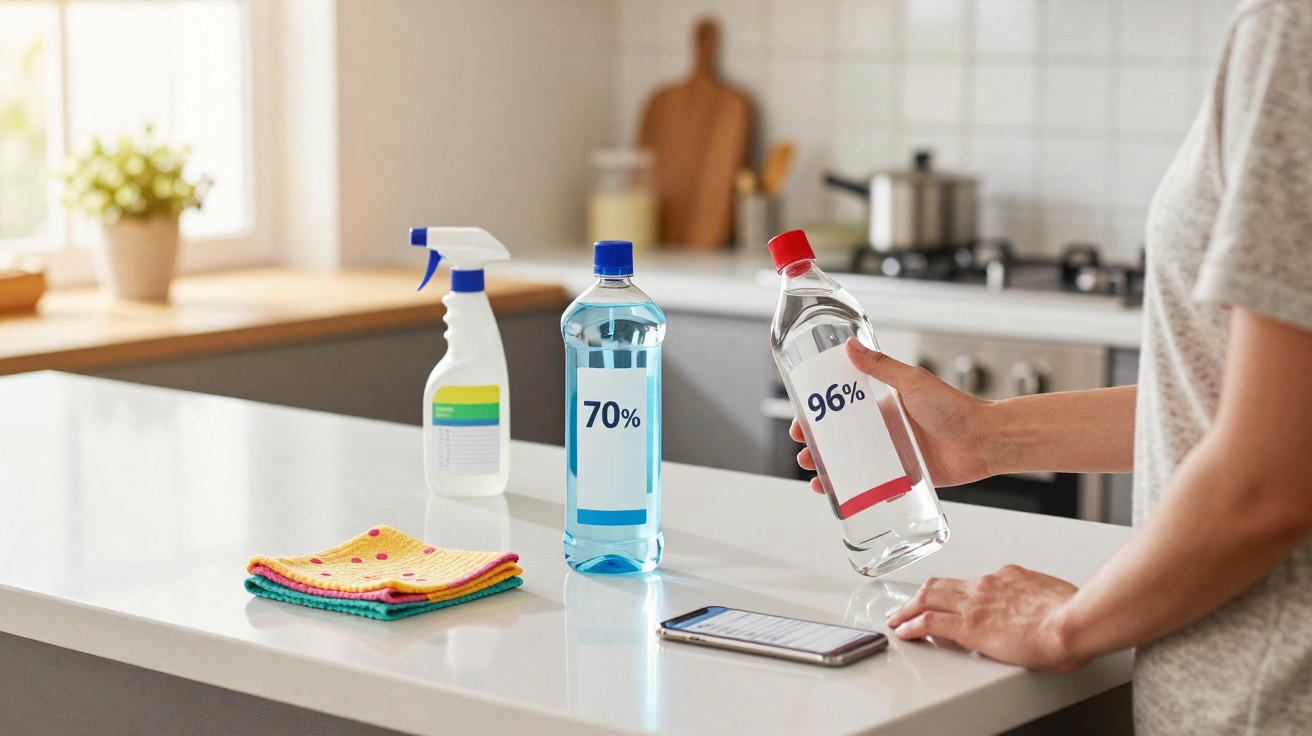
Using alcohol for household cleaning still raises plenty of questions, particularly regarding 70% alcohol and 96% alcohol (or 92–96%). Their compositions and concentrations differ, directly affecting how they work, which surfaces they suit and the necessary safety precautions; in some cases, their use is not advisable at all.
What are the practical differences between 70% alcohol and 96% alcohol?
So-called 70% alcohol is a solution containing roughly 70% ethanol and 30% water. This balance helps it penetrate microorganism cells and disrupt proteins and membranes, which is why it is widely used as an antiseptic and disinfectant on hard surfaces.
96% alcohol (or 92–96%), on the other hand, contains considerably less water, has a higher concentration, evaporates more quickly and is more flammable. Its shorter contact time with germs can reduce its disinfecting effectiveness, although it can be useful as a solvent for targeted cleaning of metal parts and certain technical applications.
How should you choose 70% alcohol or 96% alcohol for different cleaning tasks?
For everyday household use, 70% alcohol is the more versatile choice, particularly for disinfecting high-touch points such as door handles, light switches and worktops. It can also be used on some electronic equipment, provided it is applied with a lightly dampened cloth and never sprayed or poured directly onto the device.
96% alcohol is more commonly used to remove particular residues, clean small areas of glass or lightly degrease metal, always in a well-ventilated space and away from flames. The comparison below outlines the most common uses:
- 70% alcohol: disinfecting hard surfaces, frequently handled objects and food-preparation areas (after cleaning with detergent);
- 96% alcohol: spot-cleaning metal, removing fresh paint or glue from small areas, and workshop use when guided appropriately;
- General precautions: keep it away from heat, do not use it in unventilated rooms, and store it somewhere cool and out of the reach of children and animals.
Which surfaces are suitable or unsuitable for each type of alcohol?
On ceramic floors, properly sealed granite or marble worktops, and stainless steel, 70% alcohol can be used as an additional cleaning step after dirt has been removed with water and mild detergent. Moderate use on steel furniture, metal handles and handrails is also common in day-to-day cleaning.
Plastics, acrylics, painted finishes, and varnished or lacquered wood may become stained or dull with frequent use, especially when a more concentrated alcohol is used. Television screens and computer monitors generally require dedicated products or, where permitted, low-concentration alcohol applied with a soft cloth.
Common mistakes and dangerous mixtures when using alcohol for cleaning
One common mistake is to treat alcohol as a replacement for every cleaning product, even though it does not effectively remove heavy dirt, built-up grease or ingrained residue. Another frequent issue is applying it directly to electronics, allowing liquid to run inside and damage components.
It is also risky to mix alcohol with chlorine bleach, concentrated disinfectants, ammonia or other flammable solvents, as this can produce irritating vapours and increase the fire risk. Using one product at a time, following the label instructions, testing it on an inconspicuous area and ensuring good ventilation are straightforward measures that make 70% alcohol and 96% alcohol safer and more effective to use.
Comments
No comments yet. Be the first to comment!
Leave a Comment