
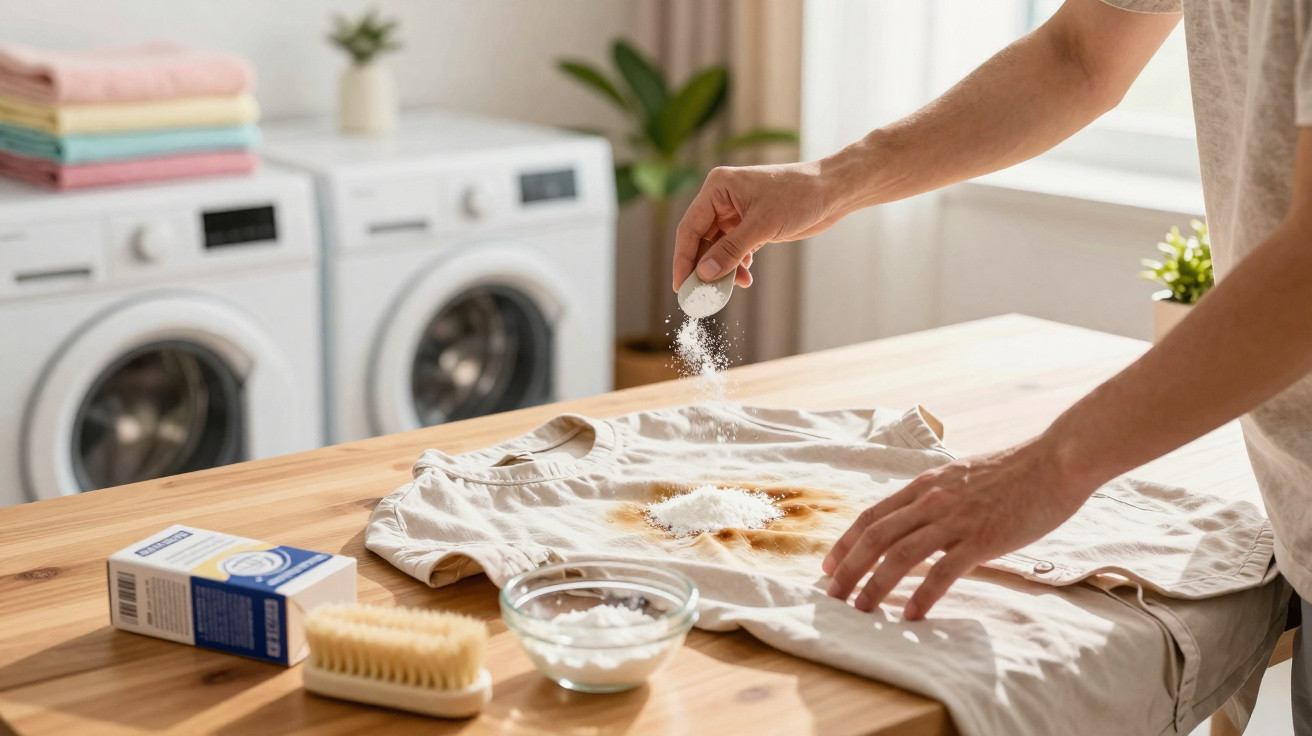
Grease marks on clothing are very common after an enjoyable meal, particularly when they land on favourite wardrobe items. Although many people immediately turn to specialist stain removers or dry cleaners, straightforward and affordable methods can help tackle the issue at home, using kitchen staples such as cornflour, bicarbonate of soda and mild washing-up liquid.
How does cornflour work on a grease stain on clothing?
Once oil touches fabric, it spreads through the threads and clings to the fibres, which makes it harder to remove. Cornflour acts as an absorbent: its microscopic granules draw in some of the grease, reducing the amount that remains trapped in the garment.
This approach works best while the oil is still wet, so acting quickly matters. Covering the affected area with cornflour soon after the spill creates a powder layer that directly contacts the grease and helps stop it from soaking further into the material.
Watch a video from the Manual of the World YouTube channel about small preventive repairs and simple “Do It Yourself” techniques for dealing with persistent problems in the structure of the home:
https://www.youtube.com/watch?v=bFw0vN-G3oI
How to remove a grease stain on clothing with cornflour: step by step
When using cornflour to treat oil marks on fabric, handle the garment gently and take its material into account. This helps prevent the grease from spreading further or the item from being damaged, especially if it is pale or very delicate.
- Blot away excess oil: if grease has collected on the surface, gently press kitchen roll or a clean cloth over the area without rubbing.
- Cover it with cornflour: apply a thick layer of cornflour over the grease stain on clothing, ensuring the whole affected area is covered.
- Allow it to work: leave the powder in place for around 10 to 20 minutes so it can absorb oil from the outermost fibres.
- Remove the powder: carefully brush it away with a soft-bristled brush, or shake the garment to dislodge the grease-soaked powder.
- Use mild washing-up liquid: place the stained section on a light-coloured cloth with the stain facing downwards, then apply small amounts of mild washing-up liquid diluted with water to the inside of the fabric.
- Rinse with cold water: rinse the area under cold running water, removing both the washing-up liquid and remaining grease residue.
- Dry it initially: lightly press a dry cloth against the area to absorb excess moisture without rubbing, then check whether the stain has faded.
- Wash as usual: after this pre-treatment, put the item in the washing machine using cold water and follow the care-label instructions.
When does a grease stain on clothing need extra care?
Not every oily fabric stain responds well to home treatments, particularly on highly delicate items. Clothing labelled “dry clean only” requires additional caution and, in many cases, is best taken to a professional dry cleaner.
- Silk, fine wool and embroidered garments may be damaged by excessive friction.
- Items that have already been washed and dried at high temperatures often have grease more firmly embedded in their fibres.
- Deep or very dark colours can fade if rubbed with unsuitable products.
Which household products can help besides cornflour?
Cornflour is only one of several useful household options for removing grease, and common kitchen items may enhance the result. The key is to clean quickly while respecting the fabric’s properties, testing on an inconspicuous area first if there is any uncertainty.
- Bicarbonate of soda: it can work as a mild abrasive and help absorb oil, usually when made into a paste with a little water.
- White school chalk: suitable for small, fresh marks, it is rubbed over the oily area to absorb some of the grease.
- Washing-up liquid: formulated to break down grease molecules, it is often applied in a small amount directly to the affected spot on more hard-wearing fabrics.
In general, acting promptly, avoiding hot water at first and not using an iron or tumble dryer before the stain has been completely removed greatly improves the likelihood of saving the garment. This combination of simple resources is often enough to rescue clothes that initially seem ruined by grease.

Comments
No comments yet. Be the first to comment!
Leave a Comment