
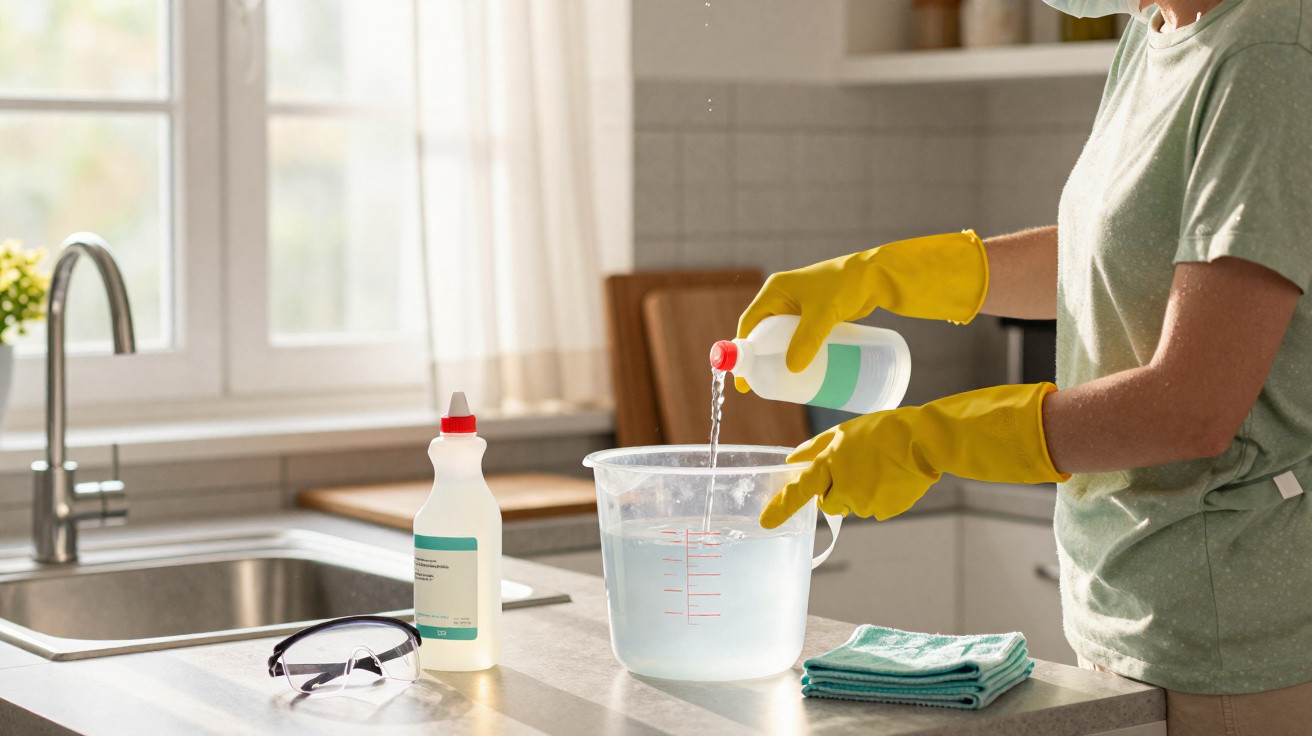
Keeping the home clean and fresh-smelling requires particular care to prevent serious household accidents involving strong chemicals. Many Brazilian housewives use bleach every day in every room without recognising the hidden dangers of this common practice.
How should bleach be used correctly when cleaning?
The Federal Chemistry Council advises taking full care when sanitising household surfaces with this substance. The most common mistake is applying the product completely undiluted straight on to dark floors and the tiles in the kitchen or bathroom.
Diluting it properly in clean water lowers its acidity level and releases the powerful hypochlorous acid that destroys harmful micro-organisms. Following the guidance issued by the authorities prevents skin irritation and ensures genuinely safe and effective disinfection at home.
Below are five essential recommendations for handling this disinfectant without taking unnecessary risks:
- Label: Check that the stated active chlorine concentration is between 2% and 2.5%.
- Ratio: Add exactly 25 millilitres of the purifying liquid for every litre of water.
- Storage: Keep the mixture in a tightly sealed container to retain its strength.
- Application: Use suitable bottles rather than leaving the solution exposed in open buckets.
- Hygiene: Do not put a dirty cloth straight back into the container holding the clean mixture.
What is the main danger of using the product undiluted?
When it is used without any dilution, the substance has a high alkalinity potential that prevents the formation of the chemical compound responsible for correct sanitisation. As a result, using more product in the belief that it will clean better only wastes money and creates unnecessary risks.
In addition, gases can evaporate in enclosed spaces, causing headaches and suffocation where there is insufficient air circulation. Protecting the family’s health calls for basic precautions and the correct, conscious and attentive handling of cleaning solutions.
Watch detailed explanations of the correct sanitisation procedures directly on TV Brasil’s YouTube channel:
How can the diluted solution be prepared perfectly?
The disinfecting liquid should not be prepared directly in open containers. Ongoing exposure to the surrounding air speeds up evaporation of its active components and drastically reduces the effectiveness of your weekly sanitisation routine.
Dangerous Chemical Mixtures Warning
Why should you never combine bleach with other products?
Mixing sodium hypochlorite with vinegar, ammonia or other industrial disinfectants causes dangerous chemical reactions and releases toxic gases into the home.
These reactions cancel out the products’ disinfecting ability and can seriously injure housewives’ airways during intensive cleaning.
Preventing cross-contamination of the mixed product ensures that viruses and bacteria are fully eliminated from household surfaces. For this reason, conscientious housewives use clean, closed utensils to keep the disinfecting properties long-lasting and protected.
Follow these recommended practices to maintain the stability of the diluted product while handling it:
- Measure the required millilitres using clean measuring cups.
- Store the prepared solution in dark, tightly sealed plastic bottles.
- Do not reuse containers that previously held other chemical compounds.
Which surfaces require the greatest care when cleaning?
Some areas of the home collect more heavy dirt and require a slightly more concentrated dose of the product. Bathrooms and outdoor floors need extra care to ensure the sterilisation of micro-organisms and protect the family’s safety.
However, electronic devices and delicate surfaces may be irreversibly damaged if they come into direct contact with sodium hypochlorite. Understanding the limits of use for each chemical component protects material belongings while helping to create a healthy and protected home environment.
The places below require specific attention to the correct mixing ratio:
- Bathroom floors and shoe soles require fifty millilitres per litre.
- Mobile phone screens and electronic devices must be kept completely free from the product.
- Dining tables and shared surfaces require only twenty-five millilitres.
How can you protect your health while cleaning?
Handling chlorinated substances requires the use of personal protective equipment to safeguard the body. Sturdy rubber gloves prevent dry skin and chemical burns caused by contact with the undiluted or diluted product.
Opening windows during intensive cleaning also provides the ventilation needed to disperse harmful vapours. Recognising that improperly mixing cleaning products brings real dangers helps keep your daily household routine entirely healthy and calm.
Comments
No comments yet. Be the first to comment!
Leave a Comment