
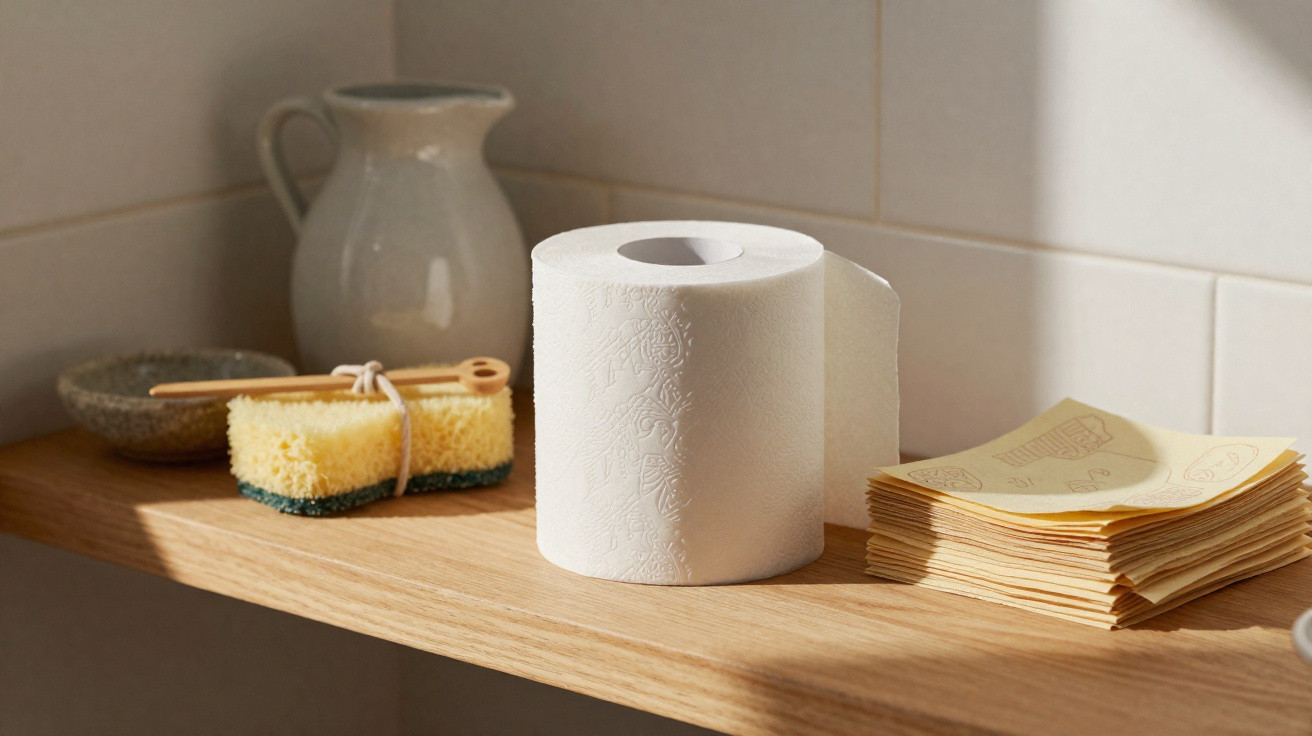
Toilet paper may feel essential today, yet it is a relatively recent development in the history of human hygiene. Long before modern rolls existed, ancient civilisations used water, leaves, cloths, sponges and other materials readily available in their surroundings.
Hygiene before modern rolls
Ancient civilisations shaped their cleaning routines around the climate, landscape and resources of their particular region. Where rivers and canals were available, water was central to everyday hygiene.
In drier or rural locations, natural materials such as leaves, straw, moss and plant fibres were used more regularly. The priority was to find something readily obtainable, sufficiently soft and easy either to dispose of or wash.
- Soft leaves: widely used in damp regions with plentiful vegetation.
- Straw and fibres: found where crops and fields supplied the raw materials.
- Running water: vital to cultures with rivers, public baths and canals.
- Sponges: especially well known from daily life in Ancient Roman latrines.
Ancient Rome had a shared solution
In Ancient Rome, one of the most unusual items was the tersorium, also known as the xylospongium. It was a sponge attached to the end of a wooden stick.
The tersorium was used in public latrines, which also served as social spaces. Once used, the sponge was rinsed in running water or in containers of vinegar. That may seem surprising today, but it was practical within that urban setting.
The curious role of water in ancient hygiene
Water was among the most important alternatives before toilet paper. Across many cultures in Asia, the Middle East and the Mediterranean, washing the body formed part of a routine associated with cleanliness, health and even purification.
Water was more than a cleaning method
A habit that lasted for centuries
In societies with rivers, aqueducts and public baths, personal hygiene relied far more on washing than on disposable materials.
This practice can still be seen in modern habits, including the use of showers, bidets and dedicated containers for intimate cleansing in different countries.
For that reason, the history of ancient hygiene should not simply be interpreted as a lack of technology. Many customs were connected to the infrastructure at hand, including canals, fountains, communal baths and basic sanitation systems.
China came close to modern toilet paper
China is among the regions most closely linked with the early use of paper for hygiene. During imperial periods, members of the elite used softer, sometimes scented sheets made specifically for this purpose.
Even so, widespread use of toilet paper took many centuries to develop. In many parts of the world, washable cloths, leaves, corn cobs, moss and water remained common options for a long time.
A simple custom that tells the history of sanitation
The practices of ancient civilisations demonstrate that hygiene has always depended on the relationship between environment, culture and technology. What now appears straightforward emerged from a long evolution in personal care and sanitation.
Ultimately, the story of toilet paper reveals something striking about everyday life: even the most ordinary objects embody centuries of adaptation, ingenuity and changing human customs.
This is the kind of curiosity that changes how you view a simple bathroom item. Share it with someone else who enjoys uncovering unexpected details from history.



Comments
No comments yet. Be the first to comment!
Leave a Comment