
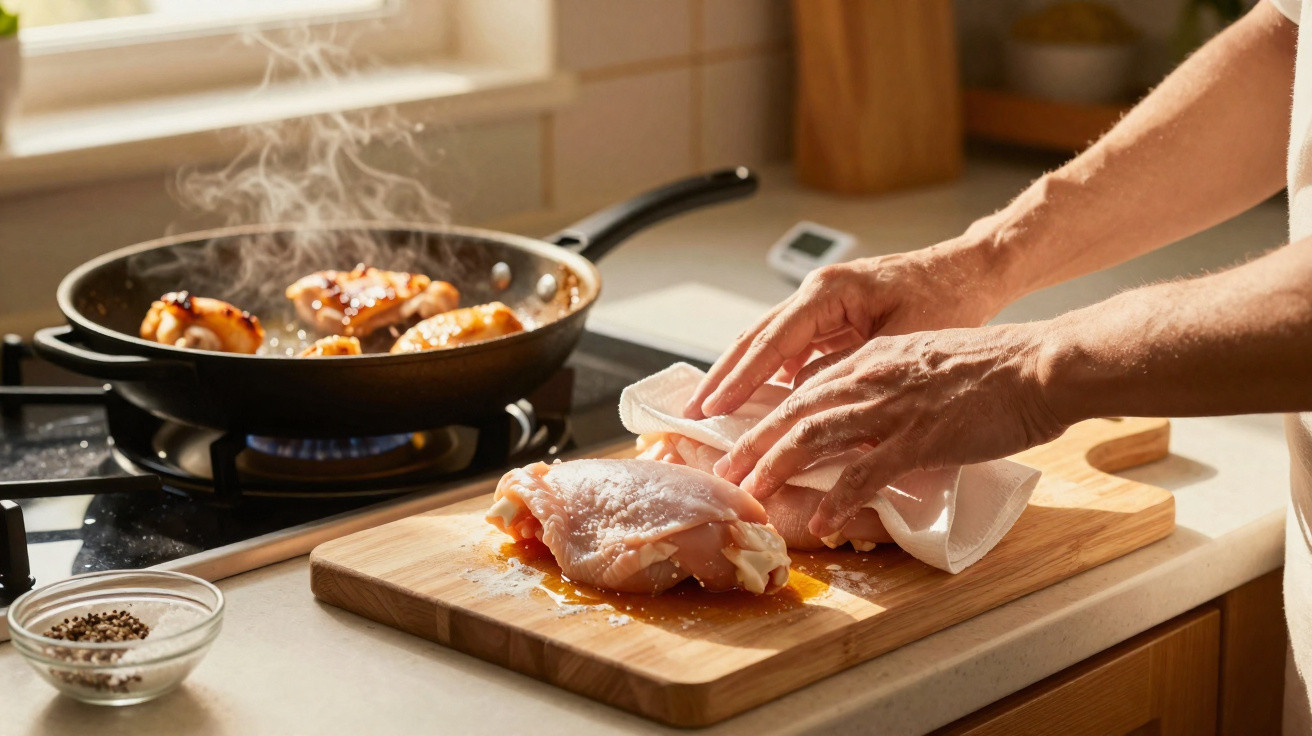
Drying chicken with paper towel before it goes into the frying pan is a straightforward step that transforms the meat’s texture. If its surface is wet when it meets hot oil, that moisture turns to steam, lowers the pan’s temperature and delays the Maillard reaction, which produces the browned colour and toasted flavour of food.
Why does wet chicken fail to brown properly?
Wet chicken must first shed its water before browning can begin. As the moisture evaporates, the surface cooks more through steam than direct contact with the hot frying pan, leaving the meat pale, rubbery and without a defined crust.
A crust develops only once the surface is hot enough to build colour and concentrate flavour. Drying chicken with paper towel before cooking therefore limits the water released into the pan and allows the oil to act directly on the meat.
How should you dry chicken correctly?
Use clean paper towel to remove excess moisture, pressing it against every side of the chicken. There is no need to rub vigorously; simply hold the paper against the meat until the surface looks dull rather than wet and shiny.
- Remove the chicken from its packaging and discard any collected liquid.
- Use a fresh paper towel for each side of the meat.
- Press carefully into folds, edges and thicker sections.
- Season after drying so that salt adheres better to the surface.
- If time allows, leave the chicken uncovered in the fridge for a few minutes.
What frying-pan temperature helps create a crust?
The frying pan should be hot before the chicken is added, though not so hot that the oil burns immediately. As a useful guide, heat the pan, add a drizzle of oil and put in the chicken once the oil is glossy and evenly coating the surface.
Once the chicken touches the frying pan, avoid moving it for the first few minutes. Leaving it in place encourages the golden layer to form; turning the meat too early tears the crust and makes it stick to the base.
Which mistakes create steam in the frying pan?
Even after drying chicken with paper towel, certain habits can fill the frying pan with steam. The most common is adding too many pieces at once, which lowers the temperature and causes the meat to release water faster than the pan can evaporate it.
- Do not overlap chicken pieces in the frying pan.
- Avoid covering the pan during the browning stage.
- Start over a medium-high heat, then reduce it if the chicken begins to burn.
- Choose pieces of similar thickness so they cook evenly.
- Cook until poultry reaches a safe internal temperature of 74°C.
How does this step improve flavour and texture?
Chicken dried with paper towel has an advantage before it even reaches the frying pan. With less surface water, it browns sooner, takes on dry seasonings more effectively and forms a firmer outer layer, while the centre cooks without needing to stay over the heat for too long.
This small measure also makes cooking more predictable. The pan spits less, browned residues on the base can be used for quick sauces, and the chicken reaches the plate with a better contrast between its toasted crust and succulent meat.
Comments
No comments yet. Be the first to comment!
Leave a Comment