
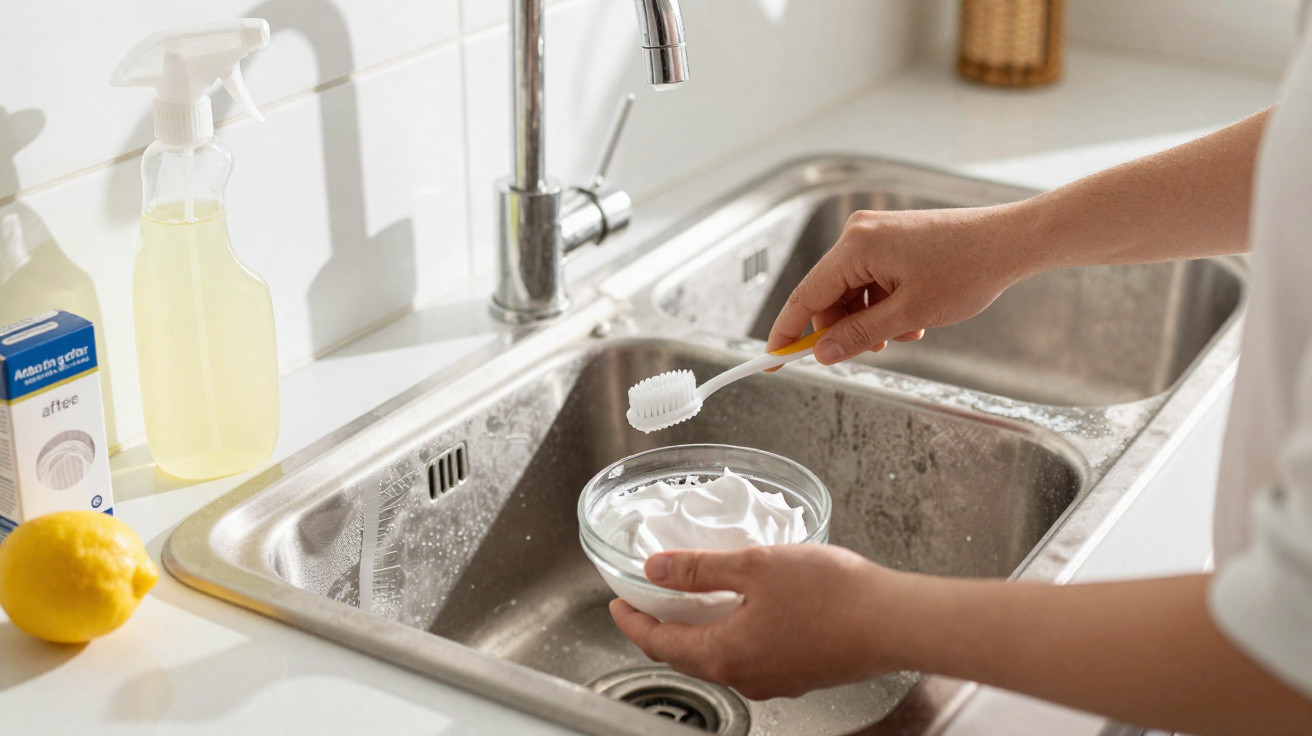
Grout around the kitchen sink can become dark very quickly, even in homes that are cleaned regularly. Grease, moisture and food debris combine to create stubborn marks that ordinary washing-up liquid alone may not remove. Knowing why this happens makes it easier to select the right method for restoring the grout’s light appearance without damaging the tiles.
Why does kitchen sink grout darken so quickly?
Around the sink, grease from pans and utensils regularly splashes onto the tiled surface. Often unnoticed, these splatters build up on the grout. Because grout is porous, it readily absorbs dirt, leaving dark, yellowish or greyish staining.
Poorly rinsed washing-up liquid, soap residue, dust that sticks to the greasy film and even mould in poorly ventilated areas can also contribute to the problem. Overly harsh cleaning products may erode the grout, making it even easier for dirt and moisture to penetrate.
Watch a video on the Oficina de Casa YouTube channel covering deep-cleaning techniques and ways to lighten heavily soiled grout in kitchens and bathrooms:
How can grease-blackened grout be cleaned without damaging the tiles?
To lift dark staining without harming the tiled finish, homemade mixtures with degreasing properties and mild, controlled abrasion can be useful. The aim is to pair a gentle alkaline ingredient, which breaks down grease, with something that helps loosen ingrained dirt from the kitchen sink grout.
Following an organised process makes deep cleaning easier and helps prevent damage, particularly to older or already worn grout. The steps below are straightforward to include in a regular cleaning routine:
- Prepare the surface: Clear away food debris, quickly clean the area with mild washing-up liquid, then dry it with a cloth.
- Apply the homemade mixture: Combine suitable ingredients to degrease the grout without attacking the tile glaze.
- Leave it to work: Allow the solution to soak into the grout’s pores for several minutes.
- Scrub carefully: Use a medium-bristled brush or an old toothbrush, concentrating on the grout lines.
- Rinse and dry: Remove all of the product and dry with a clean cloth so that dirt does not settle again.
Which homemade combination effectively lightens kitchen sink grout?
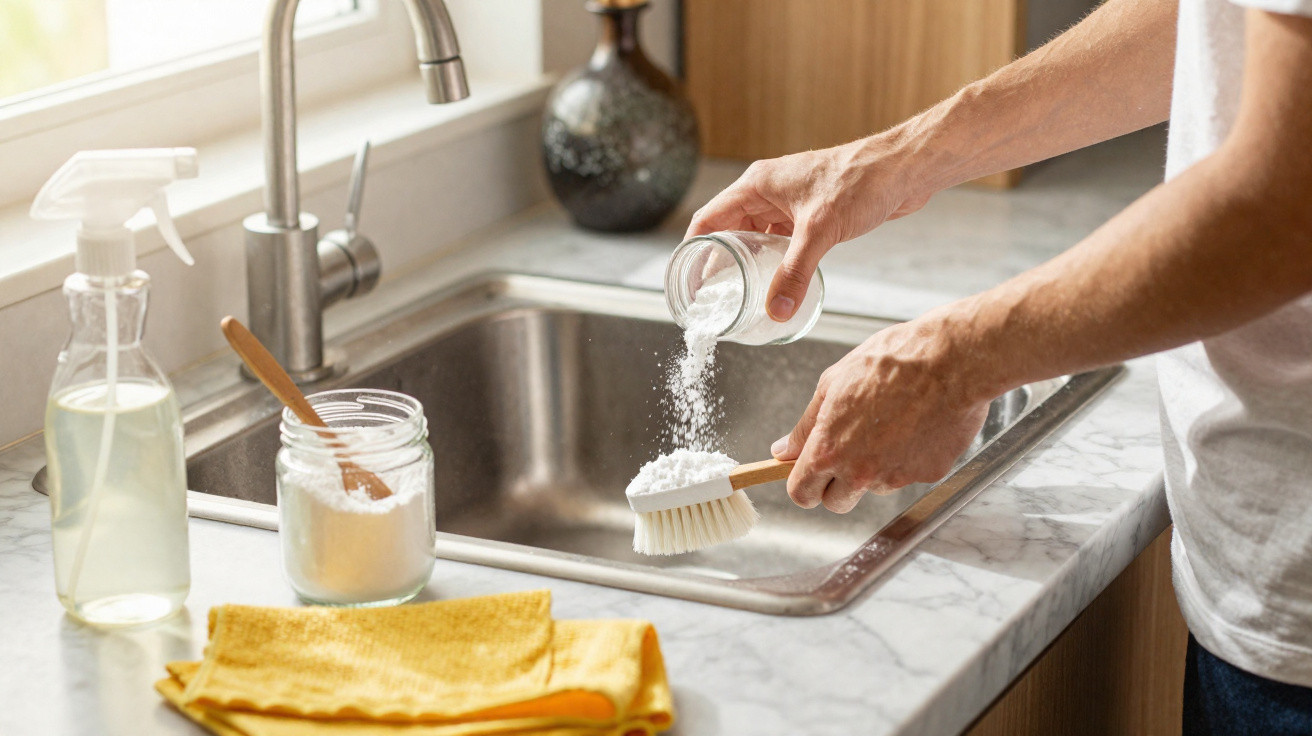
A commonly used household treatment for blackened kitchen sink grout is a paste made from bicarbonate of soda and mild washing-up liquid. Where grease is particularly stubborn, white vinegar can be added carefully as a booster, helping to loosen residue trapped in the pores.
Before treating the whole area, test the mixture on a small, less visible section, especially if the grout is coloured. These simple measures help make the treatment safer and more effective:
- Use 2 to 3 tablespoons of bicarbonate of soda, gradually adding washing-up liquid until it forms a creamy paste.
- Spread the paste over the darkened grout and leave it for 10 to 15 minutes before scrubbing.
- If there is a heavy build-up of grease, add a small amount of vinegar only to the paste already in place and allow it to fizz.
- Rinse thoroughly with clean water, then dry with a cloth or absorbent paper to help prevent fresh marks.
How often should kitchen sink grout be cleaned to keep it light?
The best frequency for deep cleaning depends on how much the kitchen is used. In kitchens where fried foods and greasy sauces are prepared every day, it is generally needed once or twice a month. In lightly used kitchens, intensive cleaning can be carried out every two or three months, with routine cleaning limited to mild washing-up liquid and a damp cloth.
A few everyday habits can prevent grout from darkening too soon: wipe up oil splashes immediately after using the sink, avoid leaving the area permanently damp and switch on the extractor fan while cooking. With this routine, the grout stays lighter for longer and subsequent cleaning becomes far less demanding.


Comments
No comments yet. Be the first to comment!
Leave a Comment