
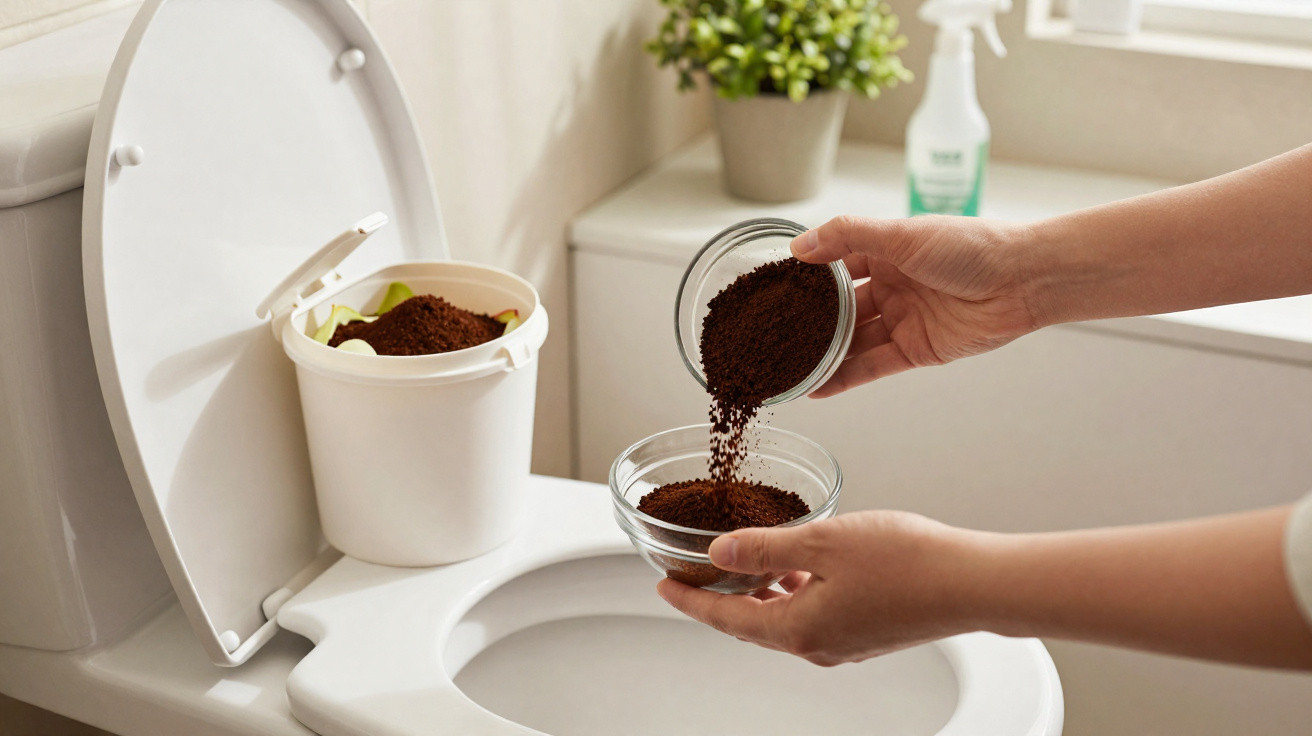
Putting used coffee grounds into the toilet is a household tip often mentioned as a way to lessen unpleasant bathroom smells, as the grounds have a strong scent that may temporarily counteract odours. However, used coffee grounds do not dissolve in water and, if this is done regularly, they can build up inside the pipes and raise the likelihood of a blockage.
What is the purpose of putting used coffee grounds in the toilet?
Used coffee grounds are chiefly used to cover unpleasant smells coming from the toilet. Their powerful aroma can absorb some of the surrounding odour and make the bathroom seem fresher for a few minutes.
That result is about fragrance rather than sanitation, however. Used coffee grounds are no replacement for scrubbing with a toilet brush, proper disinfection, bathroom ventilation or maintaining the trap when a strong smell is coming from the drains.
Why do coffee grounds reduce unpleasant smells?
Coffee grounds retain aromatic compounds that can still be noticed after the drink has been brewed. When they are put in the toilet, their pronounced scent may compete with bad odours and make the room feel less unpleasant.
This tip is generally suggested for simple situations, such as a poorly ventilated bathroom or a toilet left unused for a while. Even so, an odour that quickly returns may point to an issue with the drain, the toilet seal, the trap or the plumbing system's ventilation.
How can you use them without using too much?
If you wish to try used coffee grounds solely as an occasional deodoriser, use only a small amount and dilute it thoroughly. Tipping spoonfuls of dry or compacted grounds into the toilet increases the risk of deposits forming in the pipework.
- Use a small amount of grounds; never use an entire filter full of coffee.
- Mix them with plenty of water before pouring them in.
- Do not repeat the process every day.
- Flush fully immediately after use.
- Do not combine them with oil, fat, strong chemicals or food waste.
What risks can this habit cause?
The main concern is the gradual accumulation of particles within the pipework. Unlike soluble liquids, coffee grounds can combine with fat, soap, organic debris and dirt already caught in the pipes, creating a mass that restricts the flow of water.
- Slow blockages in the pipework.
- Bad smells returning through the toilet or nearby drains.
- A weak flush or water draining away slowly.
- Greater build-up in bends and older sections of pipework.
- Problems in septic tanks, where the grounds do not break down quickly.
Is it worth putting used coffee grounds in the toilet?
Used coffee grounds may disguise odours quickly, but they are not the best answer for frequent use in the toilet. To protect the pipework, the safest place for the grounds is the food-waste bin, compost heap or controlled use in the garden, where suitable for the plant type.
For a bathroom without unpleasant smells, regular cleaning remains more effective: scrub the toilet, wash the exterior, ensure drains retain water in their traps and ventilate the room. This keeps the bathroom fresh without turning coffee grounds into a hidden risk for pipes, flushing and the drainage system.

Comments
No comments yet. Be the first to comment!
Leave a Comment