
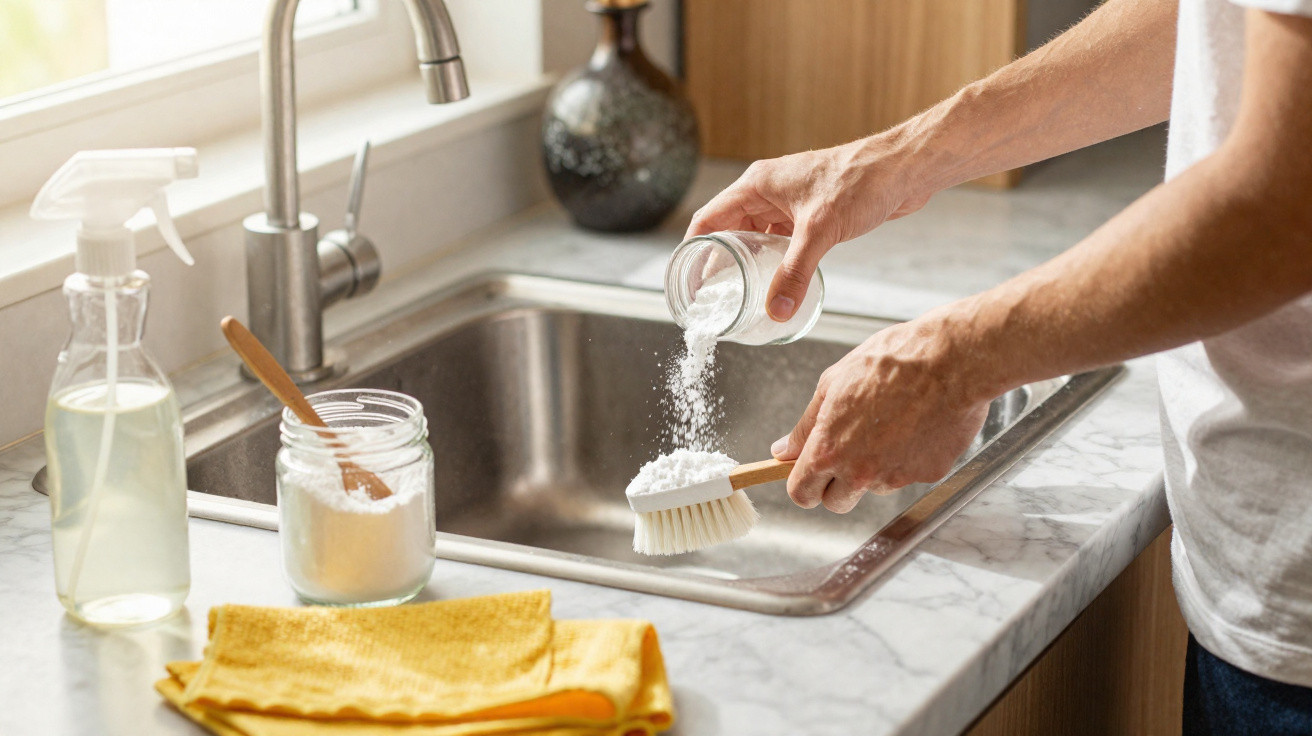
Bicarbonate of soda is useful for cleaning because it can neutralise odours, loosen light grease and lift dirt through gentle abrasion. However, it is not suitable for every surface: it may scratch glass, mark aluminium, wear down wood and leave white deposits if it is not rinsed away properly.
Why is bicarbonate of soda not suitable for cleaning everything?
Although bicarbonate of soda is a fine powder, it still has an abrasive action. On hard-wearing surfaces, this can help remove stuck-on dirt; on delicate finishes, the same friction may cause fine scratches, reduce shine or gradually leave the item looking dull.
Residue is another concern. If too much powder is used, or it is not wiped off with a damp cloth, it can dry in gaps, grout lines, sink corners, handles and on appliances, creating a whitish film that can be hard to notice while cleaning.
Where does bicarbonate of soda work best at home?
Bicarbonate of soda is most effective on washable, durable surfaces without a delicate finish. It is particularly useful for targeted cleaning when the problem involves odours, light grease, surface stains or trapped residue.
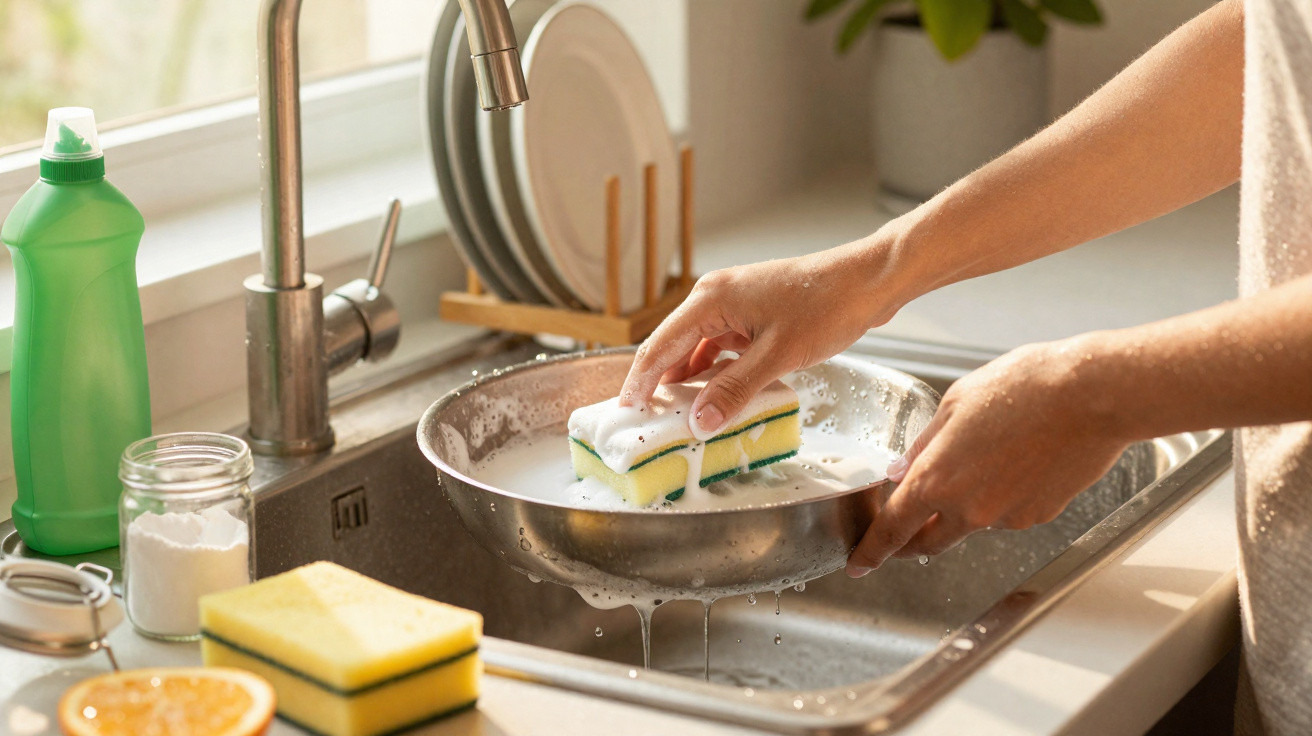
- Stainless-steel sinks, provided little pressure is used and they are rinsed thoroughly.
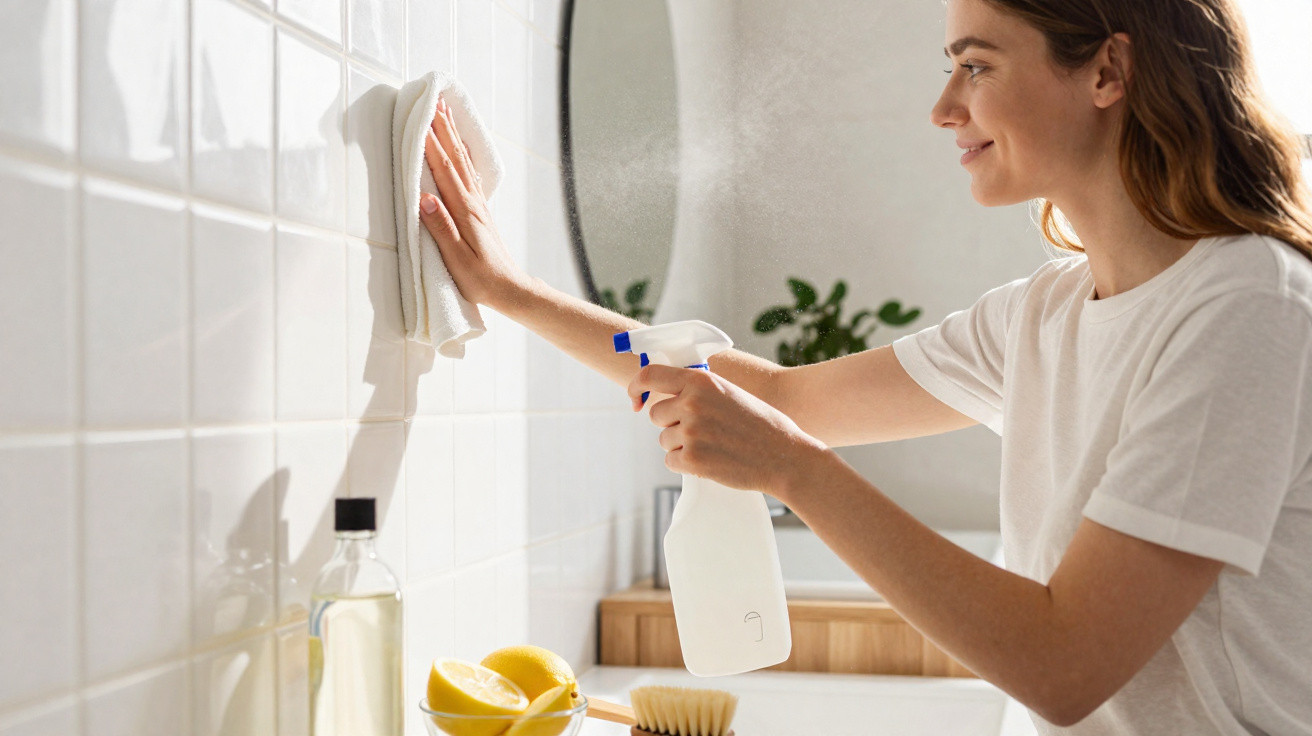
- Ceramic tiles and durable grout, as long as they are not scrubbed too forcefully.
- Pans with burnt-on bases, where the material can tolerate mild abrasion.
- Bins, drains and plastic containers with lingering smells.
- Ovens and racks with light grease, using a paste of bicarbonate of soda and water.
Which surfaces should be kept away from bicarbonate of soda?
Glossy, porous or sensitively finished surfaces may be damaged by repeated use of bicarbonate of soda. The risk is greater when the powder is applied dry, used with a rough scourer or rubbed in firmly.
Some materials need gentler or purpose-made products:
- Glass, mirrors and induction hobs, as abrasive particles can scratch them.
- Waxed, varnished or laminated wood, because the finish may lose its shine.
- Marble, granite and natural stone, particularly where they have a sealant or polished finish.
- Aluminium, which may become marked or darken with frequent use.
- TV, mobile phone and laptop screens, which have sensitive surface coatings.
Which mixtures are helpful, and which should be avoided?
For everyday cleaning, the safest mixture is bicarbonate of soda and water made into a paste. It can help with light stains, recent grease and odours, provided the surface is rinsed afterwards.
- Bicarbonate of soda with water creates a simple paste for localised dirt.
- Bicarbonate of soda with mild washing-up liquid can help remove light grease from sinks, hobs and tiles.
- Bicarbonate of soda in an open container can help reduce odours in cupboards, the fridge and shoe cupboards.
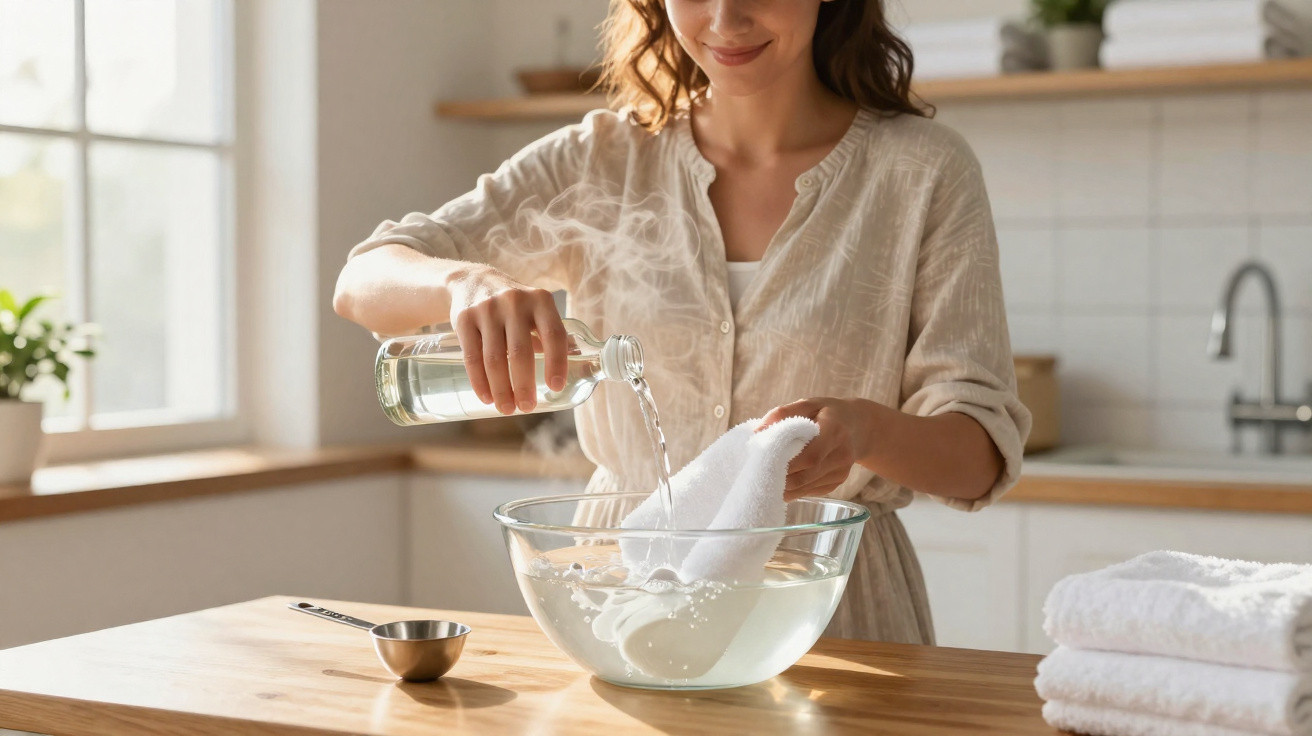
- Bicarbonate of soda with vinegar produces plenty of fizz, but the reaction weakens both products when they are mixed before use.
- Never mix bicarbonate of soda with bleach, ammonia or unknown strong cleaning products.
How can it be used without leaving scratches, marks or residue?
Use bicarbonate of soda sparingly, with a soft cloth or non-abrasive sponge, and always test it first on a concealed area. Once cleaning is finished, rinsing is essential to remove powder caught in gaps, edges and textured areas.
In household cleaning, it works best as an aid for odours and specific types of dirt, rather than as a universal replacement for mild washing-up liquid, disinfectant or dedicated cleaners for wood, stone, glass and electronics. Giving each surface the appropriate care helps cleaning preserve the shine, finish and durability of household materials.
Comments
No comments yet. Be the first to comment!
Leave a Comment