
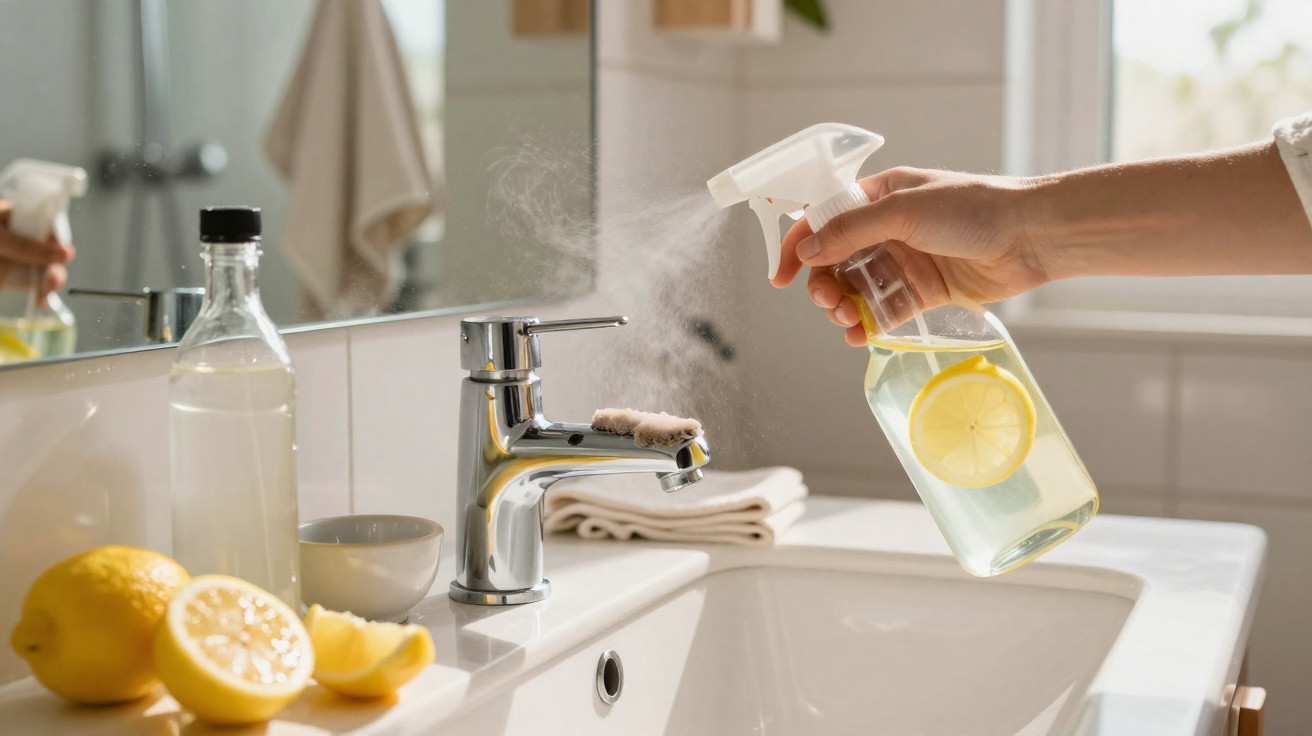
The first time I spotted it, I was in the shower on a dreary Tuesday, peering at a tap I had cleaned only two days before. Instead of gleaming, the chrome was buried beneath a chalky white film that appeared to grow thicker by the week. I had already worked through the usual collection of bathroom cleaners, all with a migraine-inducing smell and warning labels lengthy enough to alarm anyone who enjoys breathing. Yet the limescale returned as though it belonged there.
That morning, with the extractor fan whirring and my patience gone, I tried another approach. I left the bathroom, headed straight for the kitchen cupboard and picked up the one item nearly everyone owns - but rarely considers a bathroom essential.
It was the day an ordinary kitchen cupboard staple quietly defeated the problem that harsh chemicals had failed to solve.
The unglamorous enemy lurking in your bathroom
Limescale is not particularly dramatic to look at. At first, it is a light misting on taps, a mildly rough area on the shower screen or a ring around the toilet base that refuses to disappear. You promise yourself you will tackle it properly “this weekend”, but then one week passes, followed by another. Eventually, the bathroom that once looked bright begins to resemble a worn-out hotel bathroom.
That is the gradual, underhand effect of hard water: mineral residue accumulating day after day and quietly fastening itself to every surface exposed to hot water.
For one reader I spoke with, the frustration came to a head one Saturday. She spent 45 minutes scrubbing her shower doors with a powerful branded product. Its label promised “zero limescale in seconds”. In reality, the glass improved, but chalky lines still clung to the edges like persistent ghosts.
She had already been through the full range of products: gels, sprays and foams. Different colours, but the same biting odour. Every attempt brought a slight improvement followed by the same disappointment, before the deposits gradually reappeared. The endless routine was tiring and felt oddly personal, as though the house itself were silently criticising her.
Limescale is not dirt in the conventional sense. It is chiefly calcium carbonate: minerals that remain once water has evaporated. Rather than simply removing grime, you are attempting to dissolve a solid layer attached to metal, glass and ceramic. Conventional cleaning products rely on strong acids, often with added fragrance to disguise their chemical harshness.
What a bathroom really requires is something able to dissolve those minerals gently and repeatedly, without making you cough in a cloud of artificial citrus. That is where this modest kitchen ingredient steps in, working through the chalky residue in a reassuringly simple way.
The kitchen staple that quietly beats limescale: white vinegar
The crucial ingredient is plain white vinegar. It is not an expensive eco product in stylish packaging, but the inexpensive, sharp-smelling bottle you may use on chips or in salad dressing. Its mild acidity makes this everyday liquid remarkably effective at breaking down limescale deposits.
The approach could scarcely be easier. For taps and showerheads, pour vinegar into a small plastic bag, place it over the fitting so that the metal is submerged, then secure it with an elastic band. Leave it in place for at least an hour before wiping clean. For tiles and glass, combine equal amounts of warm water and vinegar in a spray bottle, spray liberally, allow it to sit and gently scrub using a non-scratch sponge. The dull white coating will then begin to lift away.
If you have used this method once and concluded “meh, it didn’t really work”, you are certainly not alone. Vinegar is often dismissed before it has been given enough time. One man admitted that he abandoned it after one hurried effort: he sprayed it on, waited five minutes, wiped it off, saw no immediate transformation and returned to his green gel marked with a skull-and-crossbones warning symbol.
An especially grim bathroom day changed his view: his shower door was clouded with limescale and the chrome mixer tap looked almost grey. This time, he saturated paper towels with vinegar, pressed them over the tap and along the door frame, then left them for two hours while working from home. When he returned and removed them, he said the limescale “literally slid off like wet chalk”. Did one treatment make everything flawless? No. However, it was the first time the metal beneath the deposits genuinely shone.
There is a straightforward chemical explanation. Vinegar contains acetic acid, which reacts with the calcium carbonate in limescale, breaking it down into substances that can be rinsed or wiped away. As it is less aggressively powerful than certain commercial descalers, it needs more contact time, particularly with old or heavy deposits. Limescale that took years to build won’t disappear in 30 seconds just because the bottle says so.
That mildness is also one of its advantages. Vinegar won’t fill your bathroom with harsh fumes, and it does not mean sending unidentified compounds down the drain. Used routinely, it changes from an emergency “rescue job” to a calm, ongoing form of prevention. The bathroom becomes less of a battleground and more of a manageable part of the routine.
How to use vinegar like a quiet cleaning pro
The most effective routine is almost deliberately unexciting. Begin with the areas where limescale is worst: taps, showerheads, the seam between glass and metal, the toilet base and around the sink plughole. Soak cotton pads, reusable cloths or paper towels with white vinegar, then press them firmly against the affected surfaces. On vertical areas, smooth them down so they stay in contact.
Leave them for at least 30–60 minutes. This is the stage most people are tempted to rush. Go and do something else, allowing the acid to work gradually. Afterwards, use a soft brush or sponge to scrub lightly, then rinse with warm water. For kettles and taps with internal deposits, fill them with a half-water, half-vinegar mixture, leave for an hour and flush thoroughly afterwards.
A few familiar errors lead people to dismiss vinegar prematurely. First, they do not allow enough time or use enough of the product. A quick spray followed by a 3-minute wait will not remove years of hard-water deposits. Second, they use an abrasive scouring pad to “help it along”, potentially scratching chrome or glass and causing permanent damage.
Then there is the odour. Yes, the bathroom may briefly smell like a chip shop. Open a window, turn on the extractor fan and avoid judging the technique within the first five minutes. Once the surface has been rinsed and the room dries, the smell vanishes much sooner than the artificial lemon haze left by many cleaners. Realistically, nobody does this every day. A thorough, unhurried clean every week or two is already a worthwhile achievement.
“Switching to vinegar felt almost silly at first,” one homeowner told me. “I thought, there’s no way this cheap bottle can beat the powerful stuff. But I was tired of the burning smell. The first time I wiped my tap after a long vinegar soak and saw proper shine under the crust, I actually laughed. It felt like I’d been tricked by marketing for years.”
- Best spots for vinegar
Taps, showerheads, glass panels, tile grout, kettles and the areas around drains are especially responsive to slow vinegar soaks. - When to avoid it
Do not apply undiluted vinegar to natural stone, including marble or travertine, and take care with delicate acid-sensitive finishes. - Simple upgrades
Warming the vinegar slightly can increase its effect; a drop of washing-up liquid helps tackle soap scum, while several short soaks over a week can deal with very old deposits. - Why it feels good to use
It delivers visible results without choking fumes, using something recognisable that is probably already in the home. - Long-term payoff
Regular, gentle vinegar treatments can slow future limescale accumulation, making each subsequent clean quicker and easier.
From dreading the scrub to quietly owning it
Seeing vinegar remove limescale can bring a subtle change in perspective. You no longer assume that only the strongest, most intimidating product can save the bathroom. The balance of control shifts: instead of handling aggressive chemicals and hoping they do not splash onto your skin, you are using a familiar product calmly and on your own terms.
That does not make every task “effortless”. There will still be occasions when the shower door looks grim or a tap catches the light in exactly the least flattering way. But the task feels far less daunting when you know that a bottle from the kitchen can gradually reverse the damage. You do not need a flawless system or a colour-coded cleaning caddy to begin.
Most of us know the feeling of looking around the bathroom and becoming slightly embarrassed, even when nobody else will see it. Limescale can feel strangely emotional: it suggests you are falling behind or have allowed things to slip. Vinegar’s gentle appeal is not only about chemistry, but also about reducing the pressure. You are not forced to choose between suffocating fumes and giving up completely.
The next time you notice that white crust forming around the base of a tap, you may think of the bottle beside the cooking oil. Perhaps you will soak a cloth, press it against the surface and leave it to work. Perhaps you will mention it to a friend or share a before-and-after photograph, quietly pleased that the tap is shiny again without a hazmat-level cleaner. These may be modest household wins, but they matter more than they first appear.
| Key point | Detail | Value for the reader |
|---|---|---|
| White vinegar dissolves limescale | Mild acetic acid breaks down mineral deposits on taps, glass and ceramics | Provides a low-cost, low-tox alternative to harsh chemical descalers |
| Contact time beats brute force | Soaking cloths or bags of vinegar on problem areas for 30–120 minutes | Cuts down scrubbing and helps protect surfaces from scratches |
| Regular light use slows future buildup | Weekly or bi-weekly vinegar routines on high-contact zones | Keeps bathrooms cleaner for longer with less total effort |
FAQ:
- Can I use any vinegar, or does it have to be white vinegar? White distilled vinegar is best for cleaning because it is clear, inexpensive and has consistent acidity. Apple cider vinegar and darker vinegars may stain or leave residue, making them less suitable for pale surfaces.
- Is vinegar safe on all bathroom surfaces? It is generally suitable for chrome, ceramic, glass and most tiles. Do not use it on natural stone, including marble, limestone and travertine, and test an inconspicuous area first if you are uncertain about a particular finish.
- How do I deal with the strong vinegar smell? Open a window, turn on the extractor fan and air out the room after rinsing. You can dilute it with water or add a few drops of essential oil, although the odour normally disappears quickly once everything is dry.
- How often should I use vinegar on limescale? In hard-water areas, a light vinegar treatment once a week or every two weeks on taps and shower glass can stop heavy buildup. Kettles and showerheads generally only need a deeper descale every 1–3 months.
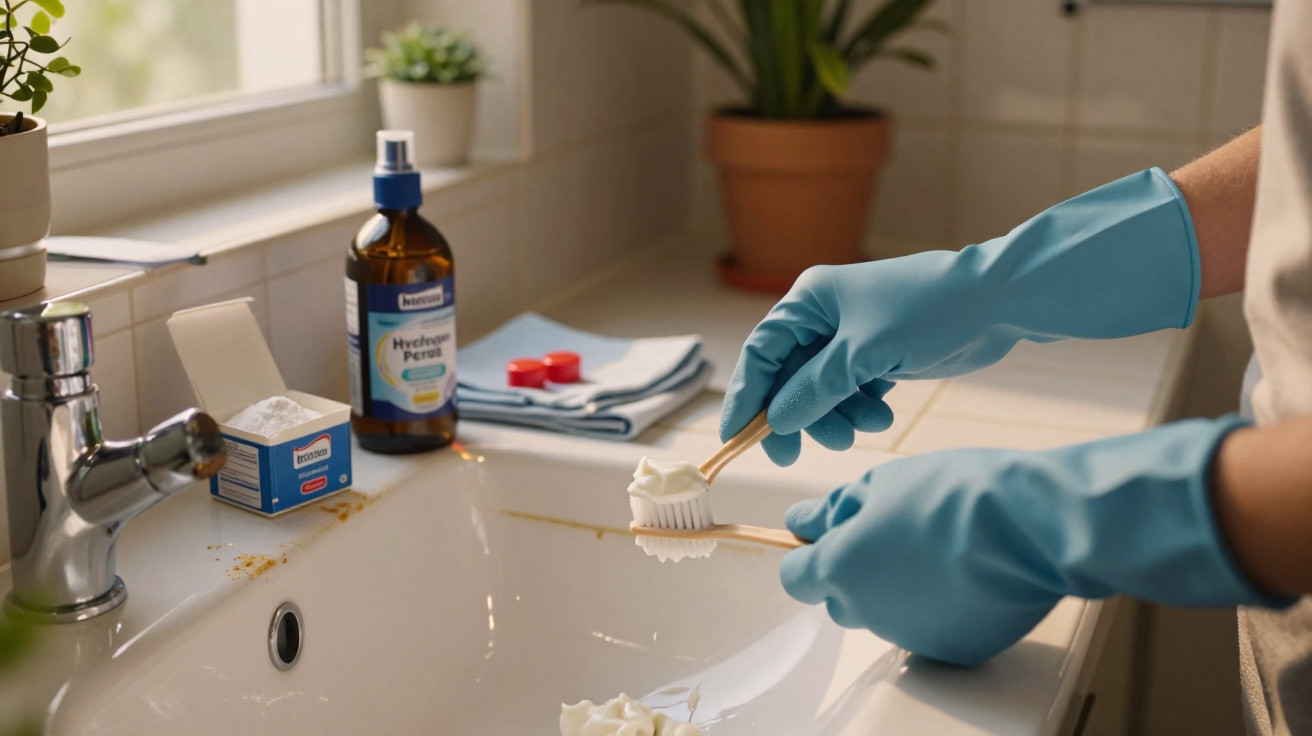
- What if the limescale is really old and thick? Use repeated treatments: apply vinegar-soaked cloths or bags several times over a few days, scrubbing gently between applications. For exceptionally stubborn deposits, you can combine vinegar with a baking soda paste, always testing a small area first.



Comments
No comments yet. Be the first to comment!
Leave a Comment