
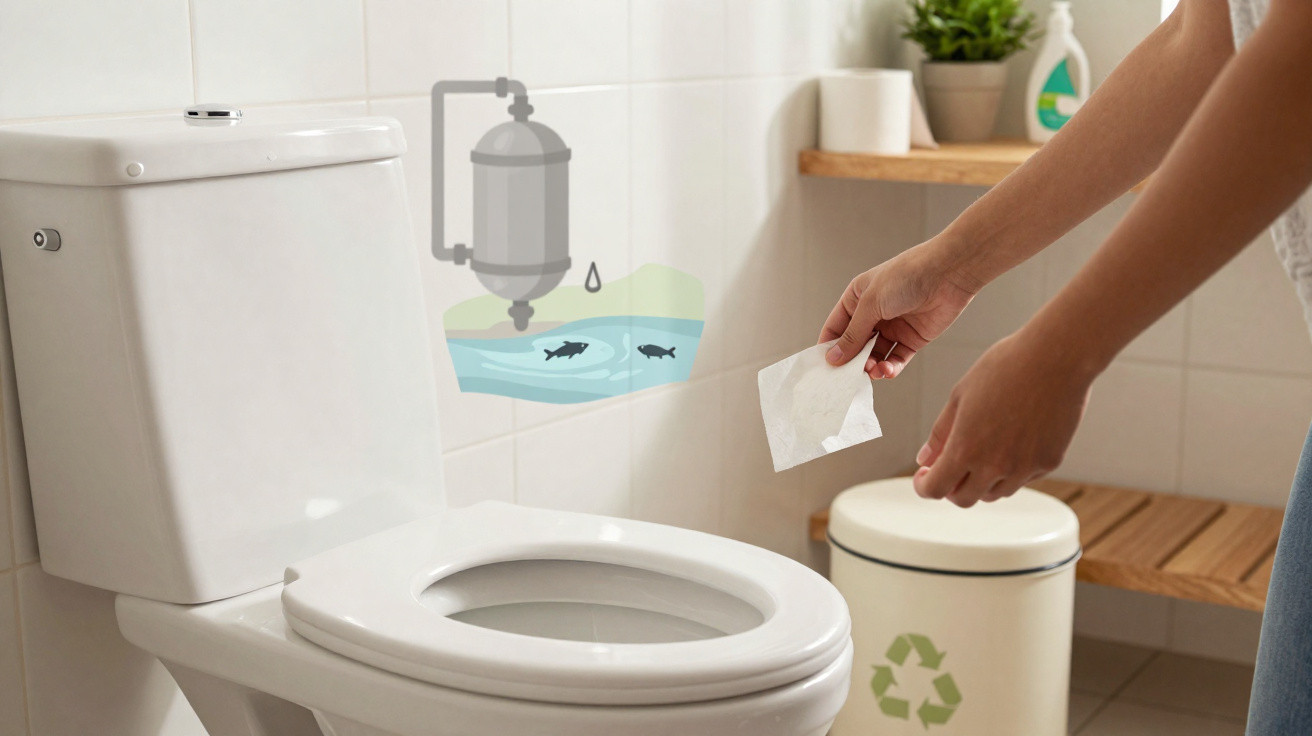
Across much of Europe, the United States and Japan, people routinely flush toilet paper without a second thought. In Brazil, the advice is the reverse, and many people only learn why when a plumber arrives with a bill in hand. In most cases, Brazilian sewer networks and household pipework were simply not designed to handle fibrous solid waste in addition to human waste.
What Brazilian pipework can handle - and what it cannot process
The plumbing in most Brazilian homes is sized to carry liquid waste and organic solids that break down quickly when exposed to water. Pipes commonly have a narrow diameter, several sharp bends and sections with inadequate gradient. Every bend and restriction can become a place where fibrous material, including toilet paper, collects. Although toilet paper is made to disintegrate, it does not always do so quickly enough to travel cleanly through the entire pipe system.
Flush pressure is another decisive issue. Countries with more modern sanitation infrastructure use high-pressure systems that force waste through several metres of pipework without leaving material behind. In Brazilian properties with a close-coupled cistern or an elevated water tank, pressure is limited. As a result, paper can adhere to the inner pipe walls, building up layer by layer until it creates a blockage that restricts flow and, eventually, causes a complete clog.
- Triple-ply or premium toilet paper: the thickness and strength that make it comfortable to use are precisely what make it harder to break down in the water inside the pipes.
- Wet wipes of any kind: even products labelled as “flushable down the toilet” are highly resistant to disintegration and are the leading cause of serious blockages in Brazil and worldwide.
- Kitchen roll: designed to absorb liquid without falling apart, its long fibres and reinforcing additives make it virtually indestructible in domestic pipework.
- Large amounts of paper at once: even the thinnest paper becomes troublesome if the flush lacks sufficient pressure to carry the whole volume away in one go.
- The safest solution: a pedal bin with an airtight lid beside the toilet eliminates hygiene concerns and protects the pipework without any maintenance cost.
Why homes with septic tanks face an even bigger problem
A substantial share of Brazil’s population is not connected to a mains sewer network and relies on septic tanks to treat waste. These underground tanks operate through anaerobic bacteria that digest the organic matter in human waste. The difficulty is that the cellulose fibres in toilet paper are far more resistant to bacterial breakdown than organic waste.
When paper is flushed in homes with a septic tank, it settles and accumulates at the bottom of the tank rather than breaking down at the same rate as other waste. Over time, this reduces the tank’s usable capacity, hinders bacterial activity and brings forward by years the need for emptying by a septic-tank lorry, an expensive service. In extreme situations, the tank can overflow, contaminating the surrounding soil and groundwater.
The environmental impact rarely linked to this everyday habit
The consequences do not stop at the home. Once toilet paper reaches wastewater treatment systems, it must be mechanically separated from liquid waste before treatment can continue. This procedure uses energy, requires continual equipment maintenance and produces solid waste that must go to landfill. In municipalities where sewage is not properly treated - still the reality across much of Brazil - undissolved paper goes directly into rivers, streams and the sea.
When flushing toilet paper may be considered, with caution
Four conditions must be met at the same time. The pipework must be PVC of an appropriate diameter, with few bends and a relatively recent installation. The property must be connected to a municipal sewer network with active treatment, never a home with a septic tank. The paper must be single-ply and used in moderate quantities; wet wipes, kitchen roll and triple-ply paper must never be flushed. The toilet must have a close-coupled cistern with a minimum capacity of six litres and good flow pressure.
In practice, this combination of four conditions remains uncommon across Brazil’s housing stock. For the vast majority of homes - particularly older properties, houses with septic tanks and buildings with original pipework installed decades ago - a bin beside the toilet remains the safest, most economical and most environmentally responsible choice.
A pedal bin with an airtight lid addresses the main objections commonly raised against this practice. With modern models available at affordable prices, there is no longer an aesthetic or hygiene argument for resisting it. The paper goes into a properly sealed bin, the bathroom remains odour-free and the pipework is protected. What may seem like a minor bathroom detail is actually a preventive maintenance decision that avoids plumber call-outs and pipe repairs.
Why so many Brazilians still flush toilet paper despite knowing the risk
Part of the explanation is the lack of accessible technical information about the limitations of Brazilian sanitation infrastructure. Another factor is increasing exposure to travel content and people living abroad, where this practice is presented as entirely normal. When a Brazilian returns from a trip to Europe or watches an American television series, what is shown as ordinary can shape behaviour back home, without taking into account that the infrastructure is completely different.
Flushing toilet paper is one of those habits that seems harmless until the day water starts rising rather than draining away. Anyone who understands the real limits of Brazil’s sanitation infrastructure recognises that a bin beside the toilet is not cultural backwardness. It protects the pipework, household finances and the environment.
What changes when a city has a treated mains sewer network
Even in cities served by a mains sewer network, the situation does not change as radically as it may appear. Wastewater treatment plants must mechanically remove paper before processing the liquid effluent, increasing operating costs and the amount of solid waste produced. Sewage treatment coverage in Brazil remains low, with less than half of the population having access to adequate collection and treatment, according to data from the Ministry of Cities. This means that, for most Brazilians, the impact of paper disposed of in the toilet extends far beyond household pipes.
This is the kind of information that can permanently change an everyday habit. Share it with those you live with or anyone who is still unsure about the correct practice in a Brazilian bathroom.
Comments
No comments yet. Be the first to comment!
Leave a Comment