
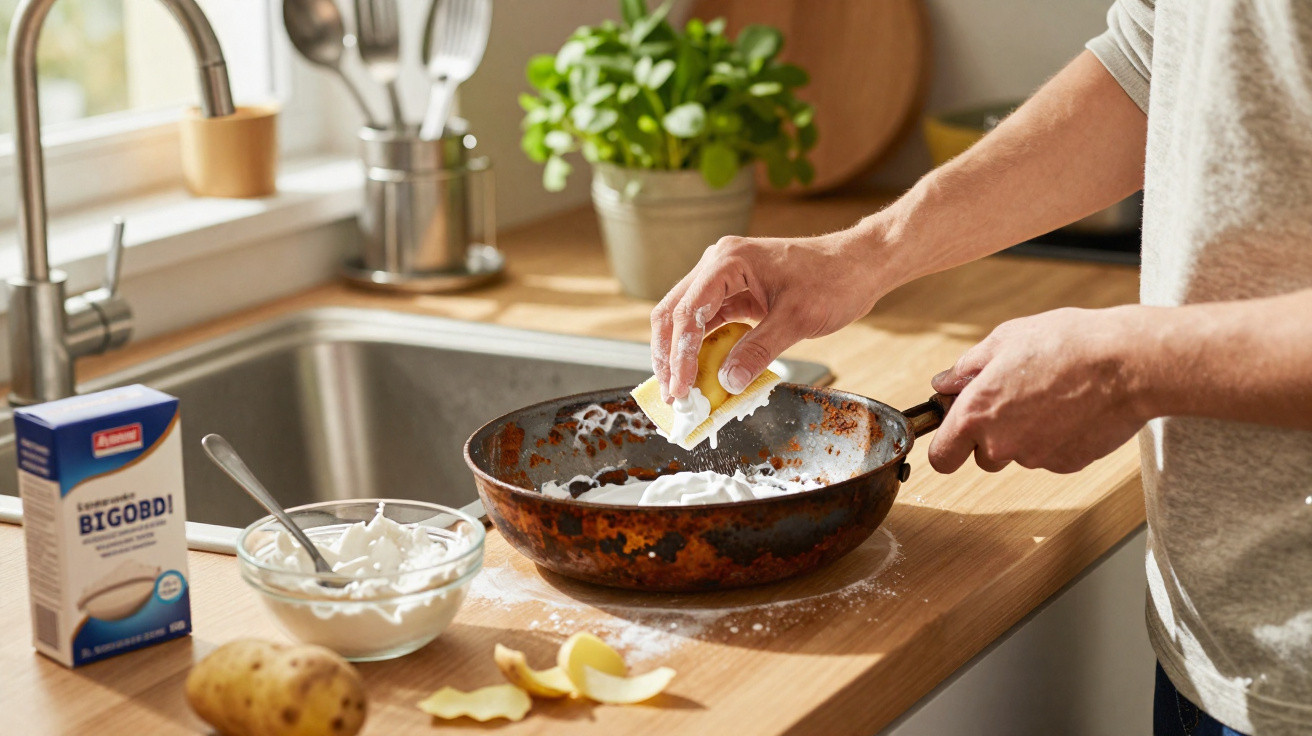
Combining potato peel with baking soda has become increasingly common in household cleaning routines as a straightforward, affordable way to tackle rust. Rather than relying on harsh chemicals, this homemade solution can be used on pans, baking trays, metal utensils and even small tools, with less impact on both household budgets and the environment.
What is a mixture of potato peel and baking soda used for?
The most common purpose of mixing potato peel with baking soda is to remove rust from metal surfaces affected by moisture. The method is often used on cast-iron pans, steel frying pans and other kitchen utensils that need restoring without harming the material.
Potato peel releases mildly acidic compounds that react with iron oxide, while baking soda works as a mildly abrasive alkaline agent. Together, they can loosen and lift rust, making mechanical removal with a sponge or brush considerably easier and more controlled.
Watch the video on Vida de Pobre Nalva's YouTube channel about lightening skin with potato and baking soda. The content discusses the popular use of this homemade mixture with potato peels, as well as its purposes and care-routine tips.
Why is it beneficial to mix potato peel with baking soda?
This mixture is valued because it combines low cost, ease of use and reduced reliance on strong chemical products. Potato peel, which would usually be thrown away, is put to practical use, while baking soda is inexpensive, widely available and already part of many households' cleaning routines.
As well as being economical, this combination is generally less harsh than many industrial rust removers, helping to protect the original metal surface. Even so, it is sensible to test it on a small area before treating the entire item, particularly when working with objects that have a delicate finish or sentimental value.
How to use potato peel and baking soda to remove rust
The method is straightforward and can be adjusted according to the amount of rust and the type of item involved. Baking soda is used as a “cleaning powder”, while the peel acts as a natural sponge, using its organic compounds to enhance the result.
- Wash the potato peel thoroughly to remove soil and dirt.
- Lightly dry the rusted area, removing any excess water or grease.
- Cover the rust with a generous layer of baking soda.
- Rub the surface with the inner side of the potato peel, using circular movements.
- Leave the peel in contact with the metal for a few minutes, depending on the severity of the rust.
- Rinse under running water and scrub with a sponge that is not overly abrasive.
- Dry the item completely with a clean cloth and, where possible, place it over a low heat for a few minutes.
For heavier rust, the process can be repeated, while checking that the metal is not being excessively worn away. With cast-iron pans, it is common to finish by applying a thin layer of vegetable oil to form a protective barrier against further oxidation.
What precautions should be taken when using this cleaning mixture?
Although it is a homemade solution, the mixture should be used carefully to avoid damaging the utensil or its surroundings. Some materials, especially non-stick coatings, paint and varnish, may be sensitive to friction and to the combined action of potato peel and baking soda.
It is also worth following a few simple precautions to ensure safety, hygiene and greater durability for items cleaned using this method:
- Avoid prolonged contact with painted or varnished metals.
- Test on a small area before applying it to the entire item.
- Never store the item while wet after cleaning, as this can encourage rust to return.
- Apply oil to cast-iron pans once they are fully dry, providing additional protection.
Used peels should also be disposed of with organic waste rather than left to build up in the sink or drain, where they may cause unpleasant smells and attract insects. This keeps the method practical and hygienic, while supporting a more sustainable cleaning routine that makes better use of what is already in the kitchen.





Comments
No comments yet. Be the first to comment!
Leave a Comment