
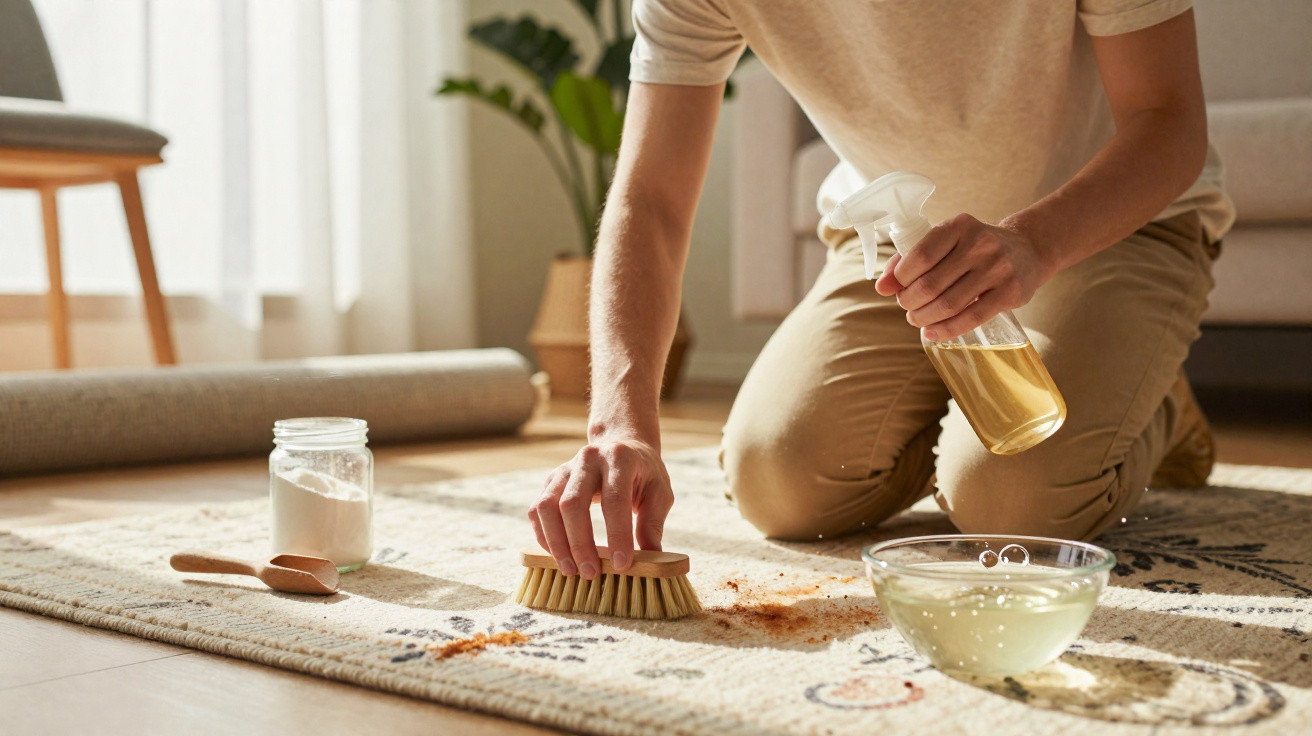
Cleaning rugs and carpets without using a washing machine is entirely achievable with a straightforward, dry and safe approach for everyday household care. Vacuuming, bicarbonate of soda, a soft brush and minimal moisture work together to lift dust, lessen odours and freshen the fibres without soaking the material.
Why should you avoid using too much water on rugs and carpets?
Over-wetting is the most common mistake in home cleaning. Thick rugs and fitted carpets take a long time to dry, while moisture trapped in the fibres can lead to unpleasant smells, internal staining and mould growth.
For regular upkeep, a dry or nearly dry cleaning method is therefore the safest option. Water should only be used on small stained spots, in very limited amounts and with prompt drying.
Which natural cleaning ingredients should you use?
Bicarbonate of soda is the key ingredient, as it can absorb odours and help loosen some surface dirt. Warm water and mild washing-up liquid may be used carefully for isolated stains.
- Bicarbonate of soda: helps minimise odours and freshen the fibres.
- Vacuum cleaner: removes dust, pet hair and loose debris.
- Soft brush: distributes the product without damaging the fabric.
- Mild washing-up liquid: suitable for small, fresh stains.
- A clean white cloth prevents colour transfer onto the rug.
How do you clean rugs and carpets without using a washing machine?
First, vacuum the rug or carpet thoroughly, moving slowly in every direction. Next, scatter a light layer of bicarbonate of soda across the surface. Use a soft brush to work it gently into the fibres, without vigorous scrubbing.
- Leave the bicarbonate of soda in place for 30 minutes for light cleaning.
- For stronger odours, wait 2 to 4 hours before vacuuming.
- Vacuum once more until all the powder has been removed.
- For stains, apply a small amount of mild washing-up liquid foam with a damp cloth.
- Finish by pressing a dry cloth onto the area to absorb excess moisture.
How should you dry rugs and carpets properly to prevent mould?
Drying matters just as much as the cleaning itself. After treating stains with a damp cloth, keep the room well ventilated, open the windows and, where possible, use a fan to improve air circulation.
Loose rugs can be placed in a shaded, airy space. Avoid leaving them in strong sunlight for many hours, as this may fade certain fibres. Before putting the rug back in place, make sure its underside is completely dry.
How often should this process be repeated?
Vacuuming can be carried out once or twice a week in high-traffic areas, particularly in homes with children or pets. Bicarbonate of soda, meanwhile, can be applied every 15 or 30 days, depending on the build-up of odours and dust.
To keep the results for longer, deal with stains as soon as they occur, avoid walking on the rug with dirty shoes and test any product on a hidden area before use. This natural cleaning routine better protects the fibres, reduces odours and avoids the unnecessary use of a washing machine or too much water.


Comments
No comments yet. Be the first to comment!
Leave a Comment