
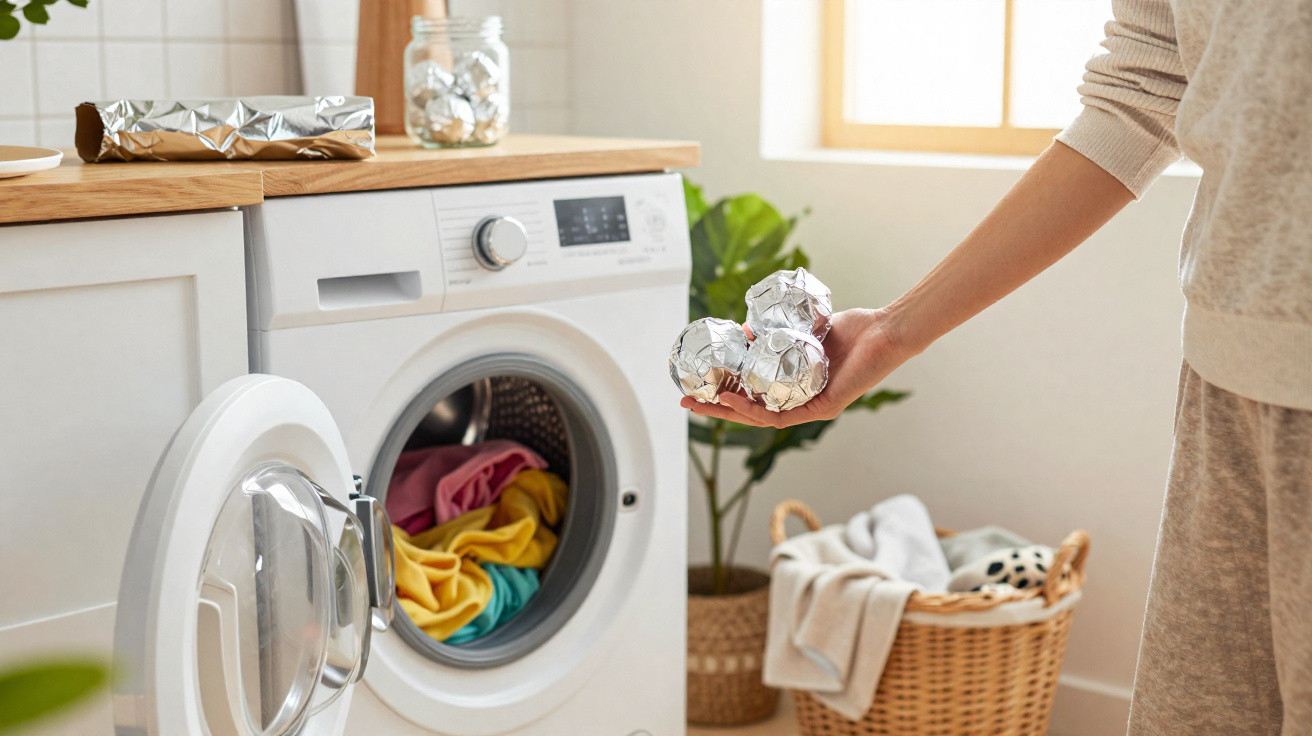
Putting a ball of aluminium foil in a washing machine drum has become a popular trick for clothes that come out clinging together. The idea centres on friction between fabrics, the build-up of charges and a straightforward attempt to reduce static electricity.
Why do people recommend putting aluminium foil in the washing machine?
This advice is common because synthetic garments can build up charges as they rub together during spin cycles or drying. The metal ball is intended to act as a contact point, helping to disperse some of that charge before the items become stuck together.
The approach is more plausible where there is considerable friction and little moisture, as is typical in tumble dryers or during vigorous spinning. In a wash cycle full of water, the result is generally more limited because moisture already lowers the charge.
The trick is usually linked to the following factors:
- Charges: friction between fabrics can cause a temporary electrical imbalance.
- Clothes: synthetic items are more likely to cling together when dry.
- Aluminium: the ball should be tightly compacted so that no fragments come loose.
- Drying: the effect is generally more noticeable in low-humidity conditions.
- Care: check the machine manual before trying the trick again.
What does static electricity have to do with clothes sticking together?
Static electricity is an imbalance of electrical charges within or on the surface of a material. In clothing, this imbalance can be created by friction, causing fabrics to attract each other, stand on end or cling after washing, particularly during dry cycles.
Once charges remain built up, they disappear only when they can move through a current or discharge. This is why materials, humidity and contact affect how garments behave, especially in drying environments where repeated friction occurs inside the drum.
How does an aluminium foil ball help with this process?
Aluminium foil is used because the metal repeatedly comes into physical contact with the clothes as the drum moves. This contact may help limit localised charge build-up, reducing the feeling of electric shock and clinging.
Friction, charge and humidity
Static electricity relies on the separation of charges. Fabrics rubbing together can build up charges while they rotate in the drum. The metal ball provides an additional point of contact, but it does not replace proper care of fabrics and drying.
For better results, the ball needs to be firmly scrunched up, smooth enough not to tear fabrics and large enough not to break apart. If loose edges are present, the trick may introduce risk rather than provide a solution.
Only use the ball with these precautions:
- Scrunch the aluminium foil thoroughly into a compact sphere.
- Avoid using it with delicate items, lace or fabrics that snag easily.
- Do not place several loose balls in the drum.
- Stop using it if you notice scratches, unusual noises or residue.
When does the aluminium foil ball trick make most sense in everyday laundry?
The trick is most useful when clothes leave the spin cycle or drying process feeling as though they are sticking together. Synthetic fabrics, dry air and long cycles can encourage the problem, whereas damp cotton usually has less static and less clinging.
It is also worth checking whether the machine actually permits additional objects in the drum. Some manufacturers may restrict improvised accessories, so the practical recommendation is to consult the manual, protect delicate garments and test it first with a simple load.
Its use is likely to be more suitable in these situations:
- Synthetic clothes that cling to one another when removed.
- Drying in a dry environment, where there is substantial friction in the drum.
- Small loads containing durable items and no delicate fabrics.
- Laundry routines where the manual does not advise against objects in the drum.
Does this trick replace other clothing-care measures?
Just as storing food correctly depends on organisation and preservation, caring for clothes requires attention to fabric, cycle and drying. The ball may help in certain cases, but it does not correct excessive friction during lengthy cycles.
To reduce garments sticking together, use moderate loads, separate items by fabric and avoid over-drying. Aluminium can offer simple support, but the best prevention remains managing the cycle, humidity and movement inside the machine with every wash.


Comments
No comments yet. Be the first to comment!
Leave a Comment