
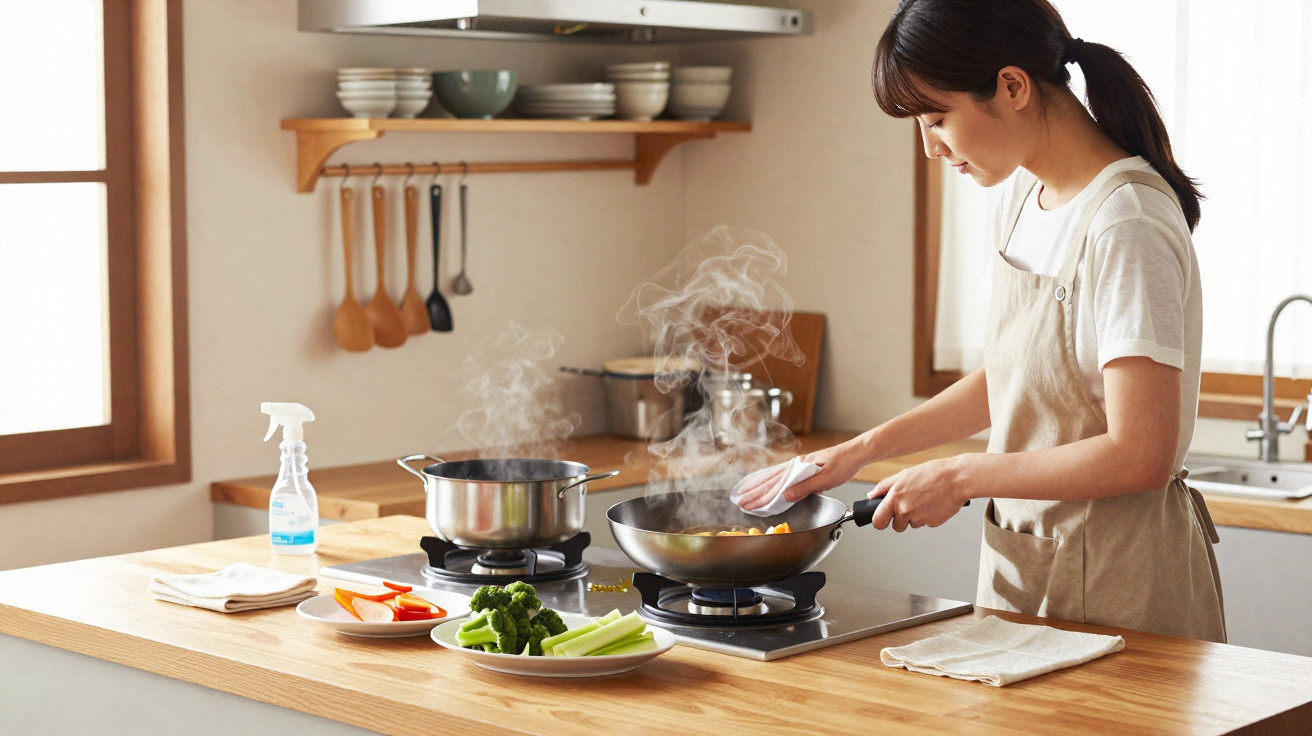
In many homes in Japan, the kitchen stays clean despite heavy everyday use. This is not achieved through lengthy cleaning sessions, but through small actions repeated throughout the day. These prevent grease from spreading, drying and hardening on surfaces, so there is less need to scrub pans and cupboards vigorously.
How do Japanese kitchens prevent everyday grease build-up?
The key principle is prevention: residents do not wait for dirt to build up. Small tasks completed in seconds stop grease at every stage, from the moment oil is added to the frying pan through to disposal, keeping the space tidy and practical.
Before they start cooking, many people clear the worktop and set out everything they will need, leaving little opportunity for unnecessary splashes. Microfibre cloths, absorbent kitchen paper and a small spray bottle of diluted washing-up liquid are always within easy reach, making quick cleaning possible and preventing grime from spreading.
Which small habits keep the kitchen free from grease?
Certain practices are repeated each day, creating a barrier against grease build-up. They tackle residue while it is still thin and fresh, so a light wipe with a cloth and virtually no physical effort are all that is needed.
- Wipe up splashes straight away: any drop of oil on the hob or worktop is removed while still warm, before it sticks to the surface.
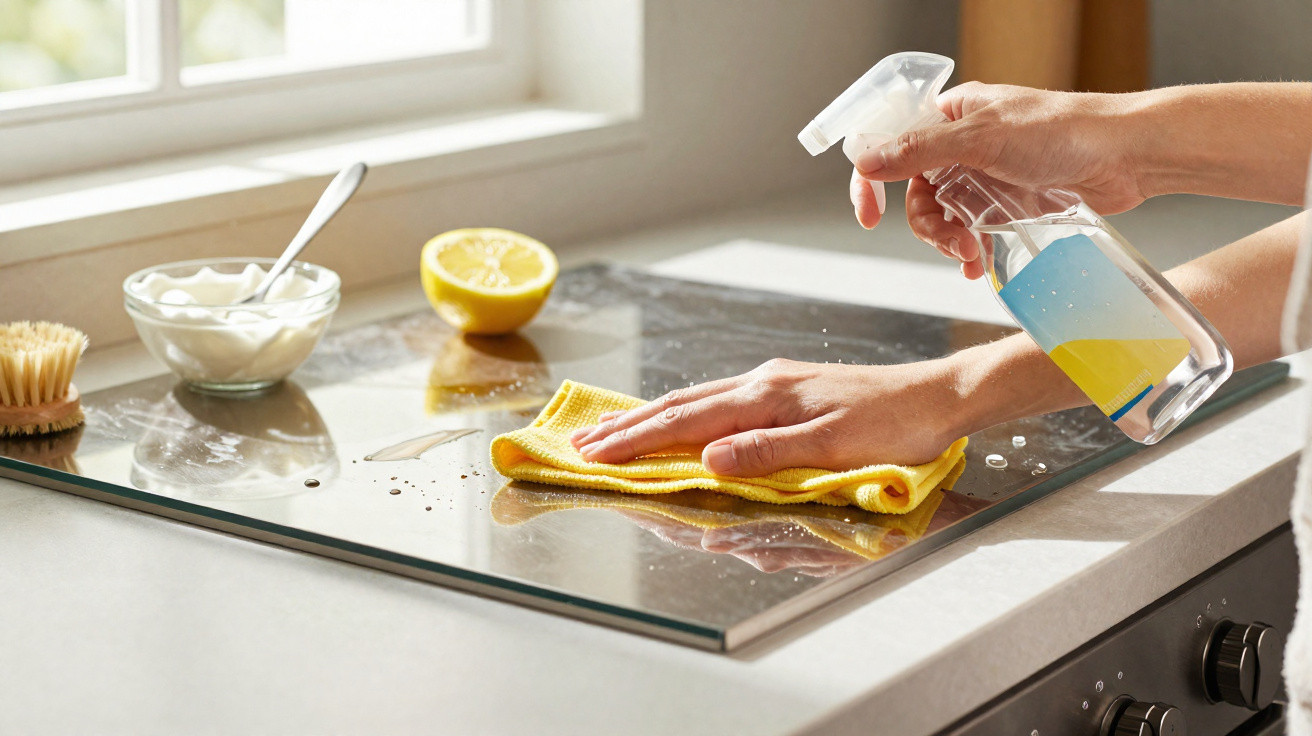
- Wipe down after frying: once frying is finished, it is common to run a damp cloth with mild washing-up liquid around the hob and over the nearby wall.
- Shield delicate surfaces: removable plastic films or aluminium foil are placed on areas near the hob, particularly in rented homes or small flats.
- Look after the extractor hood: filters are checked regularly and washed with warm water and washing-up liquid before they become saturated.
Why does cleaning while preparing food make the job easier?
In many Japanese kitchens, cleaning takes place alongside using the hob. While a pan is simmering over a low heat, the cook uses the time to wipe splashes from the sides or quickly wash used utensils, reducing the number of greasy areas.
In practical terms, warm grease is far easier to remove than cold grease. Wiping with a damp cloth immediately after use, particularly on metal and glass surfaces, requires very little effort and almost never calls for vigorous scrubbing.
- Finish using the hob and turn off the heat.
- Wait a few seconds for the excessive heat to subside.
- Spray a mixture of water and a little washing-up liquid over the surrounding areas.
- Wipe with a microfibre cloth using gentle movements, without applying excessive force.
- Dry quickly with another cloth to prevent streaks.
How can you incorporate Japanese kitchen habits into your household routine?
Adapting these methods for any home involves keeping cleaning supplies close by, simplifying each step and repeating the same actions every day. A small kit beside the sink makes immediate cleaning after every cooking session easier, making tidiness almost automatic.
- Keep a spray bottle of diluted washing-up liquid topped up at all times.
- Set aside two cloths: one for grease and another for drying.
- Allow 3 to 5 minutes after meals solely for the hob and worktop.
- Choose one fixed day each week to clean the extractor hood and filter.
Once these actions have been repeated consistently for a few days, they become habitual and part of cooking itself. The result is a kitchen that seems ready for the next dish at any time, without relying on major cleaning sessions and with less wear on surfaces and utensils over time.

Comments
No comments yet. Be the first to comment!
Leave a Comment