
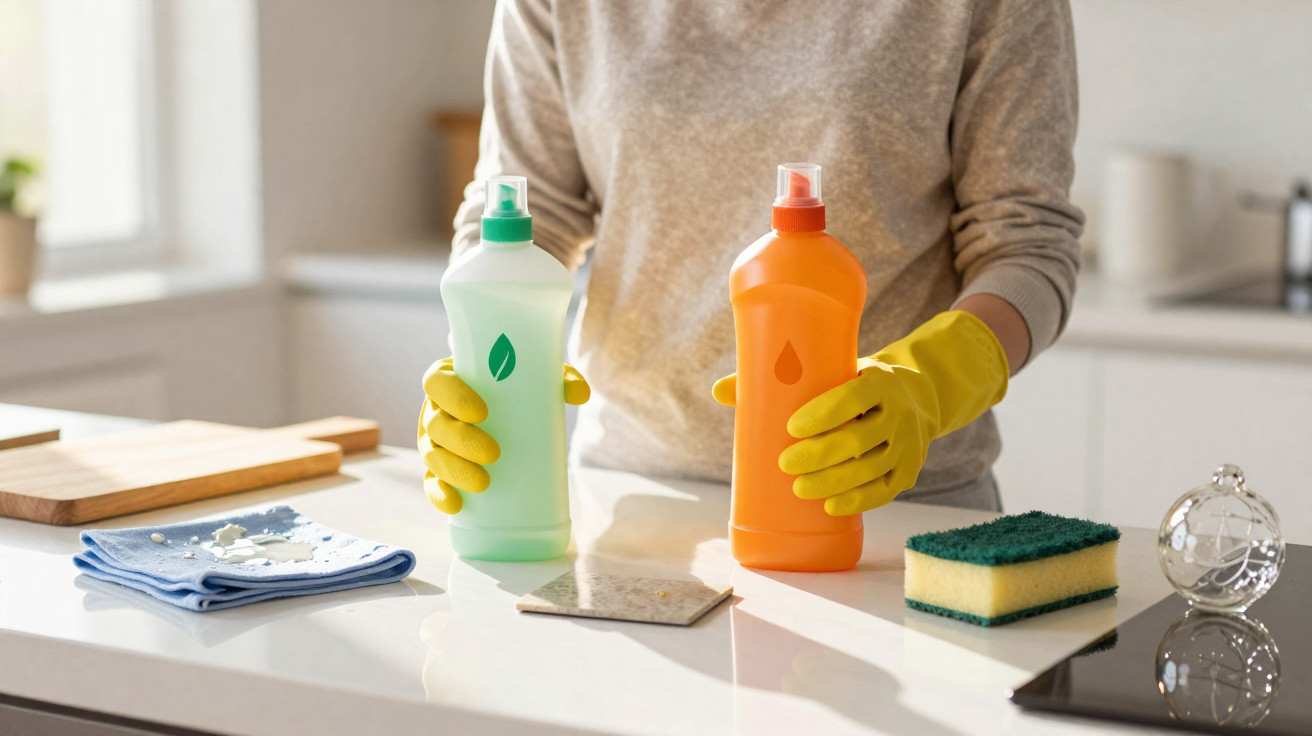
In many homes, washing-up liquid is among the most frequently used cleaning products, yet the right type is not always selected for each task. The distinction between neutral washing-up liquid and stronger washing-up liquid lies in their chemical composition, their effect on surfaces and how they interact with sensitive materials. This directly affects the lifespan of crockery, floors and worktops.
What distinguishes neutral washing-up liquid from strong washing-up liquid in its composition?
The key differences between these washing-up liquid types are their surfactant formula, pH level and the inclusion of more aggressive additives. Neutral washing-up liquid normally has a pH close to that of water, making it less irritating to skin and gentler on delicate surfaces.
Washing-up liquid with intensive degreasing action, on the other hand, commonly combines stronger surfactants with alkalis and, in some cases, solvents that lift stubborn grease. While highly effective, frequent use on unsuitable materials can cause staining, drying or corrosion, particularly on delicate metals, natural stone and protected finishes.
When should you use neutral washing-up liquid and when is strong washing-up liquid preferable?
For everyday tasks, neutral washing-up liquid is generally the best option, as it removes dirt effectively without damaging the material. This applies to ordinary crockery, stainless steel, sensitive plastics and more delicate indoor flooring, provided everything is thoroughly rinsed.
Washing-up liquid with greater degreasing power is better suited to occasional deep cleans and built-up grease. In these circumstances, it is helpful to understand the practical situations in which each type is likely to work best:
- For crockery, glasses, cutlery and food-preparation utensils: choose neutral washing-up liquid and rinse thoroughly.
- For greasy cookers, grills, hotplates and extractor hoods with accumulated grease: use strong washing-up liquid occasionally.
- For delicate indoor flooring, such as polished porcelain tiles: select neutral washing-up liquid diluted with water.
- For outdoor areas affected by oil or heavy grease: use strong washing-up liquid, following the label instructions exactly.
Which surfaces are most sensitive to washing-up liquid?
Certain materials are more vulnerable to highly concentrated products or those with a very alkaline pH, developing microscopic damage that may only become apparent over time. It is therefore important to recognise these more fragile areas of the home before making one type of washing-up liquid your standard choice.
Natural stones such as marble and some granites can become stained and lose their shine; wood can dry out; and metals including polished aluminium and copper may darken. Varnished, sealed or waxed finishes, as well as non-stick pans, can also lose their protective layer when regularly exposed to strong or poorly diluted washing-up liquids.
How can you choose and use washing-up liquid safely and efficiently?
Selecting the most suitable type depends on three main factors: the kind of dirt, how often cleaning is needed and the material's sensitivity. In general, neutral washing-up liquid is the safer "all-purpose" product for daily use, whereas strong washing-up liquid is most useful for heavy cleaning and intensely greasy conditions.
To prevent waste and damage, always dilute the product where directed, avoid using too much, do not combine it with other cleaning products unless the label advises it, and never leave it to work for long periods on natural stone or metals. Taking these precautions extends the lifespan of pans, floors and worktops, while also providing worthwhile savings over time because washing-up liquid is used only when it genuinely makes a difference.


Comments
No comments yet. Be the first to comment!
Leave a Comment