
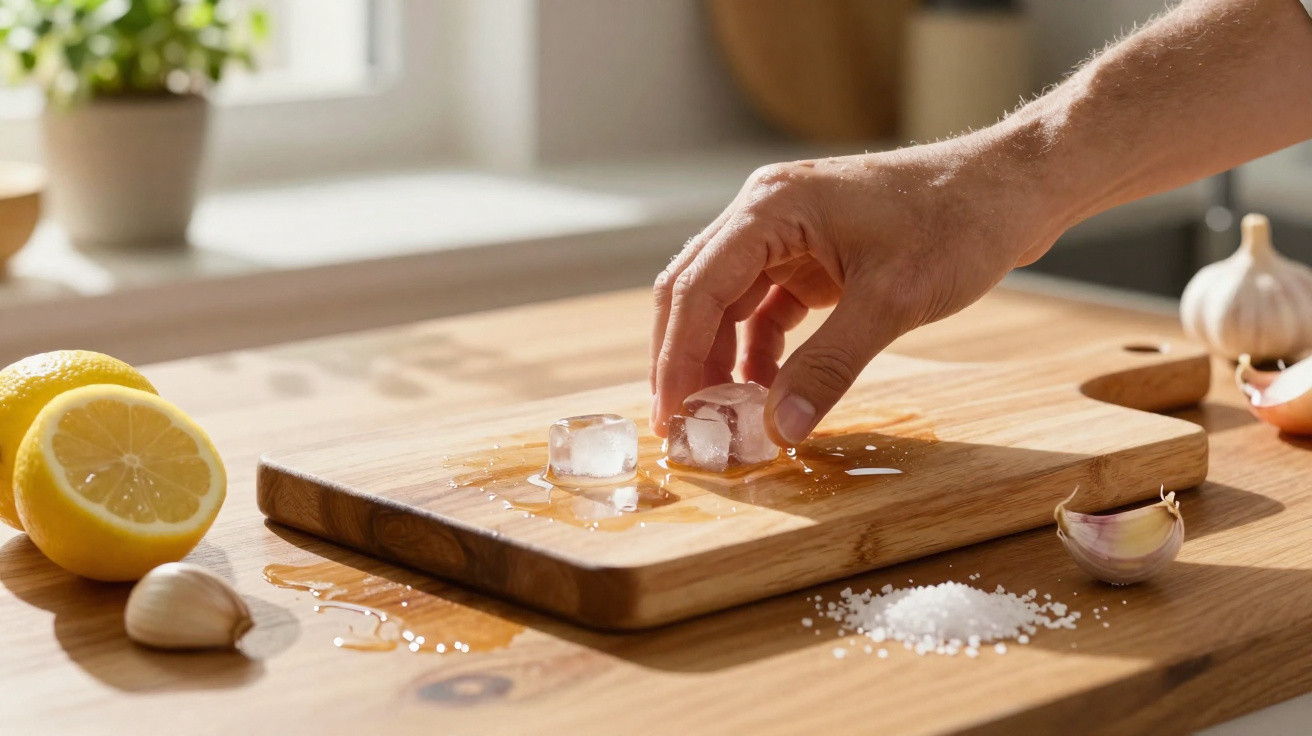
Using ice to clean a wooden chopping board has become a household tip that stands out for its simplicity and effectiveness in tackling lingering kitchen odours. The combination of low temperature and wood’s porous structure creates an interesting effect during food preparation routines.
Over time, a wooden chopping board absorbs food residues, especially garlic, onion and meat, which can make odours more pronounced. Ice can help reduce this retention by acting directly on the surface and within the material’s pores, without requiring harsh products.
Why does ice on a wooden chopping board remove odours?
When ice comes into contact with a wooden chopping board, it causes a slight contraction of the pores, making it harder for odour-producing residues to remain lodged in the kitchen surface. This effect helps loosen particles left behind after chopping food.
Cold moisture also reduces the activity of organic compounds responsible for smells. The result is a more neutral surface, without the need for strong chemical products.
How does ice affect the pores of a wooden chopping board?
Placing ice directly on a wooden chopping board produces a slight tightening of the natural fibres, which makes it easier to release residue responsible for odours. Although straightforward, this process can be highly effective in everyday kitchen use.
In practice, the method works as a mild thermal clean, helping to maintain the wood’s structure without wearing it down quickly.
To use this care method properly, a few simple steps can improve the outcome:
- Rub ice cubes directly over the surface of the wooden chopping board;
- Allow the melting water to work for a few seconds;
- Rinse and dry thoroughly to prevent moisture build-up and odours;
- Repeat the process as part of kitchen cleaning routines.
What kitchen precautions are needed when using ice for cleaning?
As part of a kitchen routine, using ice on a wooden chopping board requires care so as not to affect the material’s durability or create new odours. Wood is sensitive to excessive moisture and must be dried properly after the process.
The best approach is to balance cleaning with basic maintenance, ensuring the surface remains functional and safe for preparing food.
Important precautions include:
- Avoid soaking the wooden chopping board after using ice;
- Dry it immediately once the odours have been removed;
- Do not use excessive hot water in the kitchen, as this may warp the wood;
- Store it in a well-ventilated place.
Can ice damage a wooden chopping board?
Using ice on a wooden chopping board does not usually cause damage when done in moderation. However, overuse may affect its natural structure and increase odour retention if moisture builds up in the kitchen.
For this reason, balancing cleaning and drying is essential. Wood responds well to mild temperature changes, provided it is not continually exposed to prolonged dampness.
What to consider when keeping a chopping board free from odours
Keeping a wooden chopping board free from odours relies on simple habits within the kitchen routine, with ice serving as an occasional aid in this maintenance. Regular cleaning prevents residues from collecting in the deeper layers of the wood.
When this care becomes routine, the surface stays more neutral and ready for different types of food preparation. This reduces the transfer of smells between ingredients and improves the everyday experience.


Comments
No comments yet. Be the first to comment!
Leave a Comment