
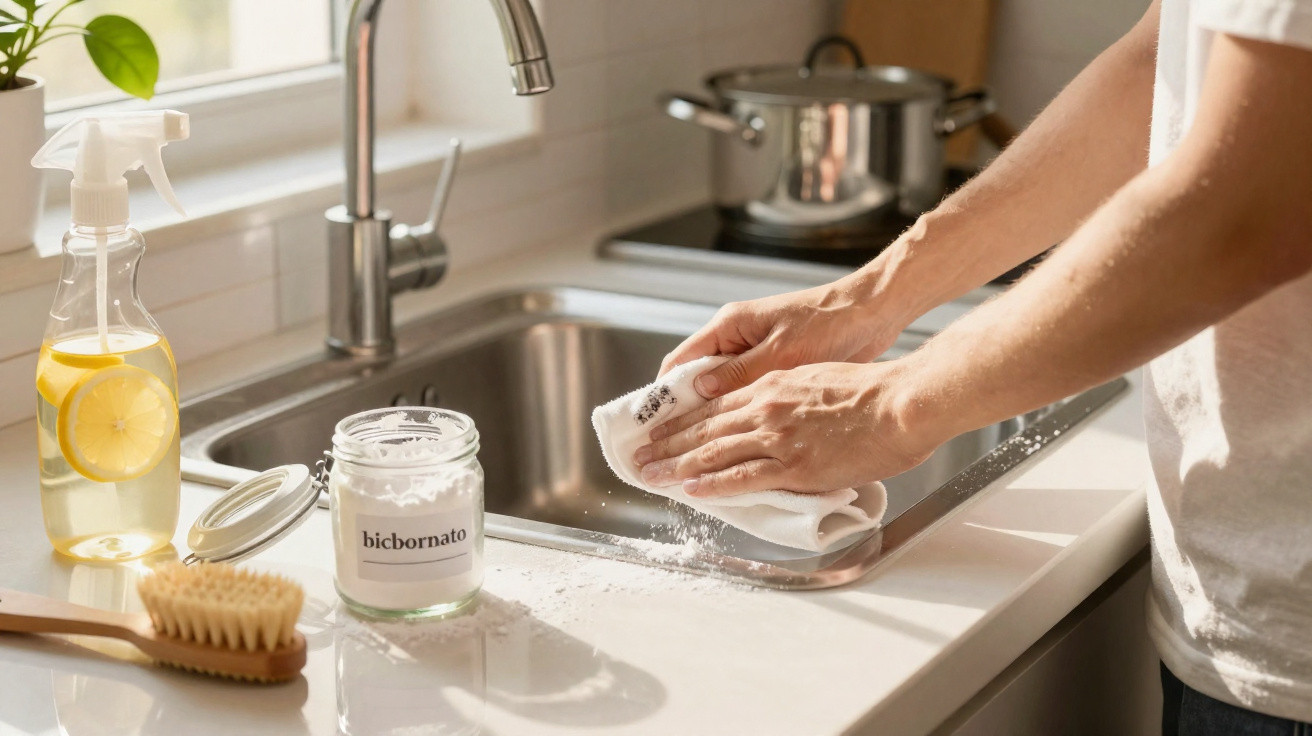
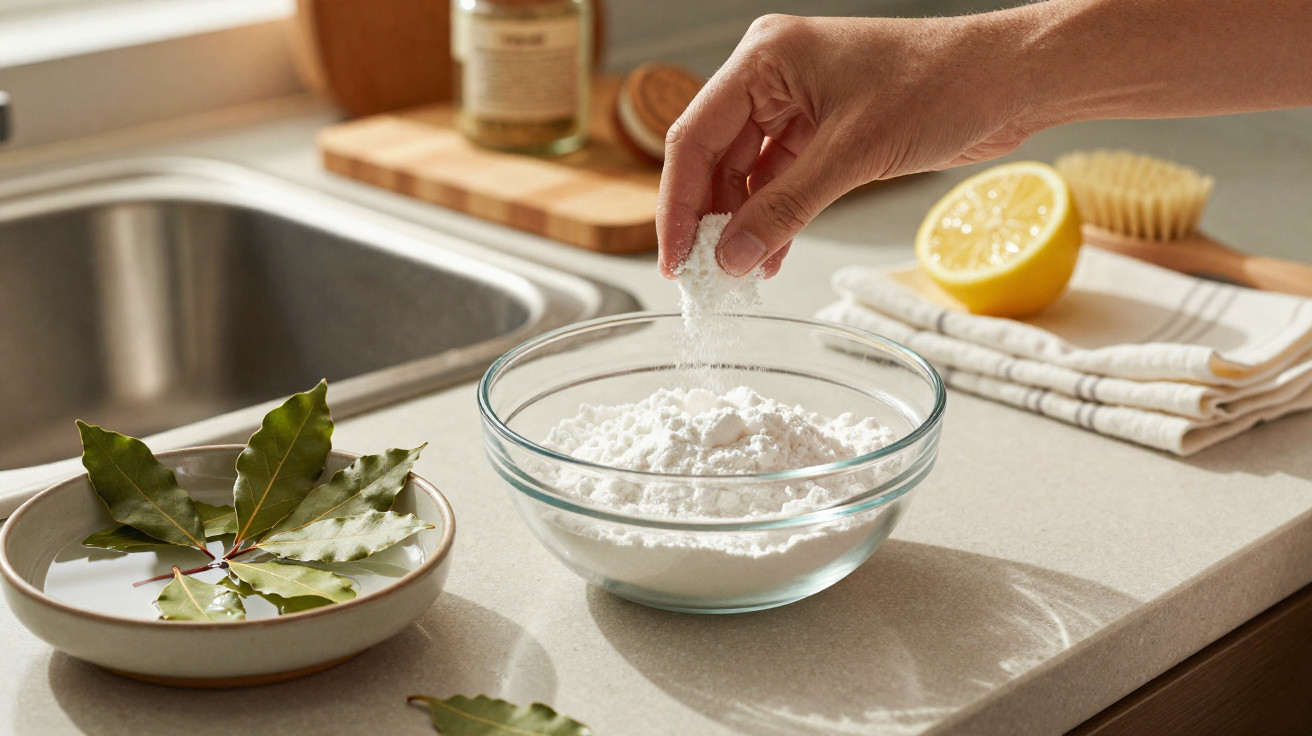
Bicarbonate of soda is among the most versatile household cleaning products, as it can lift light grease, neutralise odours and loosen stuck-on dirt without the need for complicated formulas. It is most effective for straightforward everyday cleaning, particularly when made into a paste, sprinkled over surfaces or combined with a small amount of water.
Why does bicarbonate of soda work so well for cleaning?
Bicarbonate of soda is mildly abrasive, helping to release residue without being as harsh as stronger products. It also tackles odours, making it useful for fridges, bins, containers and areas where smells tend to linger.
Although it is a simple product, it still needs to be used carefully. Very delicate, glossy, painted or scratch-sensitive surfaces should be tested on a small, inconspicuous area before use.
What does bicarbonate of soda clean effectively?
In everyday household cleaning, bicarbonate of soda is particularly helpful on areas where grease, light staining or odours build up. Use a small quantity and scrub with a soft cloth, a non-abrasive sponge or a suitable brush.
- Pans: helps to loosen light crusting and stuck-on food residue.
- Tiles: removes surface dirt and greasy marks.
- Grout: improves its appearance where there is light ingrained dirt.
- Sink: helps clean a stainless-steel bowl and reduce odours.
- Fridge: neutralises smells and assists with interior cleaning.
- Bins: reduces unpleasant odours when applied after washing.
How to use bicarbonate of soda on pans, sinks and tiles
For pans, make a paste using bicarbonate of soda and a little water, spread it over the dirt and leave it for a few minutes before scrubbing. For more stubborn residue, warm water can help soften it before cleaning.
- For the sink, sprinkle over a little bicarbonate of soda and scrub with a soft sponge.
- For tiles, apply the paste to greasy sections, then wipe away with a damp cloth.
- For grout, use a small brush with gentle movements.
- For the fridge, wipe the interior with a cloth dampened with bicarbonate of soda diluted in water.
- Rinse thoroughly so that no whitish residue is left on surfaces.
What precautions prevent damage and hazardous mixtures?
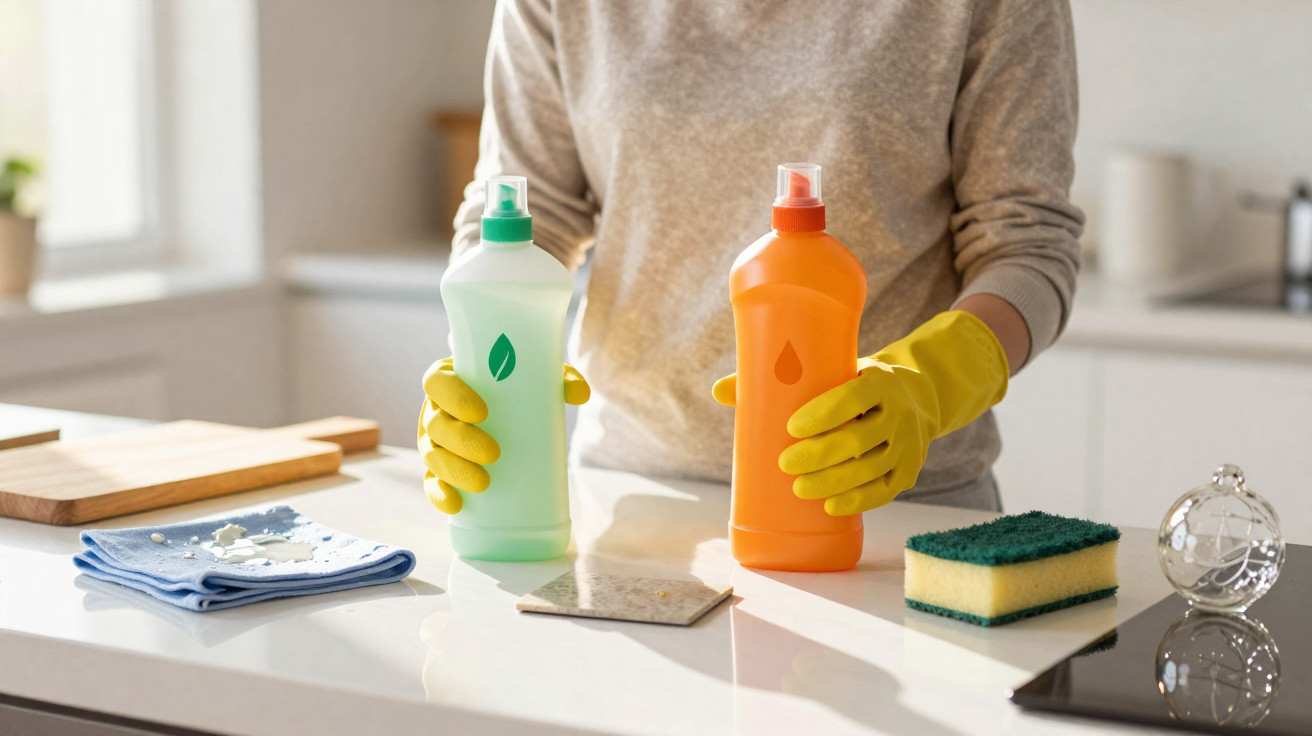
Bicarbonate of soda should not be mixed with bleach, chlorine, ammonia or unknown products. These combinations may release dangerous fumes or trigger unwanted reactions. For household cleaning, water, washing-up liquid and bicarbonate of soda are generally enough.
It is also best not to use it frequently on aluminium, marble, polished granite, unprotected wood or mirrored surfaces. Its fine texture may cause staining or scratching if scrubbed too vigorously.
When is bicarbonate of soda not enough?
Bicarbonate of soda is useful for light to moderate dirt, but it will not deal with deep mould, heavily baked-on old grease, severe rust or bad smells caused by blockages and water ingress. In these situations, the underlying cause must be addressed rather than merely masking the odour or scrubbing the surface.
To get the most from the product, use it for small, regular cleaning tasks, always rinsing and drying afterwards. This makes pans, tiles, sinks, fridges, grout and bins easier to keep clean without constantly relying on harsh manufactured cleaning products.

Comments
No comments yet. Be the first to comment!
Leave a Comment