
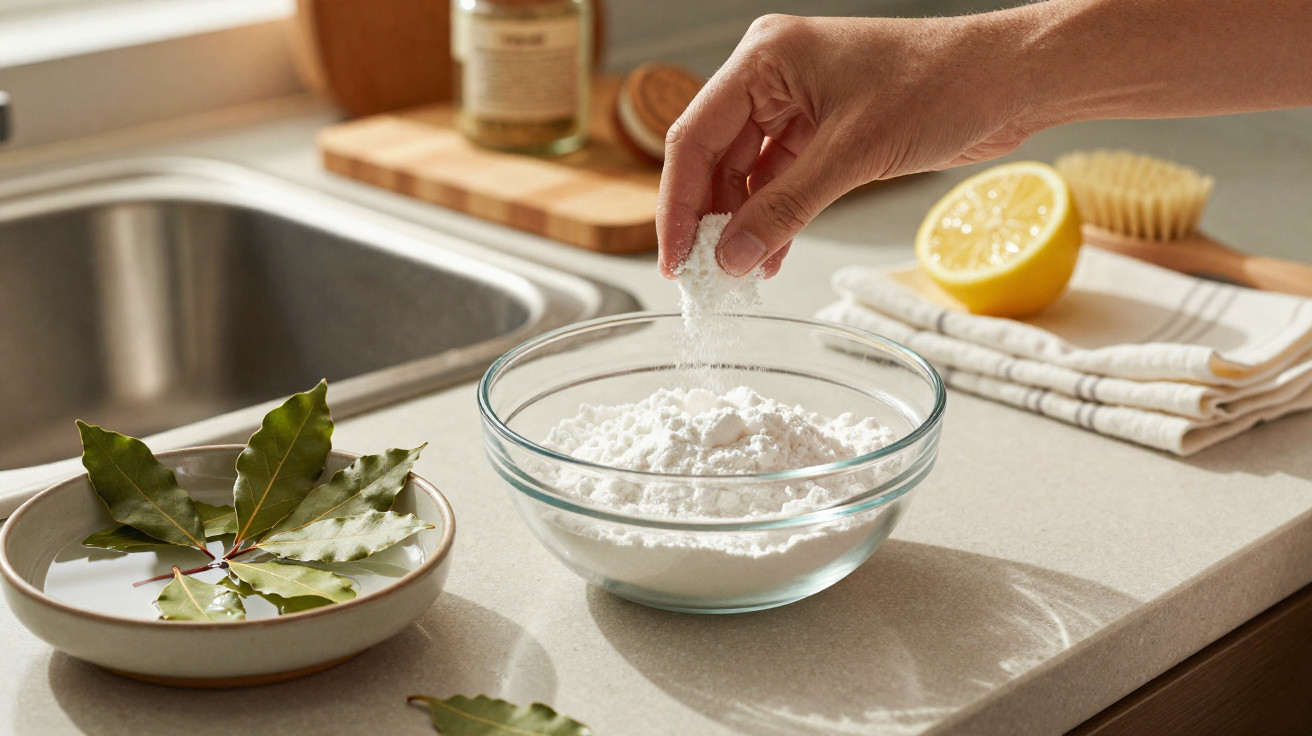
In many households, combining bicarbonate of soda with bay leaves has become a straightforward, affordable way to tackle unpleasant smells and carry out minor cleaning jobs. It can reduce the day-to-day reliance on harsher chemicals while still supporting basic household hygiene.
What is the bicarbonate of soda and bay leaf mixture?
The bicarbonate of soda and bay leaf mixture is a popular household preparation for people looking for cleaning tips and homemade solutions for the home. Bicarbonate of soda works as an odour neutraliser and mild abrasive, while bay leaves provide a fragrance and may offer antimicrobial properties linked to their natural oils.
In use, bicarbonate of soda interacts with acidic compounds, helping to lessen unwanted smells caused by food, damp or organic residue. Dried, crushed bay leaves release a gentle scent that can mask lingering odours. Together, they provide an inexpensive way to keep rooms smelling more neutral and pleasant without artificial fragrances.
How to make and use a bicarbonate of soda and bay leaf mixture at home
When making the bay leaf and bicarbonate of soda mixture, use bay leaves that are thoroughly dry to prevent mould from developing during storage. Once dry, the leaves can be crushed or chopped into small pieces, allowing their aromatic compounds to be released more easily when exposed to air and bicarbonate of soda.
A simple method generally follows the steps below, although it can be adjusted according to the size of the area and the strength of the odours:
- Choose 4 to 6 bay leaves and allow them to dry completely in a well-ventilated place.
- Crush or finely cut the bay leaves using scissors or a pestle and mortar.
- Combine the crushed leaves with around two coffee spoons of bicarbonate of soda in a clean container.
- Place small amounts of the mixture in fabric sachets, perforated jars or open containers, depending on the intended use.
What is the bay leaf and bicarbonate of soda mixture used for every day?
Around the home, the bay leaf and bicarbonate of soda mixture is mainly used to prevent strong odours and make damp-prone areas more pleasant. In enclosed spaces such as shoe cupboards, larders and storage boxes, bicarbonate of soda reduces the intensity of smells, while bay leaves add a light fragrance.
These applications are common where food, kitchen equipment or bedding stored for long periods are kept. Frequently reported ways of using it include:
- Deodorising fridges: small open jars of the mixture on shelves can help reduce food odours.
- Cupboards and drawers: fabric sachets filled with the preparation help keep clothes and tea towels free from musty smells.
- Light surface cleaning: the mixture can be sprinkled onto worktops and tiles, then wiped away with a damp cloth.
- Damp, enclosed areas: bathrooms and utility rooms can have the mixture placed in strategic corners to assist with odour control.
What are the benefits and limitations of bicarbonate of soda with bay leaves?
Its practical benefits include its low cost, the easy availability of both ingredients and a more natural scent for people who are sensitive to synthetic perfumes. As it contains no harsh components, the solution can also appeal for frequent use in domestic spaces, including those used by children and animals.
However, this homemade bicarbonate of soda and bay leaf mixture is most effective for everyday prevention and light cleaning. It does not replace dedicated products when there is heavy soiling, advanced mould or a need for deeper disinfection. In places with excessive damp, it may help manage odours but will not address underlying structural issues, such as leaks or inadequate ventilation. It should therefore be regarded as an addition to regular cleaning routines and, where required, technical repairs.



Comments
No comments yet. Be the first to comment!
Leave a Comment