
Many households use undiluted bleach in the kitchen and bathroom, overlooking the fact that effective disinfection requires… Read more
Daily cleaning in Brazilian homes calls for particular care when choosing cleaning products. Keeping bathrooms and kitchens properly disinfected depends on using protective substances correctly, while avoiding hazardous combinations that can harm families’ health and damage household surfaces.
How should bleach be diluted correctly?
Many people assume that pouring pure chlorine bleach down drains makes cleaning more effective. However, harmful germs are only eliminated when the product is correctly diluted with clean water for everyday cleaning.
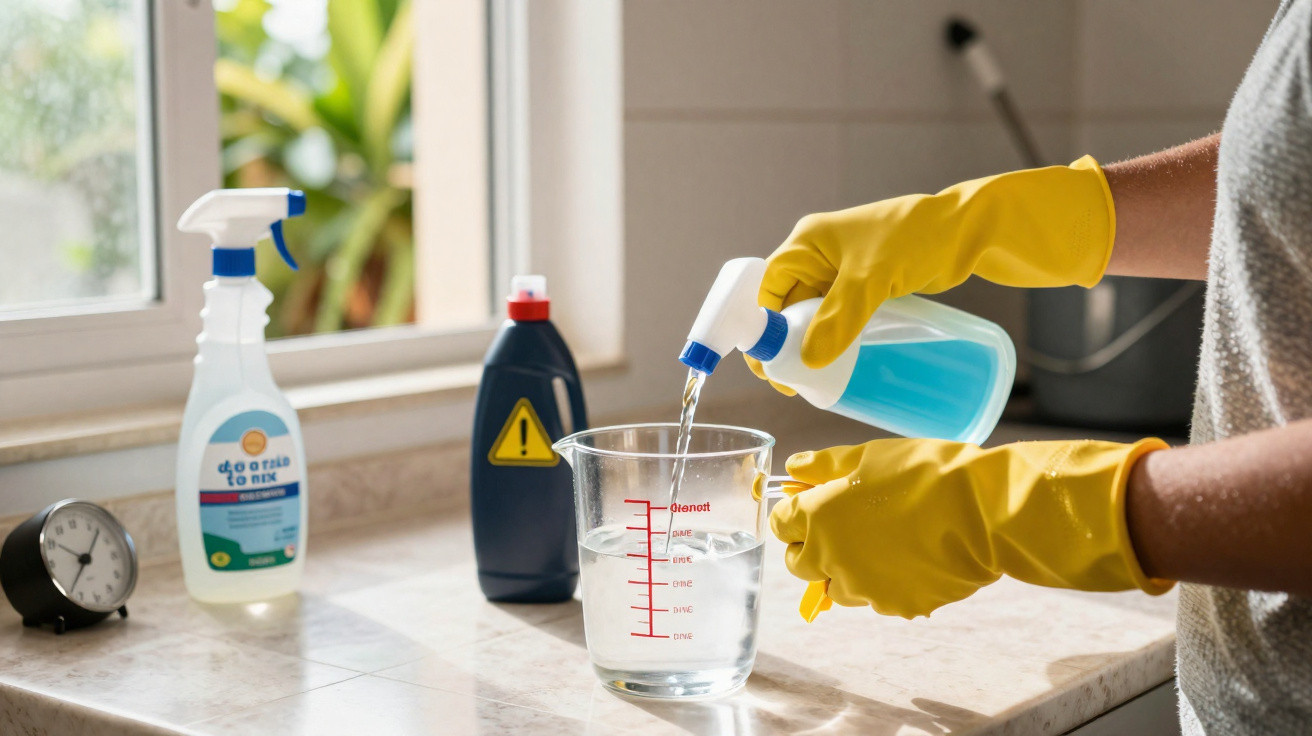
To disinfect sinks, door handles and worktops after lunch, a mild solution is required. Add 25 millilitres of household bleach to a 1-litre plastic bottle, then top it up with tap water.
The lower-strength protective mixture can be safely used on the following surfaces:
- Granite worktops and dining tables;
- Door handles and house keys;
- Plastic packaging brought home from the supermarket.
Why does active sodium hypochlorite matter?
The active ingredient in commercial products works powerfully against invisible contaminants. This important chemical reaction produces hypochlorous acid, an essential substance that destroys threats without harming the person carrying out daily cleaning in a busy kitchen.
For this reason, carefully reading the label before starting household chores makes a real difference. Checking that the product has the right concentration ensures thorough, economical disinfection, protecting the entire home against illnesses carried by external vectors in the bathroom environment.
Below is a video from the Conselho Federal de Química YouTube channel, which explores the points discussed in this topic in greater depth:
How do you disinfect heavily soiled areas and floors?
Areas with more footfall or accumulated dirt need a stronger solution. Use 50 millilitres of disinfectant for every litre of purified water to create a powerful mixture suitable for thoroughly washing the floor and toilet.
Because this intensive cleaning solution is concentrated, physical protective barriers must be used. Handling the bucket while consistently wearing protective equipment prevents skin irritation and safeguards the person carefully looking after the upkeep and wellbeing of their home.
Precautions for the Strong Mixture
Guidance for Heavily Soiled Areas
Follow these essential steps to disinfect floors and toilets safely:
- Wear durable rubber gloves throughout handling;
- Apply the liquid to open areas, toilets and shoe soles;
- Dampen a clean cloth and place it at the entrance to the room.
How should the disinfectant be stored?
Once the solution has been prepared correctly, the bottle containing the cleaning substance needs immediate storage precautions. Clearly labelling the container helps prevent serious household accidents involving other family members, ensuring everyone knows what is inside the plastic bottle kept in the cupboard.
The diluted chemical compound loses its active properties if it is exposed directly to daylight. It should therefore be stored somewhere completely dark and cool, kept well out of reach of young children and animals.
Follow these essential steps to preserve the effectiveness of the homemade disinfectant prepared after lunch:
- Attach a clear identification label immediately after preparation;
- Keep the plastic bottle in a cool, dark place;
- Take the container out of the cupboard only when it is time to apply the solution.
What should never be cleaned with this solution?
Although this homemade disinfectant is highly versatile for sanitising floors and tiles, important restrictions help avoid serious material damage. Modern electronic devices must never be treated with this product, as their sensitive components can be immediately damaged by the corrosive moisture in the formula.
To keep items such as mobile phones and screens thoroughly clean, use specific methods recommended by their manufacturers. This preserves the lifespan of personal technology while keeping the whole home protected from micro-organisms through the intelligent use of chlorine bleach in your routine.
Comments
No comments yet. Be the first to comment!
Leave a Comment