
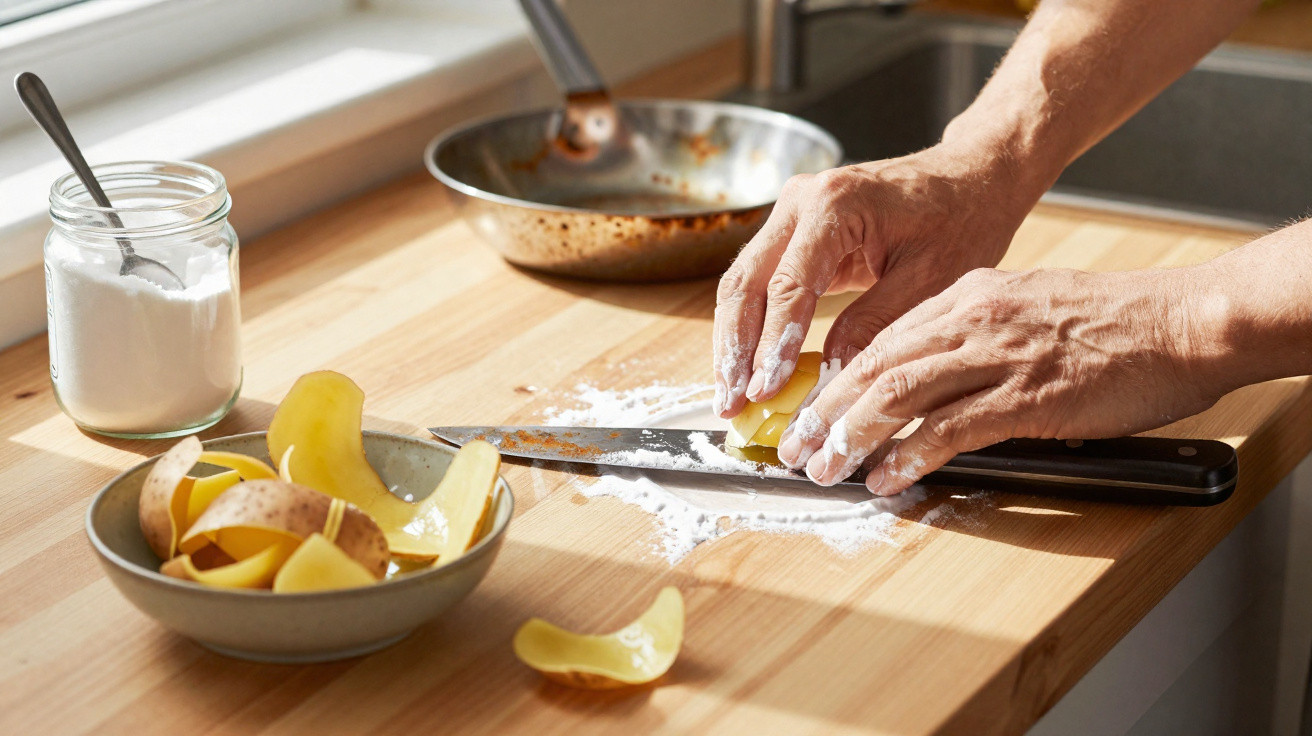
Among the many household tips currently doing the rounds, using potato peel with bicarbonate of soda to remove rust has attracted attention. The idea is straightforward: use a kitchen leftover alongside an inexpensive product to clean small metal items, providing a home alternative for milder cases of recent, surface-level rust.
How does potato peel with bicarbonate of soda help to remove rust?
Potato peel contains mild organic acids that can interact with the iron oxide found in rust. This contact can soften the rusty surface layer, particularly on items such as cutlery, small tools and metal decorative pieces.
Bicarbonate of soda works as a gentle abrasive, helping to lift the rust that has been softened by the peel. Together, they create a mild paste that can polish metal less aggressively than strong chemical products or metal brushes.
How to use potato peel with bicarbonate of soda to remove rust: step by step
Anyone wishing to try this method at home should first test it on a small area, checking how the metal reacts and whether the cleaning is effective. This precaution helps prevent damage to delicate items and makes it possible to adjust the pressure used.
Once you have tested an inconspicuous spot, follow the basic steps below, adjusting the amount of peel and bicarbonate of soda to suit the size of the item being cleaned:
- Wash the potato thoroughly before peeling it, removing any soil and dirt.
- Cut the potato and set aside pieces of peel that are still moist, as the moisture helps form the paste.
- Sprinkle a layer of bicarbonate of soda over the inner side of the peel, where it has greater contact with the flesh.
- Rub the potato peel over the rusty area using gentle circular motions.
- Add more bicarbonate of soda or replace the peel whenever the surface becomes too smooth or darkened.
- Leave the mixture on the metal for a few minutes before removing it.
- Wipe with a damp cloth to remove excess paste, then dry the item thoroughly.
For more stubborn rust, the procedure can be repeated a few times. Careful drying after every application matters, as prolonged moisture encourages the problem to return.
Can potato peel with bicarbonate of soda remove every type of rust?
Using potato peel with bicarbonate of soda is most effective on thin, recent and localised rust, serving as a light maintenance method. On items with deep corrosion, already worn metal or compromised older structures, its effect is likely to remain largely superficial.
In more serious cases, specialist rust removers, mechanical sanding or professional treatment may be required. This household technique is better suited as a complementary measure for preserving everyday objects, helping to slow the progress of corrosion.
What are the benefits, precautions and good practices when using potato peel with bicarbonate of soda?
As well as being economical, this combination reuses a leftover that would usually go in the bin or onto the compost heap. For more mindful everyday use, people who adopt this type of household cleaning commonly highlight the following points:
- Economy: uses inexpensive products that are easy to find in supermarkets.
- Reuse: gives potato peels another purpose as part of reducing waste.
- Gentle action: less harsh than metal brushes and strong chemical removers.
- Targeted application: ideal for small objects, such as cutlery, garden tools and screws.
For the best results, always test the method on a discreet area and avoid using it on very delicate metals or items with special finishes, such as decorative plating. Keeping the object completely dry after cleaning and storing pieces in less humid places helps prolong the effect and reduces the likelihood of rust returning quickly.


Comments
No comments yet. Be the first to comment!
Leave a Comment