
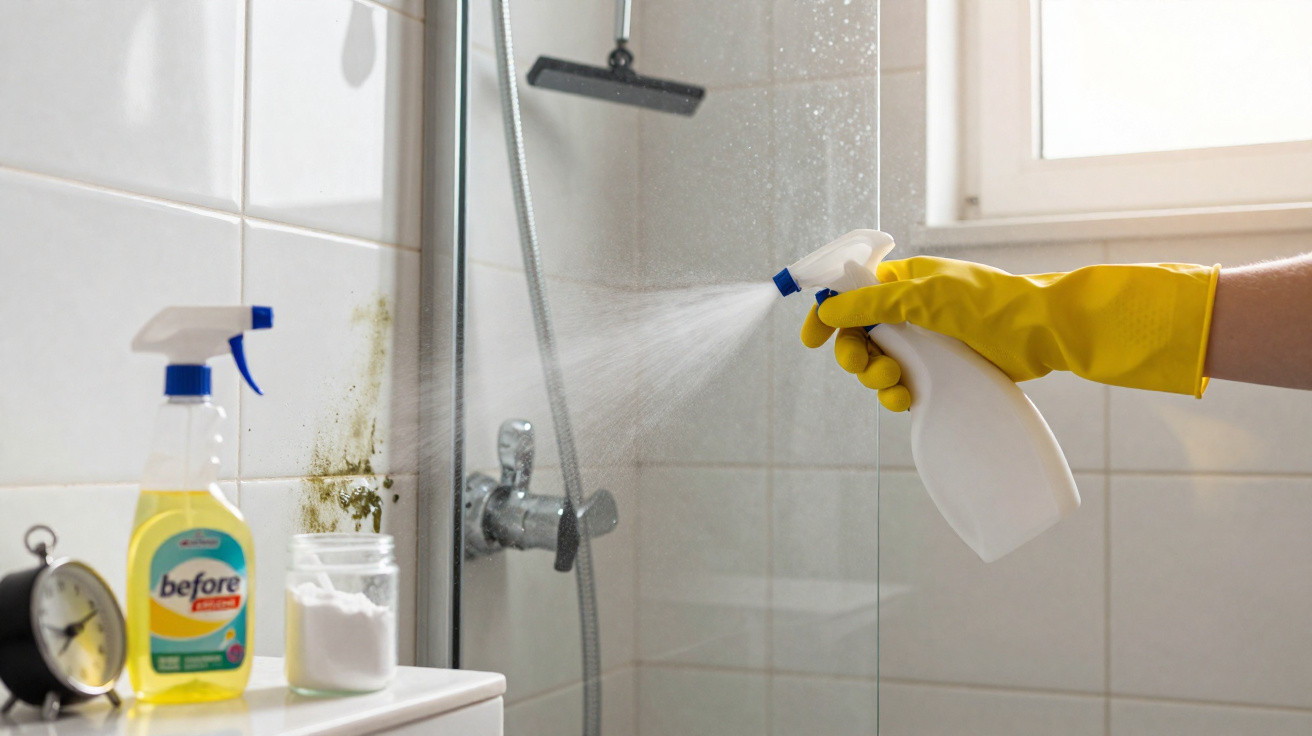
Keeping the home organised calls for practical tricks that make better use of everyday time. When bathroom grout builds up slime because of high humidity, removing heavy dirt from the shower enclosure can seem like an exhausting task without the use of effective products.
Why does bathroom grout develop so many dark marks?
Continual contact with water vapour creates the ideal setting for microorganisms to multiply on surfaces. The ongoing build-up of soap residue and body oils speeds up the appearance of dark marks on tiles extremely quickly.
Without regular sanitising, slime spreads into damp corners and spoils the appearance of the room. Finding solutions that remove these harmful agents without intensive scrubbing makes household cleaning more intelligent and manageable.
Using the right techniques correctly tackles the issue effectively with targeted actions:
- Active removal: Practical elimination of mould built up on partitions.
- Chemical action: Use of active chlorine for deep disinfection.
- Abrasive effect: Bicarbonate of soda cleans stained tiling.
- Safe whitening: Hydrogen peroxide works directly by breaking down biological impurities.
- Complete prevention: Control of greasy residues to prevent new deposits.
Why should you avoid excessive physical effort when cleaning?
The key to removing biological deposits is breaking down dirt molecules with suitable substances. Powerful mixtures can release deeply embedded residue from porous surfaces, allowing sanitising to happen in an automated way and with excellent performance.
Using the correct chemical products reduces physical strain while protecting the condition of the surfaces. This intelligent approach saves the resident’s arms and leaves surfaces fully disinfected against harmful microorganisms, ensuring a completely sanitised bathroom free from marks.
Below is a video from the Bettanin Oficial YouTube channel that explores the points discussed in this topic in greater detail:
Which mixtures make slime and mould easier to remove?
Ingredients with oxidising properties work directly on the dark pigments produced by established fungi. Selecting effective materials neutralises the characteristic smell of enclosed spaces and restores affected areas to their original appearance with safety and excellent practicality.
Efficient and Safe Sanitising
Components that work independently on surfaces
Applying the right solutions prevents intense physical strain during the weekend clean.
The planned use of these materials protects the tiles and brightens dark corners.
A carefully planned combination of these chemical elements improves the release of dirt embedded in tile gaps. Adopting this method delivers lasting results for maintaining living spaces, turning difficult jobs into simple, highly effective processes for everyday life.
The main items that help restore the appearance of washable surfaces are listed below:
- Active chlorine for rapid disinfection
- Bicarbonate of soda for mild abrasive action
- Hydrogen peroxide for safe whitening
How can you save time during household cleaning?
Planning each sanitising stage properly significantly cuts the time spent on tiring household jobs. Letting chemical agents work on dark marks by themselves makes it possible to complete other important tasks in the home routine in an organised manner at the same time.
This process optimisation removes the need to scrub the floor repeatedly to achieve the desired brightening of the partitions. The method saves the resident’s energy, turning the weekend into a time for genuine rest with fully refreshed spaces.
Consider some benefits of adopting this intelligent approach to household tasks:
- Significant savings in free time
- Complete reduction in muscle strain
- Protection of ceramic surfaces and grout
How can humidity be controlled in a domestic shower enclosure?
Reducing persistent humidity after showering is the best preventative barrier against new areas of biological contamination. Keeping windows fully open ensures constant airflow, stopping spores from settling permanently on the ceramic covering.
Drying the shower enclosure walls with a plastic squeegee immediately after use drastically reduces the water left on surfaces. This straightforward daily habit interrupts the mould growth cycle, helping the bathroom remain clean for much longer.
Read also: A two-ingredient mixture cleans grout and saves your weekend
Comments
No comments yet. Be the first to comment!
Leave a Comment