
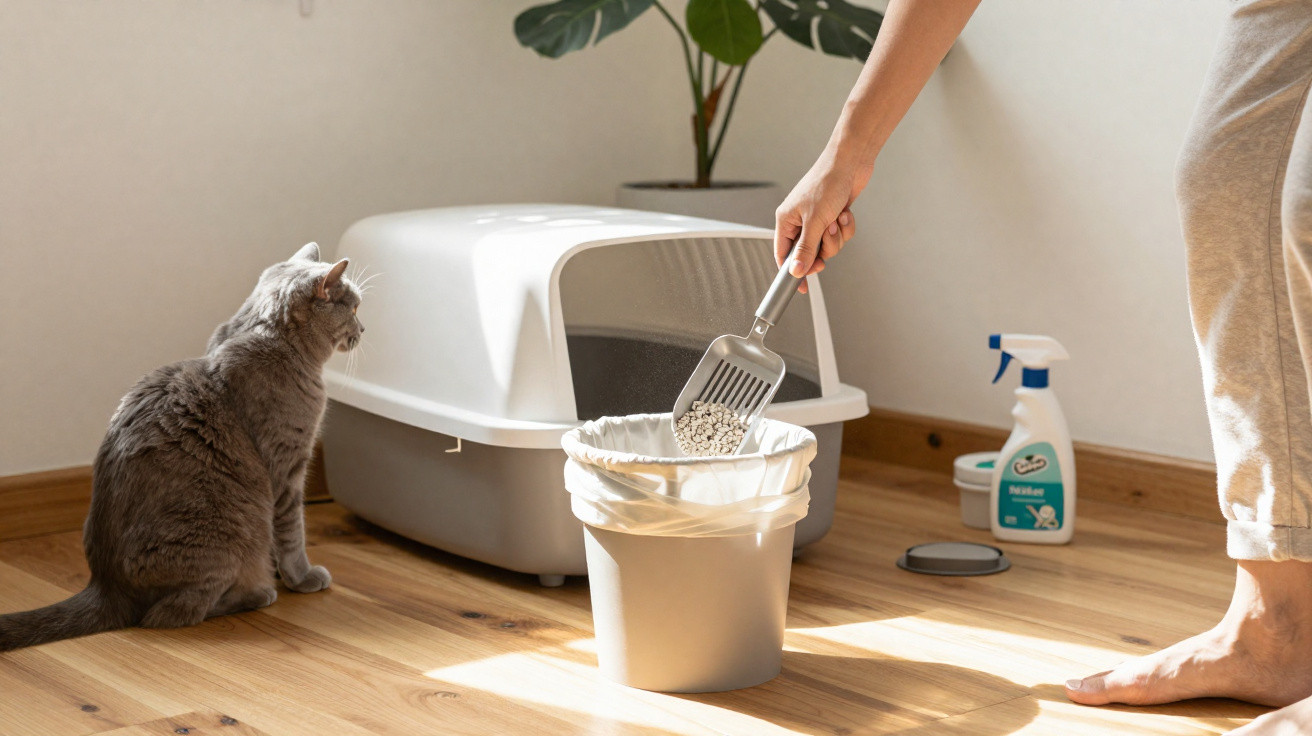
Cleaning a cat’s litter tray properly is among the most important tasks for safeguarding an animal’s wellbeing and keeping the home free from unpleasant smells. Many owners assume that occasionally removing waste is enough, yet proper hygiene also requires daily and regular care that directly affects cats’ health, comfort and behaviour. A clean tray lowers stress, helps prevent inappropriate toileting and makes the home far more pleasant for everyone.
How often should a litter tray be cleaned?
Cleaning the litter tray should be built into every owner’s everyday routine. Cats are recognised for their cleanliness and will often avoid areas they find dirty or uncomfortable.
To ensure the tray remains suitable for use, the following habits are essential:
- Remove faeces and urine clumps every day.
- Top up the litter whenever needed.
- Check for excessive odours.
- Monitor whether the cat is using the tray as usual.
How should you clean a cat’s litter tray properly?
As well as daily maintenance, the tray needs a thorough clean on a regular basis. This removes built-up residue that can remain even after solid waste and clumps have been taken out.
To make sure cleaning works effectively for both people and a cat’s highly sensitive sense of smell, it is worth following the video tutorial from the @FamiliaGuieCia channel. It sets out the correct steps for deep washing and explains which products should be used to genuinely remove odour molecules.
Where is the best place to put a litter tray?
Where the tray is positioned has a direct effect on how willing a cat is to use it. Very busy or noisy spaces can make the animal uncomfortable and may even lead it to look elsewhere to relieve itself.
Choose a quiet, well-ventilated area away from food and water bowls. This gives the cat the privacy and security it needs to follow its natural habits without disturbance.
Which mistakes should be avoided when cleaning a litter tray?
Certain common mistakes can undermine the cleanliness of the space and make a cat uncomfortable. Even when they are well intentioned, some approaches can negatively affect the animal’s experience and encourage lingering odours.
The most frequent issues include allowing waste to build up for several days, abruptly changing the type of litter, putting too little litter in the tray, or neglecting full cleans. Strongly fragranced products should also be avoided, as cats have an extremely sensitive sense of smell. By maintaining a consistent care routine, an owner creates a cleaner, healthier and more comfortable environment, encourages proper use of the litter tray and supports the animal’s wellbeing.
Comments
No comments yet. Be the first to comment!
Leave a Comment