
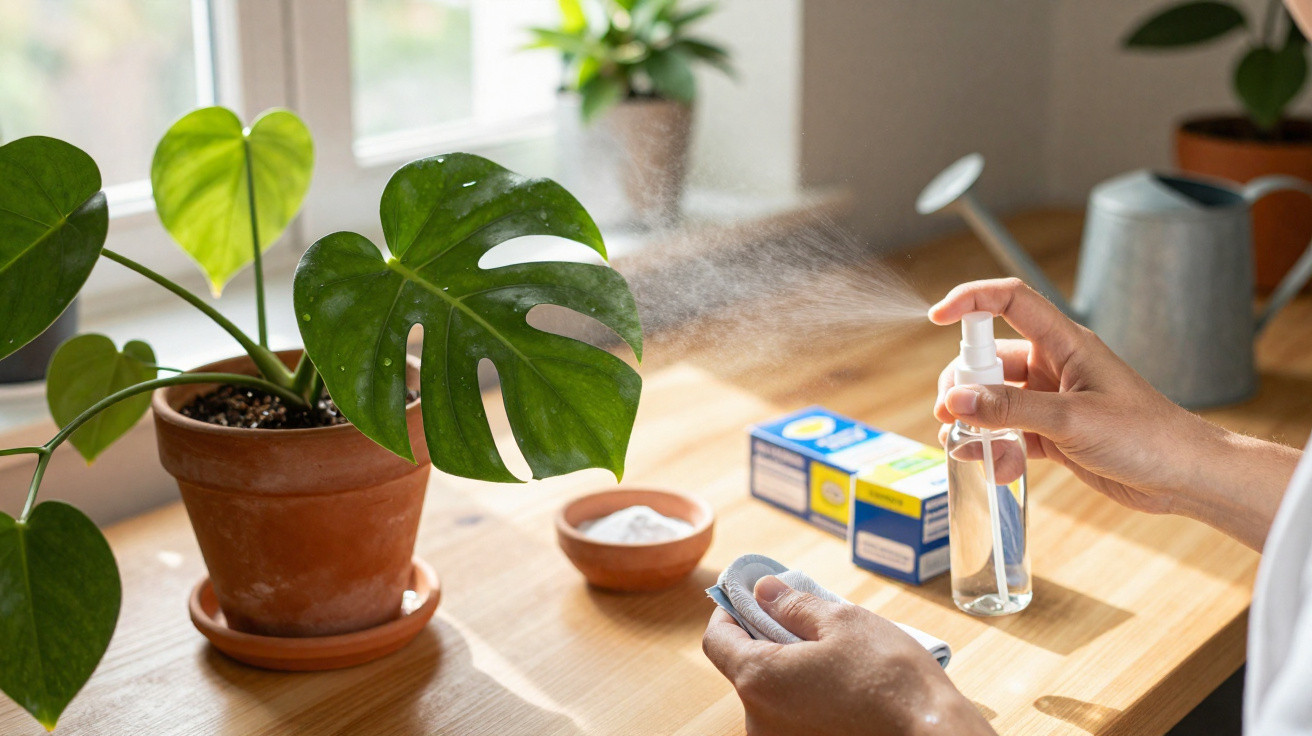
Houseplants can transform a room, yet the influence of soil, water and unseen microbes on their wellbeing is often overlooked.
From fungal marks on foliage to unexplained gnats buzzing around a pot, indoor plants contend with an entire micro-world of difficulties. Baking soda, an everyday kitchen staple, has become a discreetly popular option for home growers seeking healthier leaves without resorting to aggressive chemicals.
Why baking soda appears so often in houseplant care advice
Baking soda, also called sodium bicarbonate, is found in most kitchen cupboards for baking and cleaning. Gardeners now use it for another purpose: it subtly alters the conditions around a plant, making it more difficult for several familiar pests and diseases to flourish.
Baking soda does not act as a miracle fertiliser; it acts as a gentle environmental tweak that can slow fungi, bacteria and odours.
Many fungal leaf diseases thrive on damp, mildly acidic surfaces. A weak baking soda mixture increases the pH of the leaf surface sufficiently to make conditions less suitable for these fungi. This may help restrict powdery mildew, leaf spotting and the fuzzy mould frequently found in humid, poorly ventilated rooms.
Soil in indoor pots often remains wet for longer than soil in outdoor beds, particularly in decorative containers with inadequate drainage. Such dampness promotes surface mould and may draw fungus gnats and other small insects. Applied sparingly, a very fine layer of baking soda on the soil can help the upper surface dry somewhat sooner and make it less hospitable to these organisms.
How baking soda affects indoor plants
Baking soda influences three key parts of a houseplant’s surroundings: moisture, microorganisms and smells.
Controlling moisture and mould
Overwatering is still among the most common causes of houseplant loss. If compost remains perpetually damp at the surface, white or green-tinged mould often develops on the potting mix. Although this mould seldom damages the plant itself, it indicates conditions that are favourable for disease.
A very small dusting of baking soda over the compost surface may:
- Help the top layer of compost dry slightly more quickly.
- Deter algae and mould on the surface.
- Lessen the stale smell sometimes associated with waterlogged pots.
It will not resolve persistently wet compost deeper in the container, but it can form part of a wider plan to reduce watering and improve drainage.
Limiting fungi and bacteria on leaves
Fungal spores continually settle on houseplants, particularly where windows remain shut and airflow is limited. A diluted baking soda spray applied to leaves may inhibit some of these pathogens.
Gardeners tend to use baking soda as a preventative surface treatment: it helps slow the spread of leaf diseases rather than curing severe infections.
Its gentle alkalinity changes the thin moisture layer left on foliage after watering or misting. As many fungi favour mildly acidic moisture films, they can find it harder to germinate once the pH becomes more alkaline. Certain bacteria also respond poorly to this micro-environment, potentially resulting in fewer spots and rots.
Reducing insects and unwanted odours
Decaying plant matter, stagnant water in saucers and deteriorating roots produce scents that attract insects including fungus gnats. Baking soda is not an insecticide, but it can:
- Assist in removing odorous organic residues from empty pots during cleaning.
- Neutralise acids that contribute to unpleasant smells.
- Restrict the growth of microorganisms that insect larvae feed on near the soil surface.
Cleaner containers and reduced fungal growth can often result in fewer gnats hovering around your living-room lamp.
Safe ways to use baking soda with houseplants
A simple anti-fungal spray recipe
One popular method is to include baking soda in a homemade leaf spray. A straightforward recipe is as follows:
| Ingredient | Quantity | Role |
|---|---|---|
| Water | 1 litre | Dilutes the mixture for safe application |
| Baking soda | 1 teaspoon (5 ml) | Raises surface pH and slows fungi |
| Mild liquid soap | Few drops | Helps the solution spread and stick to leaves |
Stir the ingredients until the baking soda has dissolved completely. Transfer the mixture to a spray bottle and shake it before applying. Use the spray only when the plant is in bright but indirect light, rather than direct midday sunshine, to minimise the chance of leaf scorch.
Always test the spray on a single leaf or a small section of the plant first and wait 24 to 48 hours before treating the rest.
Provided the tested area remains healthy, mist the upper leaf surfaces lightly, no more than once weekly during an outbreak. Improve air circulation around the plant as well; the spray complements good growing practice rather than replacing it.
Applying baking soda to potting soil
When mould appears in spots across the compost surface, impatient gardeners may be tempted to add a heavy coating of powder. This commonly causes more harm than good. Too much baking soda can increase soil pH and put roots under stress, especially in plants that favour mildly acidic conditions, including ferns, calatheas and many tropical varieties.
A more cautious method is preferable:
- Remove the upper centimetre of mouldy compost and throw it away.
- Allow the compost to dry until the top 2–3 cm are dry when touched.
- Scatter an extremely light pinch of baking soda over the surface, then carefully work it into only the upper layer.
Repeat this only every one or two weeks, and solely when mould continues to reappear. Should leaves begin to yellow or growth slow after treatment, discontinue baking soda use and think about repotting in fresh compost.
Cleaning previously used pots with baking soda
Older pots may retain dried fertiliser salts, rings of algae and unseen spores from plants grown in them before. Washing with baking soda can help prepare them for replanting.
First rinse away any loose compost, then leave the pots to soak in warm water containing a few spoonfuls of baking soda. Scrub all surfaces, inside and outside, using a brush or cloth. Its mild abrasive effect clears residue without damaging plastic or glazed finishes. Rinse well, then allow the pots to dry completely before filling them with fresh compost.
Starting with a clean container cuts the risk of passing root rot, fungal spores or bacteria from one plant to the next.
Rules and risks: use baking soda sparingly
Despite its harmless reputation, baking soda may injure plants when applied too frequently or in excessive concentrations. The sodium in sodium bicarbonate can build up in potting compost and disrupt nutrient absorption. An overly strong spray, or one used in full sunshine, can leave brown margins or small scorched marks on leaves.
Most indoor gardeners use baking soda no more than once a week while a problem is present, stopping altogether once it has been brought under control. This pattern reduces the likelihood of lasting pH changes in the compost.
Certain groups are especially sensitive, including fine-leaved ferns, numerous succulents, orchids and some calatheas. Spot testing is even more important for these plants. If the test leaf curls, changes colour or develops dry patches, do not use the baking soda method on that species.
When baking soda is not the solution
Baking soda addresses surface-level problems only. Severe root rot caused by ongoing waterlogging will not be cured simply because the top of the compost dries a little more quickly. Repotting into fresh, free-draining compost, cutting away rotten roots and changing your watering habits will have a greater effect in these situations than any spray.
Similarly, serious pest outbreaks involving spider mites or scale insects rarely improve with baking soda. Horticultural soap, neem-based products and manual removal provide more dependable control. Baking soda belongs more on the “soft prevention” side of houseplant care than in comprehensive pest management.
Extra tips for healthier indoor plants
Considering baking soda raises a wider issue: how can a small indoor ecosystem remain balanced without heavy dependence on chemicals? Straightforward changes to light levels, watering and air movement can prevent many problems before they develop.
For instance, combining baking soda sprays with a small desk fan running on a low setting often controls powdery mildew better than either approach used on its own. For some species, bottom watering with saucers, followed by removing excess water after 20 minutes, can also reduce splash-borne leaf diseases.
Soil pH management is another consideration. If baking soda is used in pots more than a few times annually, occasional checks with affordable pH strips may help prevent lasting changes. Most popular houseplants perform best in compost that is slightly acidic to neutral; repeated applications of alkaline materials can gradually push them outside that range.
Home growers generally achieve the strongest results when they view baking soda as an occasional aid rather than a miracle powder. A careful, inquisitive method - test a little, observe, adjust - usually produces more resilient and attractive houseplants in the long term.





Comments
No comments yet. Be the first to comment!
Leave a Comment