
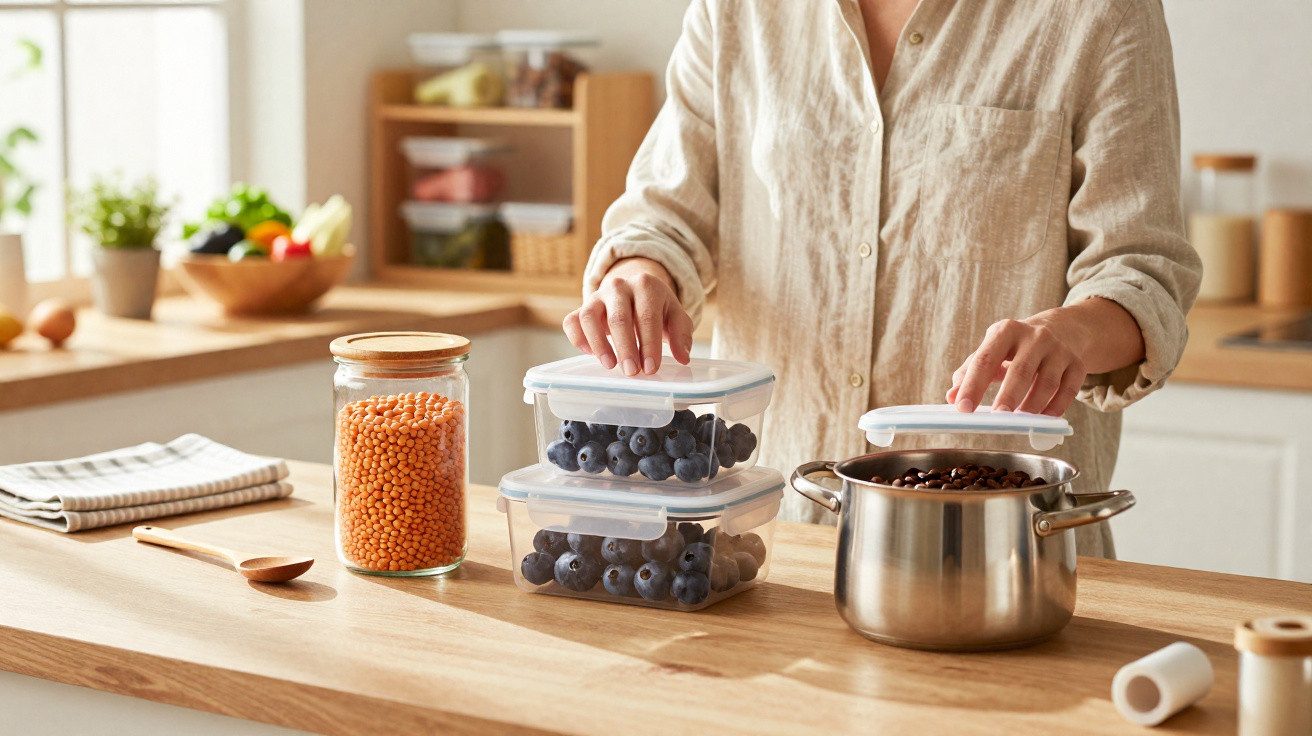
Choosing the right storage container can keep food fresh for longer, prevent lingering smells and make the kitchen tidier. Glass, plastic and stainless steel can all be effective, although each material has its own benefits and drawbacks. The most suitable option will depend on the food being stored, everyday use and whether the container will be washed, heated or carried around.
What is the difference between glass, plastic and stainless-steel containers?
A glass container is generally more neutral, does not easily retain odours and lets you see what is inside. It works particularly well for leftovers, sauces, chopped fruit and dishes taken from the fridge straight to the table.
Plastic is lightweight, inexpensive and convenient to carry, but it can become stained, scratched and absorb odours over time. Stainless steel, meanwhile, is sturdy, long-lasting and suitable for dry food or cold packed lunches, although you cannot see the contents and it must not be used in a microwave.
Which storage container keeps each type of food best?
Foods containing sauces, fat, strong seasonings or intense colours are usually better stored in glass, as it is less likely to absorb odours and pigments. Plastic can be adequate for dry foods, snacks and light transport, provided that it remains in good condition.
- Glass: best for sauces, beans, meat, chopped fruit and prepared meals.
- Plastic: practical for snacks, dry salads, biscuits and quick transport.
- Stainless steel: suitable for cold packed lunches, nuts, whole fruit and dry foods.
- Containers with securely fitting lids help to limit air exposure and leaks.
- Let hot food cool slightly before sealing it and placing it in the fridge.
What care prevents food flavours from changing?
Food flavour may change if a container holds old odours, has not been washed properly or is used incorrectly with very hot food. This is more common with scratched plastic containers, as the scratches can trap grease and residue.
- Avoid storing hot tomato sauce in heavily used plastic.
- Wash lids thoroughly, especially their sealing rings.
- Do not use containers that are cracked, warped or have a persistent smell.
- Choose glass for garlic, onion, fish and highly seasoned dishes.
- Check the manufacturer’s symbol before putting any container in the microwave, freezer or dishwasher.
What are the advantages and disadvantages of each material?
Glass is hygienic, attractive and versatile, but it is heavier and can break. Plastic is light and affordable, yet it is less durable and requires closer attention to its condition. Stainless steel lasts for a long time and stands up well to daily use, but it is not transparent and restricts heating options.
In everyday use, many kitchens work best with a combination of all three. Glass is useful for ready-made meals and moist foods; plastic suits quick uses and transport; and stainless steel is a good choice for people seeking durability and wishing to avoid fragile containers.
How do you choose the best storage container for your routine?
For anyone who stores plenty of leftovers and reheats them in the microwave, glass is usually the most practical and safest choice, as long as it is designed for microwave use. For carrying snacks in a bag or preparing a lightweight packed lunch, good-quality plastic may be more convenient.
If durability and strength are the main priorities, stainless steel is a strong option, especially for dry foods or meals that do not need heating in the container. The best storage container is one that brings together preservation, safety, easy cleaning and genuine usefulness in the everyday kitchen routine.

Comments
No comments yet. Be the first to comment!
Leave a Comment