
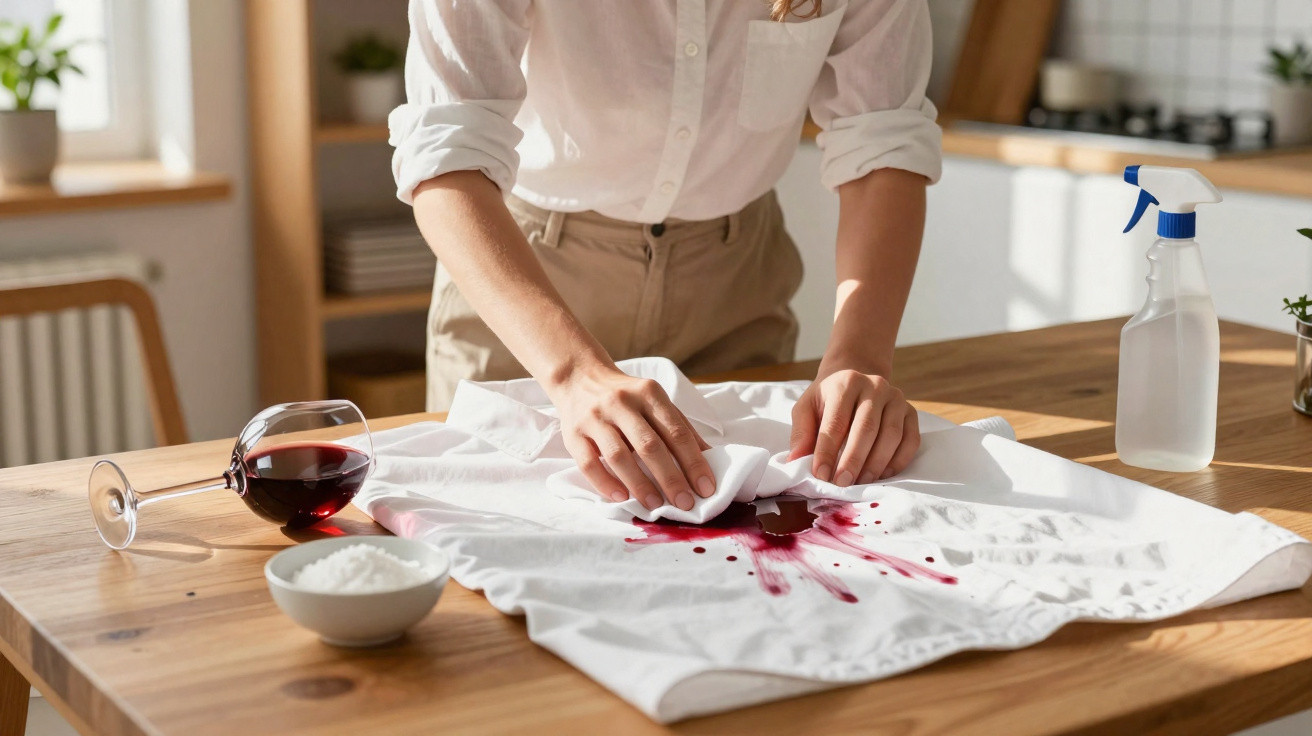
Red wine stains often happen during a moment of inattention and can cause instant concern, particularly when they land on light-coloured clothing, upholstery or favourite tablecloths. Although they look dramatic, they can be removed at home using straightforward, affordable products, provided you act quickly and avoid anything that drives the pigment further into the fabric.
What should you do in the first few minutes after a red wine stain?
During the first few minutes, the wine is still fresh and therefore easier to lift. Start by blotting away any excess liquid with kitchen roll or a clean cloth. Press gently rather than rubbing, as rubbing can spread the pigment through the fibres.
Next, dampen the affected area under cold running water, or add small amounts of water to dilute the wine. While the stain is still wet, cover it with table salt or bicarbonate of soda. Leave it for a few minutes, then wash the area with mild soap or a gentle washing-up liquid.
Watch a video from the YouTube channel Organise Without Fuss, which covers emergency methods for removing stubborn fabric and clothing stains using products you may already have in your laundry area:
https://www.youtube.com/watch?v=J3mCbyE8nco
How can this simple method be adapted for different fabrics?
This basic technique can be adjusted for cotton, delicate materials, upholstery and carpets, always using cool water and minimal friction. Below is a guide to the situations in which each material needs extra care or can withstand a slightly firmer approach.
- Cotton and hard-wearing fabrics: suitable for casual clothing, tablecloths and tea towels, these can cope with gentle rubbing.
- Delicate fabrics: silk, lace, viscose and fine synthetics require light movements and only brief soaking.
- Upholstery and carpets: these should be treated in place with a damp cloth, blotting up excess liquid while avoiding soaking the material.
How to remove red wine stains from cotton and dried stains
For cotton, the approach can still work well even if the stain has begun to dry. Remove any excess, rinse with cold water from the reverse side of the fabric, apply salt or bicarbonate of soda and leave for 10 to 20 minutes. Then rub gently with mild soap or clear washing-up liquid, and wash as usual on a gentle cycle.
If the stain is already dry, re-wet the area with cold water and soak the fabric for a few minutes to help loosen the pigment trapped in the fibres. Then repeat the salt or bicarbonate of soda and mild soap method. You can carry this out two or three times before putting the item through a full wash.
How should delicate fabrics be treated and washing completed without damaging the item?
When treating delicate materials, protecting the fibres is the priority. Use cold water only, work gently with your hands and avoid stiff brushes or twisting. Test any product on an inconspicuous spot before applying it to the stained area, especially on silk, lace and viscose.
At the final stage, inspect the stained area before putting the item in the washing machine or leaving it in the sun. Repeat the treatment if any traces of wine remain. Always follow the care-label instructions for temperature, wash type and whether the item should be dried in the shade or laid flat, preventing an almost invisible mark from returning darker once dry.





Comments
No comments yet. Be the first to comment!
Leave a Comment