
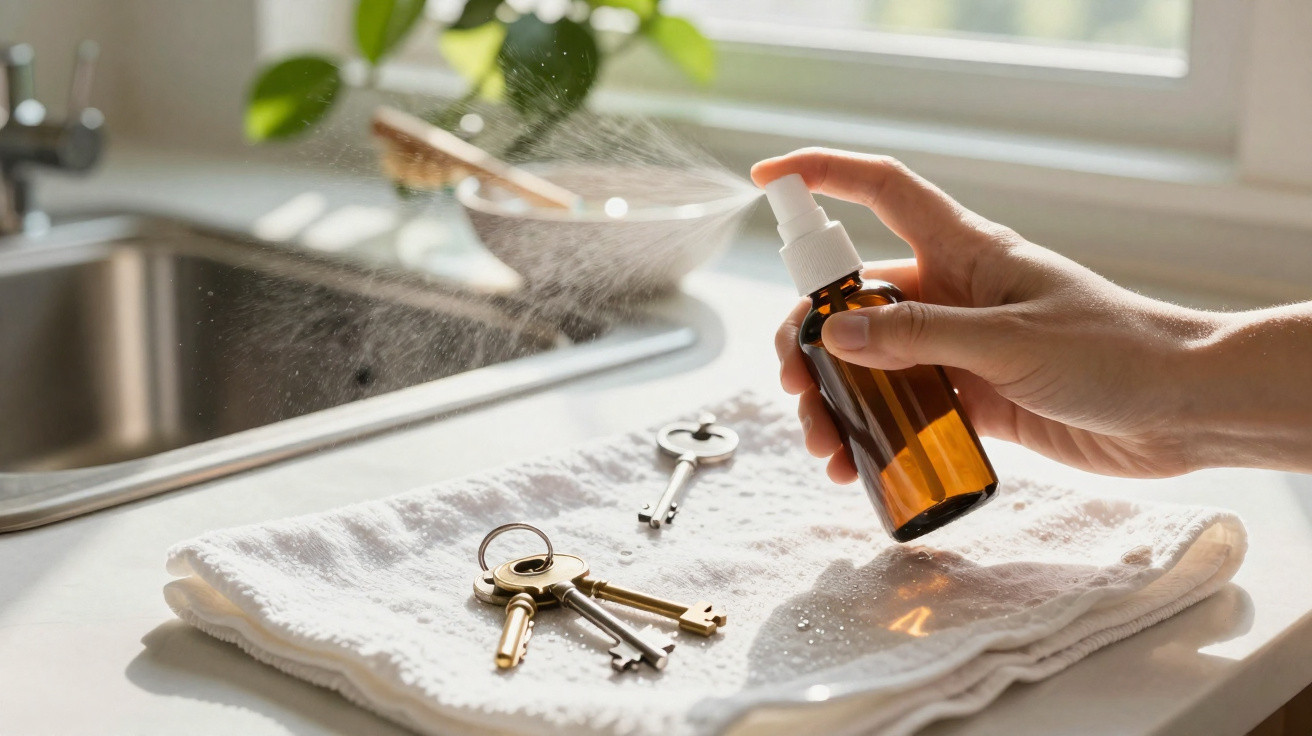
Spraying white vinegar on keys can help lift hand grease, perspiration, dust and other deposits built up through everyday handling. As a keyring travels through pockets, bags, tables and a range of other surfaces, regular cleaning helps remove attached grime; however, the vinegar must be diluted and kept away from electronic components.
Why clean keys with white vinegar?
White vinegar contains roughly 5% to 6% acetic acid. Its acidity can loosen surface residue, sweat marks and small mineral deposits on metal keys. It may also reduce some of the microorganisms on the surface, although it should not be regarded as a disinfectant that can sterilise the item.
Cleaning is particularly worthwhile because keys are handled repeatedly during the day and often move from one surface to another. The aim is to clear away accumulated dirt without leaving the metal damp for extended periods, as this could encourage staining and corrosion.
How to spray the solution without harming the metal
For a quick clean, dilute one part white vinegar with two parts water and use only a few sprays. Dry the keys immediately after applying the solution:
- Separate fully metal keys from remote controls and electronic devices;
- Combine one part vinegar with two parts water;
- Spray each side two or three times;
- Wipe between the teeth and grooves using a clean cloth;
- Dry them fully before storing or using them;
- Never insert a key into a lock while it is still damp.
How often can keys be cleaned?
Keys can be cleaned whenever they are visibly dirty, or after they have been dropped on the floor or handled by many people. In a normal routine, one more thorough weekly clean is enough, while infrequently used keys can be attended to every two weeks.
Leaving metal items submerged for a long time does not improve hygiene. For a deeper clean, place only metal keys in a mixture of two-thirds warm water and one-third vinegar for three to five minutes, then rinse and dry them thoroughly straight afterwards.
Which keys should not receive white vinegar directly?
Car keys with remote controls, smart models, fobs and other electronic devices should not be sprayed or immersed. Liquid entering through joins may reach the circuits and affect operation. Metal keys that are already rusty also need extra care.
- Do not immerse car remote controls;
- Avoid spraying liquid over buttons or openings;
- Do not put vinegar inside the lock;
- Do not leave metal parts soaking for hours;
- Avoid repeatedly using undiluted vinegar;
- Dry off any moisture before using the key.
Drying matters as much as cleaning
White vinegar is most effective as an aid for removing grime from metal keys when it is diluted and left on the surface only briefly. Overly concentrated or excessively frequent applications may promote wear on certain metals, so using more product does not necessarily produce a better clean.
After cleaning, a dry cloth and a few minutes in the open air help remove all moisture before the key returns to the keyring or enters the lock. This precaution prevents liquid from being carried into the cylinder and keeps weekly cleaning a straightforward maintenance task, without increasing the risk of corrosion or jamming.



Comments
No comments yet. Be the first to comment!
Leave a Comment