
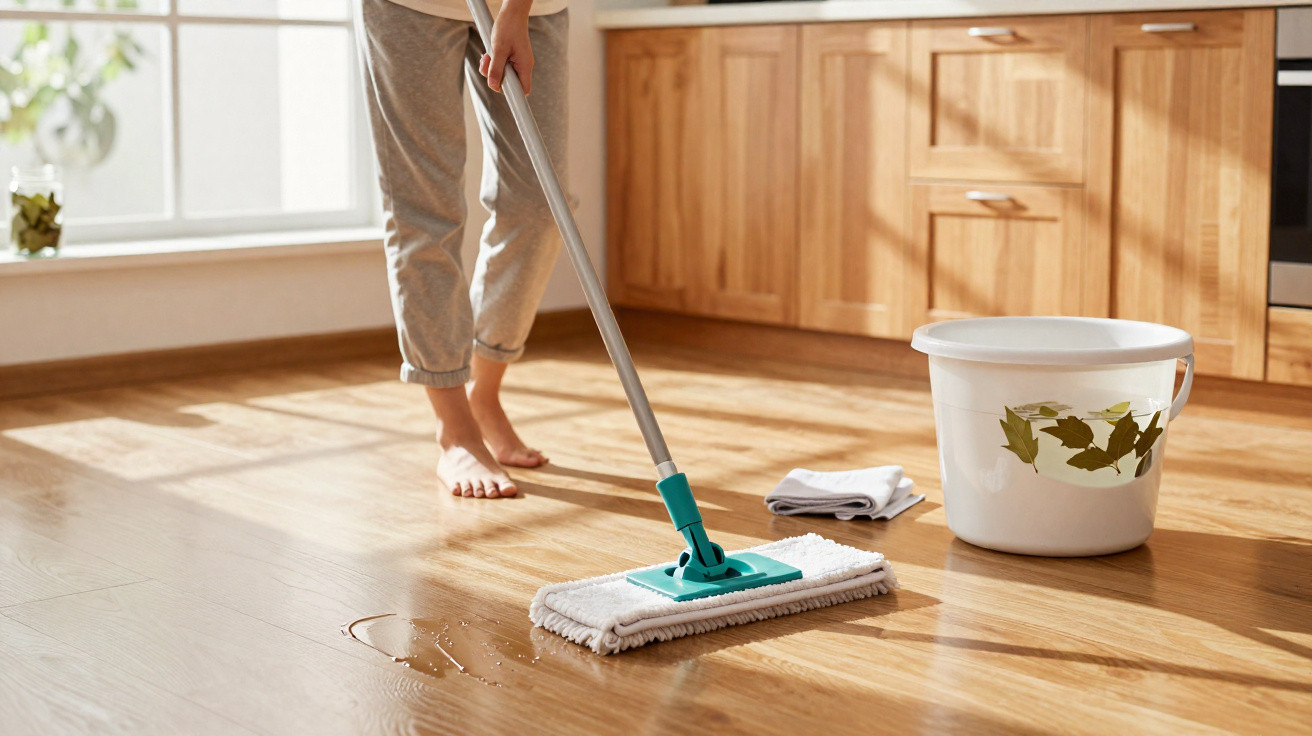
Pushing a wet mop across the home, waiting patiently for everything to dry, then watching someone walk through in socks only for the floor to look marked and vaguely dirty again is a familiar frustration. Yet one simple addition from the spice cupboard can break this cycle surprisingly easily.
Why your floor still looks dull after mopping
The main culprit is often the water rather than the cleaning product. In many areas, tap water contains high levels of limescale. When you mop, this hard water is spread over tiles or laminate, then evaporates and leaves behind a fine residue.
This residue behaves like invisible chalk. It settles on the surface, dulls the floor's sheen and reduces how well light is reflected. Consequently, even a newly mopped floor can look slightly grey, faintly dusty and never quite bright.
Stubborn dirt adds to the problem. Everyday residues such as kitchen grease splashes, rubber marks from shoe soles, and children's food or saliva stains do not lift easily with water alone. You may think, “It looks clean enough”, yet the surface can feel a little tacky or dull underfoot – making it a magnet for fresh layers of dust.
Common cleaning mistakes that leave floors sticky and dull
Out of frustration, many people reach for increasingly powerful cleaning products. Brightly coloured bottles catch the eye in the supermarket: “Extra shine”, “specialist tile cleaner” and “2-in-1 with fragrance”. The promises sound tempting, but their everyday results are often questionable.
Such cleaners frequently contain film-forming ingredients. They coat the floor in an ultra-thin layer that looks shiny at first. However, when walking across it in socks, you soon notice a slight resistance. The coating attracts dust, holds on to dirt and can make the floor appear old again within days.
Homemade mixtures can also easily get out of hand. Common issues include:
- Too much soft soap or black soap: this creates a greasy layer that is very difficult to wipe away properly.
- Overusing chlorine cleaners: these can damage grout, irritate the airways and discolour some surfaces.
- Using large amounts of neat vinegar: this may harm delicate flooring, natural stone and certain sealants.
Instead of a freshly cleaned feeling indoors, you are left with a sharp smell that lingers unpleasantly, particularly in enclosed rooms with poor ventilation.
Clean floors depend less on harsh chemicals than on the right combination of water, temperature, gentle active ingredients and good mopping technique.
The unexpected helper: bay leaves in the mop bucket
The real surprise comes from somewhere few people associate with cleaning: the spice rack. Dried bay leaves, normally added to a casserole or stew, can give mop water a useful boost.
The method is simple: steep the bay leaves as though making tea, then add the lightly scented liquid to the mop bucket. This creates a kind of natural cleaner that does not smell harsh but can still do the job.
How to prepare a bay leaf infusion correctly
For an average-sized home, use the following quantities:
- 6 dried bay leaves (8 if they are particularly large)
- 1 litre of hot water
- optional: 1 tablespoon of clear household vinegar
Place the leaves in a heatproof bowl or saucepan. Pour over the hot water and leave them to steep for around ten minutes. Then remove the leaves or strain the infusion through a sieve. Pour this liquid into the cleaning bucket and top it up with lukewarm water.
If your tap water is hard, you can add a small amount of vinegar. It helps dissolve the limescale residue responsible for the usual cloudy film. Keep the quantity genuinely modest: one tablespoon per litre of infusion is entirely sufficient.
Why bay leaves work so well for mopping
The effect comes from a combination of heat, plant-based ingredients and mild descaling:
- Warm water loosens grease: Heat helps lift greasy residue and footprints, so gentle mopping is enough instead of scrubbing the floor.
- Plant oils in bay leaves: Dried leaves contain essential oils that may have a mildly antibacterial and odour-neutralising effect. Their scent is subtle and slightly reminiscent of garden herbs.
- Gentle descaling with vinegar: The small amount of vinegar breaks down the limescale film. This makes the floor look clearer without aggressive acid damaging the surface – provided you do not overdo the dosage.
When used properly, the bay leaf infusion leaves a thin, clean surface without sticky residue – the floor feels “dry clean”, not waxy.
How to mop with bay leaf infusion like a professional
How you mop matters at least as much as the mixture itself. A few straightforward rules will help you get the most from this method:
- Mop only slightly damp – the mop should not drip, otherwise too much water can penetrate grout lines or laminate.
- Use microfibre – these cloths pick up loosened dirt more effectively instead of merely moving it around.
- Work in sections – mop smaller areas, allow them to dry briefly, then continue. This makes it easier to spot any remaining streaks immediately.
- Rinse the mop pad regularly – otherwise, you will simply spread old dirt back across the floor.
For delicate floors, such as natural stone with a high lime content or polished marble, test the mixture first in an inconspicuous spot. If the colour and shine remain unchanged, there should be no obstacle to using it.
What you should never do when cleaning with bay leaves
Useful as this approach is, it does have limits. Ignoring them risks causing damage or producing the exact opposite of the intended result.
- Never use too much vinegar: Large quantities can damage grout, natural stone and some coatings. The floor may become dull or develop marks.
- Do not use an ice-cold mixture: Cold water is less effective at loosening greasy dirt, which can leave a smeary film behind.
- Do not keep using a dirty mop: A heavily soiled mop head prevents any proper cleaning effect. You will only carry grime from one place to another.
If you are unsure, start the first time with bay leaf infusion alone, without vinegar, and observe how your floor reacts. If the material tolerates the treatment well, you can add a small quantity of vinegar next time.
How often this method makes sense – and where it works best
For most households, applying the bay leaf trick once a week is enough. Between deeper cleans, vacuuming or sweeping is often sufficient to prevent dirt from becoming trodden in. Homes with children, pets or open-plan kitchens may benefit from a second clean in heavily used areas.
It is especially worthwhile in:
- hallways, where outdoor dirt and shoe marks are most common
- kitchens, because of grease and food residue
- living rooms with tiled or vinyl flooring
The trick is less suitable for untreated wooden floors, which generally cannot tolerate excessive moisture. For these, a lightly dampened cloth and a specialist wood cleaner remain the better choice.
What really creates that “cleaner” feeling
It is interesting that many people report that the floor feels “different” after trying this method, even though they do not expect a dramatic before-and-after visual change. This comes down to several combined effects: less limescale haze, fewer sticky cleaner residues, no sharp odours and a floor that does not drag when you walk barefoot.
That feeling is precisely what determines whether a home feels genuinely clean in everyday life. Smell plays an important part too. While artificial fragrances can quickly become overpowering, the mild herbal aroma of bay leaves is barely noticeable and almost completely disappears after a while.
If you enjoy experimenting, you can adjust the number of leaves, vary the water temperature slightly or allow the infusion to steep a little longer before mopping. This lets everyone find their preferred mixture to suit their flooring, water hardness and cleaning habits.

Comments
No comments yet. Be the first to comment!
Leave a Comment