
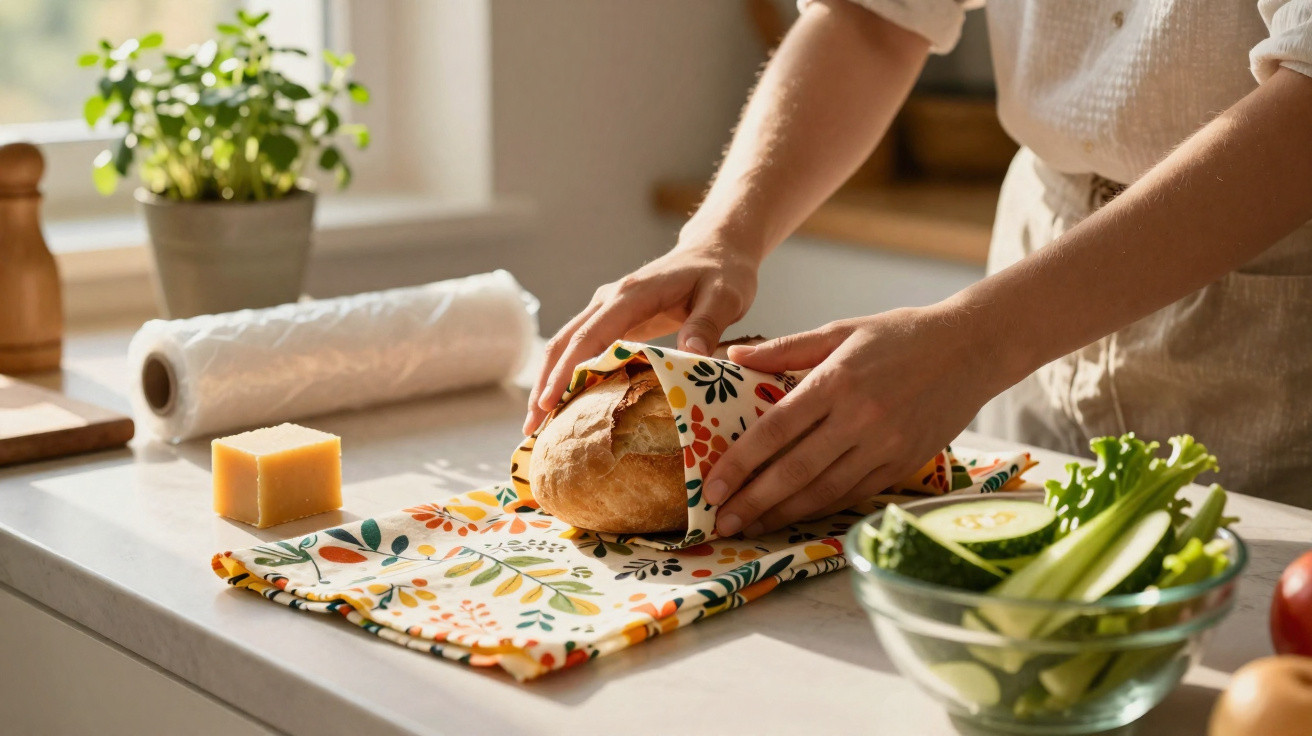
Beeswax wraps are a reusable option for covering bowls, storing cut fruit and wrapping snacks. Made from cotton fabric coated with wax and natural oils, they can be shaped repeatedly and, when cared for correctly, can remain usable for around a year.
What are beeswax wraps?
These food covers are made from cotton infused with beeswax, plant resin and oils such as jojoba oil. Together, these ingredients form a flexible, moisture-resistant surface that sticks to itself or to the rims of containers.
- They cover bowls and jars without lids;
- They wrap sandwiches, bread and biscuits;
- They protect cut fruit, vegetables and cheese;
- They can be folded into small envelopes;
- They replace some uses of disposable cling film.
How does hand warmth create a seal?
When the wrap is pressed over a container or food, the warmth from your hands slightly softens its wax coating. The fabric can then be moulded around the required shape, with the edges folded over without elastic bands, clips or extra lids.
After a few seconds, the wax cools and firms up again, keeping the wrap closed. Its seal is not the same as an airtight container, but it is generally enough to store bread, fruit, vegetables and already chilled food in the fridge.
Recommended kitchen uses and limitations
The wraps are most suitable for food that is cold or at room temperature. Since they cannot be cleaned using hot water, they are unsuitable for direct contact with raw meat and fish, which need more thorough cleaning to lower the risk of contamination.
- Let food cool before covering the container;
- Do not put the wrap in a microwave or oven;
- Keep it away from hot pans, baking trays and surfaces;
- Do not use it with raw meat or fish;
- Keep separate wraps for strongly scented foods.
How can you wash them without damaging the wax layer?
They should be cleaned with a damp cloth or with cold water and a small amount of mild washing-up liquid. Wash each wrap gently, avoiding abrasive scourers, excessive wringing and prolonged soaking.
Hot water softens and gradually strips away the coating, reducing its ability to stick. Once washed, the wrap should be left to dry naturally before it is folded and stored. With regular use and suitable care, manufacturers estimate a lifespan of around one year.
When is replacing cling film worthwhile?
In Brazil, a small wrap can cost around R$ 19, although the price varies according to its size, composition and the number of pieces included. The upfront cost is higher than that of a small amount of cling film, but its reusability reduces the need to keep buying disposable wrapping over the following months.
The saving depends on how often it is used and how well it is maintained. To justify the purchase, the reusable wax-coated wrap must genuinely replace disposable options. Once it no longer sticks, a wrap made only from cotton and natural ingredients can be cut up and sent for composting in line with the manufacturer's guidance.

Comments
No comments yet. Be the first to comment!
Leave a Comment