
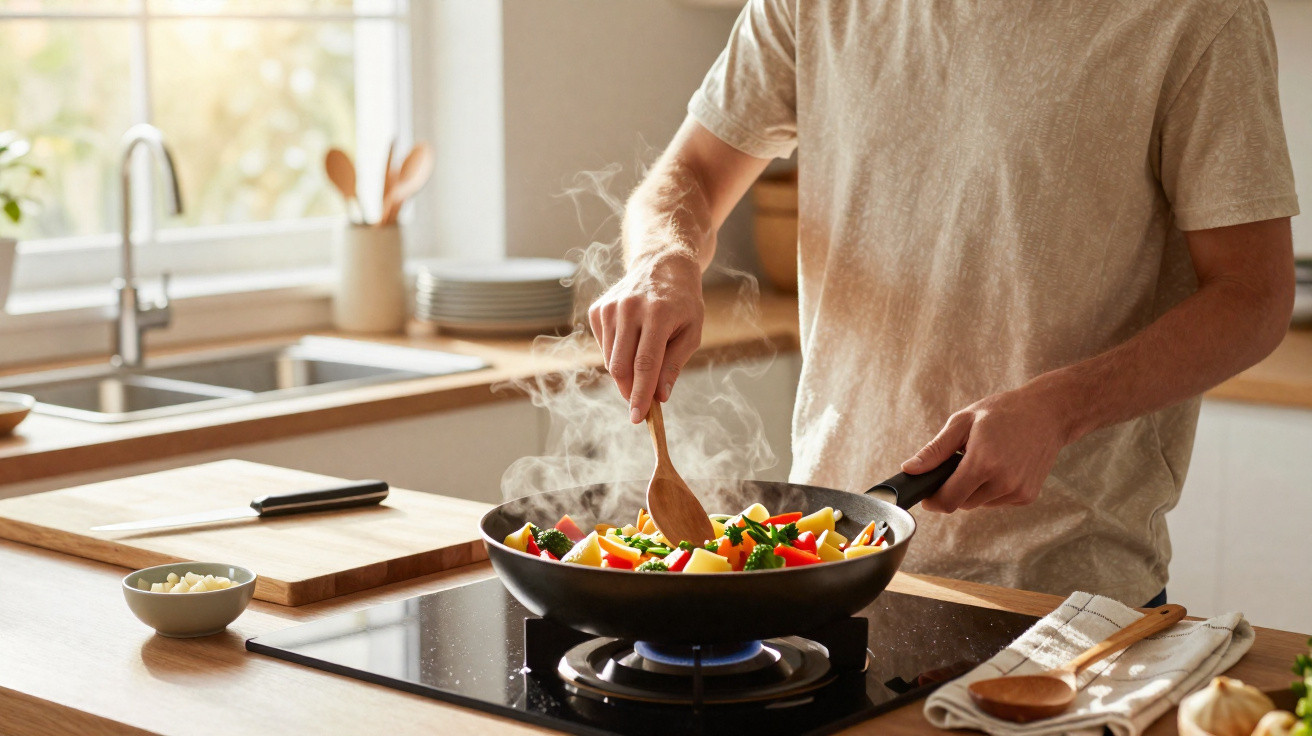
It is 7:18 p.m. Last night’s chopping board is still sitting in the sink, your laptop is partly open on the kitchen table, and somebody has once again called from the hallway, “What’s for dinner?” You look into a fridge that is well stocked yet somehow offers nothing obvious, while your mind starts reaching for the number of the closest takeaway. Then you spot one lonely pot at the back of the hob and have a weary but appealing thought: what if tonight’s dinner came from that single pan?
There is something unexpectedly soothing about it. One pot, a few ingredients, no elaborate techniques, and a meal that does not leave the kitchen looking like a disaster zone. It is the complete opposite of supposedly easy pasta dishes that somehow require washing nine bowls. This is cooking for real life, not a project for a leisurely Sunday afternoon.
You take out the pot, switch on the hob and add an onion. The gentle sizzle sounds like a small promise. The evening starts to feel different.
Why one-pot dinners quietly save your weeknights
One-pot meals suit the pace of an ordinary weekday rather than the polished schedule of a cookery programme. You may be balancing work, children, messages, homework or simply your own exhaustion, but people still expect a hot meal on the table by eight. In the middle of all that noise, one pot on the hob can feel like a small patch of calm.
The relief is not only about the food itself. One-pot cooking cuts down the decisions: fewer utensils, fewer stages and fewer moments of wondering where you left a particular pan. That reduction in mental effort matters after a long day, when your head already resembles a browser with 37 tabs open and music playing from an unknown source.
A London survey of home-cooking habits found that people cooking on weeknights spend nearly as long cleaning as they do preparing the food. That imbalance is why delivery apps can seem more tempting than a chopping board. The problem becomes the sink rather than the recipe. When washing up is limited to one pot, one board and one knife, making proper food no longer feels like a punishment.
One Tuesday in a small flatshare, I saw three adults gather around a single Dutch oven as though it were a campfire. One housemate prepared carrots, another stirred, and a third arrived late and simply bent over the pot to take in the smell. The dinner was essentially “everything left in the fridge plus rice”, but everyone had seconds. Nobody debated who had to scrub five pans. They rinsed the pot, left it to soak and returned to their separate evenings.
There is a straightforward reason one-pot recipes are so effective for quick weeknight dinners. Cooking everything in one vessel allows flavours to build on one another instead of remaining divided between separate pans. The onions browned at the beginning leave behind flavour that seasons the beans, pasta or broth added later. The pot holds on to each layer of taste.
Dishes with plenty of moisture, including soups, stews, curries and brothy pastas, are particularly adaptable for this approach. They can cope with a delayed stir, a measurement that is not quite exact or several extra minutes over a low heat while you reply to a message. For tired cooks who do not want to supervise three pans, that makes them less daunting. It’s cooking that bends around your life, not the other way around.
There is a further quiet advantage in the form of portions and leftovers. A single pot naturally encourages you to make slightly more than is needed for one sitting, turning the extra servings into tomorrow’s lunch without any additional effort. You are not only dealing with tonight’s chaos; you are also creating a little breathing room for tomorrow.
Practical strategies for fast, low-mess one-pot dinners
The quickest one-pot meals begin before you turn on the hob. Set aside a “weeknight shelf” in a cupboard with dry pasta, couscous, rice, tinned beans, lentils, coconut milk, and a few jars of sauce or stock cubes. When you arrive in the kitchen already drained, you should not have to make a plan; you should be able to reach for what you need. Think of it as a small support system for your future self.
It also helps to pre-chop, or at least pre-plan, the basic aromatics. An onion, two cloves of garlic, perhaps celery or carrot if you want that familiar soup-like aroma: these are the foundations of one-pot cooking. Once they meet the oil and begin to soften, dinner is under way, even if you have not yet decided precisely what it will become. Getting ingredients into the pot is the biggest commitment; the next steps usually become clearer afterwards.
A truth that is rarely acknowledged is that the most successful weeknight one-pot meals are repeated templates. Choose two or three basic formats and keep them ready in your mind. For example: “one-pot pasta with any vegetables + one protein + stock + grated cheese.” Or: “rice + tin of beans + frozen vegetables + spice blend.” Thinking in patterns rather than fixed recipes gives your brain a break and lets your hands work more quickly.
On a wet Thursday, a friend sent me a photograph of a pot on her hob with the caption: “This is all I’ve got in me.” It contained half a bag of fusilli, a jar of tomato passata, a handful of spinach that looked a day away from being thrown out, and two sausages cut into coin-shaped slices. She added enough water to barely cover the pasta, along with salt and dried oregano, then stepped away to take a work call. Twenty minutes later, the pasta had taken in the liquid and formed a glossy sauce, while the spinach had disappeared into the dish.
She messaged again: “Is this… a real meal?” It certainly was. It was filling, balanced and made use of the tired greens that were otherwise bound for the bin. There was no colander, no second pan for the sauce and no drama involving a cheese grater. Just a serving spoon and bowls. That is the sort of cooking that lasts beyond one optimistic week.
Most of us know the evening routine: open three delivery apps, dislike the prices, close them and then stand in the kitchen facing a solitary onion. That is exactly when one-pot habits prove their value. They remove obstacles: less equipment, fewer worktops to dirty and no fussy timing across multiple pans. Minimal washing up is not merely about being lazy; it has a direct effect on whether home cooking happens on a Tuesday night at all. Let us be honest: nobody really manages that every day.
There is a kind of workload psychology sitting in the sink, too. If you know cooking will mean scrubbing three pans, a baking tray and two bowls used “just for mixing”, your brain assigns an exhausting cost to dinner before you begin. If the outcome is one pot, one knife and one board, the calculation changes. A quick chickpea curry can suddenly seem easier than waiting 40 minutes for a pizza delivery you did not truly want.
Concrete tips to cut time, dishes, and stress
Begin every one-pot meal with a 30-second reset of the work area. Make a small clear space on the counter, place the bin or a bowl nearby for peelings, and put a little warm soapy water in the sink. As you cook, drop finished utensils directly into this small wash-up bath. When the pot reaches the table, much of the cleaning already feels less intimidating.
Be strategic with heat. To work quickly, get the pot properly hot at first so that onions, garlic or protein brown rapidly. Once liquid has gone in, reduce the heat to a gentle simmer. The high-heat opening develops flavour; afterwards, you are simply encouraging the ingredients to finish cooking. With starchy foods such as rice and one-pot pasta, stir a little more frequently so they do not stick firmly to the base.
People often make one-pot meals harder than necessary by adding too many components and steps. A useful weeknight rule is to limit fresh ingredients to no more than one chopping board’s worth. Rely on cupboard and freezer staples for the rest. Frozen vegetables, ready-cooked vacuum-packed grains, and tinned lentils or beans are not shortcuts to feel guilty about; they are often what keeps home cooking possible when you are running on empty.
Putting delicate ingredients in too early is another frequent mistake. Tender greens, peas, cherry tomatoes and seafood that cooks quickly only require the last few minutes of heat. Add them alongside firm vegetables or uncooked rice and they will be limp and overcooked by the time everything else is ready. Keep a mental list of “late arrivals” and add them shortly before switching off the hob.
Build seasoning in stages rather than throwing it all in at the finish. Add a pinch of salt as the onions soften, another when you pour in the liquid, then taste and make the final adjustment before serving. It requires no extra time, yet produces a more complete and deliberate flavour. If the dish still tastes a little dull, lemon juice, a spoonful of yoghurt or a small knob of butter at the end can revive the entire pot.
“On weeknights, I don’t cook to impress,” a home cook from Manchester told me. “I cook to feel like I’m still taking care of myself, even when the day’s been a mess.”
On some evenings, success simply means serving something warm, colourful and reasonably balanced in a bowl without creating a pile of washing up. At its best, one-pot cooking feels like supporting yourself rather than telling yourself off for needing to “eat better”. The aim is not perfection. It is being able to do it again.
Here is a simple mental cheat sheet for those times when you are too tired to think:
- Base: onion + garlic + oil (or butter)
- Bulk: pasta, rice, couscous, potatoes, or lentils
- Protein: beans, chickpeas, tofu, eggs, chicken, sausage
- Veg: fresh odds and ends + frozen back-ups
- Liquid & flavour: stock, coconut milk, tomato, herbs, spice blend
Put whatever you have into that framework and you are already very close to dinner.
A new way to look at your weekday kitchen
Once you begin to approach meals in one-pot terms, the kitchen changes slightly. Instead of asking, “What exact recipe do I have time and energy for?”, you start asking, “What can I make in this pot with what I have?” That small shift lowers the standard from perfect to practical, and practical is what actually puts food on the table.
Your shopping may start to change as well. You may find yourself choosing ingredients that work well together in one pot: small pasta shapes, tins of tomatoes, bags of frozen spinach and spice blends that make food taste as though you made more effort than you did. The fridge becomes less like a display of half-used jars and more like a set of tools for quick, forgiving dinners.
There is something subtly sociable about a single pot, too. It encourages people to gather, look through the steam and sneak a taste from the ladle. One shared source, many bowls. Whether you are feeding children, housemates or your future self through tomorrow’s leftovers, that pot can become a small anchor in the middle of a chaotic week. Perhaps that is its true attraction: not the recipe or the trend, but the sense that, for 30 minutes, life has been reduced to something warm, straightforward and manageable.
| Key point | Details | Why it matters to readers |
|---|---|---|
| Prepare a “one-pot” pantry box | Keep a small crate or shelf stocked with reliable items: short pasta, rice, tinned beans, coconut milk, tomato passata, stock cubes and a couple of spice blends, such as curry powder and smoked paprika. | When you are tired, you can take out the box and know dinner is possible without planning, scrolling through recipes or searching every cupboard. |
| Use ingredient timing rather than exact recipes | Start with firm vegetables, such as carrots and potatoes, then add grains or pasta, and finish with softer vegetables, such as spinach and peas. Use roughly 2 parts liquid to 1 part dry starch as a starting point. | This makes it possible to improvise with what you have instead of abandoning dinner because a specific recipe requires one missing ingredient. |
| Make cleaning part of the cooking process | Fill the sink with soapy water before starting, rinse and add utensils as you go, and wipe the counter while the pot simmers for 10–15 minutes. | By mealtime, the only substantial task left is washing that one pot, making home-cooked dinners feel far less like a chore. |
FAQ
- Can I really cook pasta and sauce in the same pot? Yes. Put dry pasta, sauce such as passata or tinned tomatoes, seasonings, and enough water or stock to just cover the pasta into one pot. Simmer uncovered, stirring occasionally, until the liquid reduces to a sauce and the pasta is tender.
- How do I stop one-pot rice dishes from sticking? Rinse the rice until the water is clearer, choose a wide pot and lower the heat once it begins bubbling. Stir it a couple of times early on, then cover it and leave it to steam during the final minutes.
- What are the best proteins for fast one-pot meals? Tinned beans, lentils, sliced sausages, small pieces of chicken and firm tofu are all good choices. They cook fast or are already cooked, so they only need heating and seasoning in the pot.
- Are frozen vegetables okay for one-pot dinners? Absolutely. Add firmer options, such as mixed vegetables or broccoli, earlier, and more delicate ones, such as spinach or peas, towards the end. They reduce chopping time and help prevent food waste.
- How can I make one-pot meals feel less repetitive? Change the flavour profile rather than the whole structure. Use curry paste and coconut milk one evening, garlic, lemon and herbs the next, then smoked paprika and tomato on another night. The format stays the same, but the taste changes considerably.

Comments
No comments yet. Be the first to comment!
Leave a Comment