
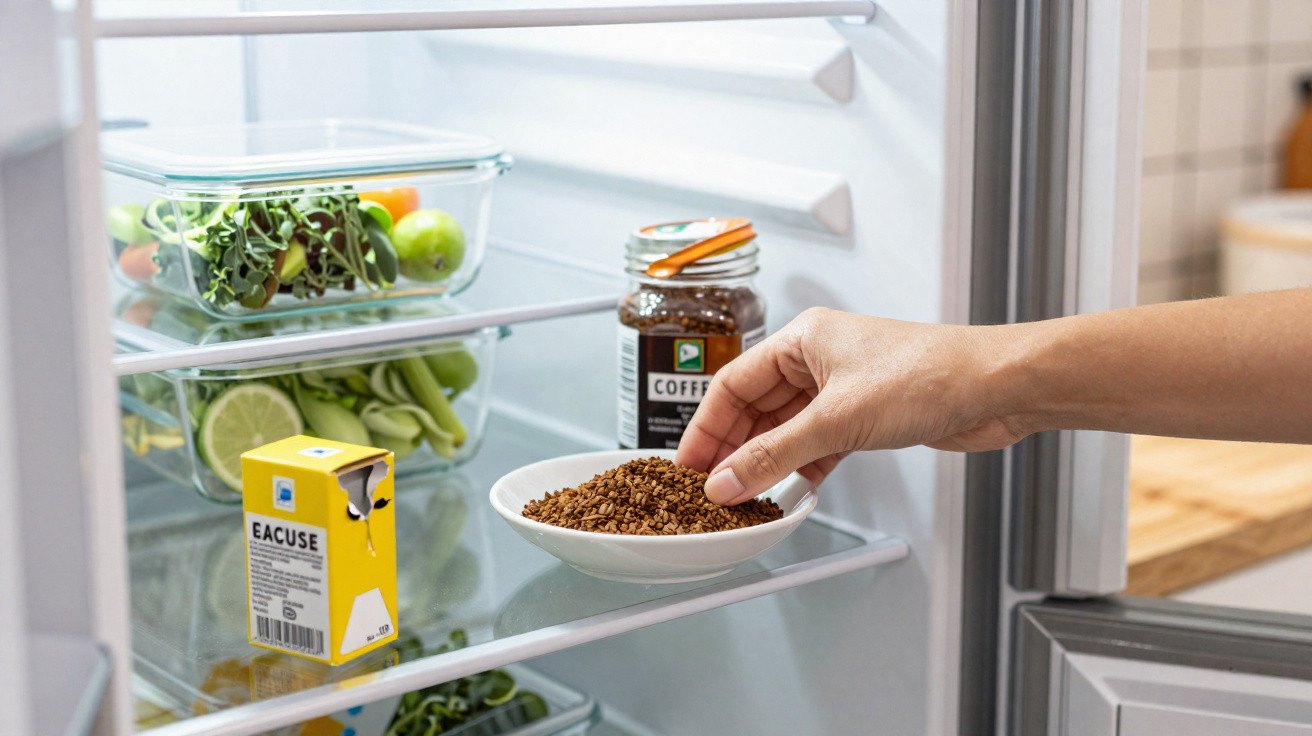
Baking soda devotees may wince at this one: this pantry powder does more than soak up unpleasant smells. It swaps them for an aroma you may actually enjoy.
I once opened the fridge looking for milk and was hit by an unidentifiable stench - a blend of garlic butter from the night before, strawberries from the previous week and a tub whose contents I had no desire to investigate. Everyone knows the moment when a fridge smell seems so intense you start wondering whether it has a colour. I had replaced the baking soda box only two weeks earlier, yet the air inside still seemed dense and stale. A neighbour recommended a remedy passed down by her grandmother: an ordinary cupboard powder said to refresh the air more quickly than the well-known orange box. I left it in overnight. By morning, everything seemed… lighter. The sharp, sour notes had disappeared, leaving an unplaceable hint of warmth behind. A small kitchen miracle.
Instant coffee: the pantry powder faster than baking soda
The answer is instant coffee. Not a brewed cup, and not grounds from your coffee machine, but plain unsweetened instant coffee powder placed in a shallow dish. This unassuming store-cupboard staple acts as a quiet sponge for the air, drawing volatile odour molecules from the fridge while replacing them with a mild roasted scent. If baking soda is the neutraliser, instant coffee is both the bouncer and the DJ: it sends unpleasant smells away and changes the atmosphere within hours. And yes - it often acts faster than baking soda.
I noticed the contrast for the first time after a fish-taco evening went wrong. Even after cleaning the fridge, that persistent seaside tang remained. A spoonful of instant coffee on a saucer, positioned on the middle shelf, made more difference in two hours than my baking soda had managed in a day. The smell had vanished by the following morning. The fridge did not smell like a coffee shop, either; it simply seemed clean, with a restrained roasted note only noticeable if you actively searched for it. Friends who gave it a go described the same result: quick relief with very little effort.
The reason comes down to surface area and chemistry. Instant coffee is a porous, dehydrated material packed with minute gaps that can capture airborne volatile compounds, including sulphur compounds and aldehydes - common culprits behind typical fridge odours. These molecules attach to the coffee’s organic compounds and are subdued. Baking soda works by neutralising acids and absorbing some moisture, which is effective but generally slower. Coffee behaves more like a friendly relative of activated carbon. It cannot clean shelves or replace proper fridge hygiene, but it can alter the air itself. That is its understated strength.
How to use instant coffee to remove fridge odours quickly
Take a shallow dish, such as a ramekin or small plate, and scatter 1–2 tablespoons of instant coffee powder across it in a thin layer. Put it on the middle shelf, close to the airflow. Shut the door and leave it there for 2–6 hours if the smell is mild, or overnight if it is stronger. For a more serious problem - a fish spill or neglected broccoli, for example - use two dishes, placing one on the top shelf and another in the vegetable compartment. If an odour lingers, replace the powder every 24–48 hours, then move to weekly maintenance. It takes little work for a noticeable result.
If you are worried that your yoghurt will end up tasting of espresso, do not be. Scent transfer to food is slight when containers are sealed and the powder is not sitting beside uncovered items. Keep it clear of exposed butter and sliced fruit, both of which absorb surrounding aromas readily. Realistically, nobody manages a full fridge clean every day. This approach gives you some breathing space until you can carry out a proper wipe-down. Coffee grounds can work if that is all you have, but instant powder is usually faster because it is finer and more porous.
When people describe this as working “like magic”, they are often reacting to its speed. Within the first two hours, the fridge air can seem clearer, calmer and less acidic. It is the kind of subtle change that makes you open the door again just to make sure.
“Baking soda is a classic for a reason, but instant coffee offers a quick win,” a food-science technician told me. “Those porous granules can grab a wide range of odor molecules fast. It’s not a deep clean - it’s an air reset.”
- Use 1–2 tbsp of instant coffee in a thin layer for rapid deodorising.
- Use two dishes for strong odours or large fridges.
- Replace the powder after 24–48 hours, then weekly for maintenance.
- Seal food securely to prevent scents from mingling.
- Deal with spills quickly so the powder is not battling an ongoing source of odour.
The limitations, the context and the wider benefit
Instant coffee is not a disinfectant. It will not sanitise the fridge or solve the problem of a forgotten cucumber liquefying in the salad drawer. This trick is useful because it fits into everyday life: it is a swift, forgiving reset that gives you time and peace of mind. There is no reason to get rid of baking soda. Consider coffee the sprinter and baking soda the distance runner. Alternate between them or use both: coffee during the first 24 hours after a particularly smelly meal or spill, then baking soda for reliable background odour control. Use what you have and what you’ll actually use.
Personal preference matters, too. Some people enjoy the faint roasted fragrance, while others want completely neutral air. If you prefer the latter, use a small dish for a limited period; 2–6 hours can make a difference without leaving an obvious scent. Coffee may clump in a humid fridge, so spread it in a thin layer. Do not tip it directly into the vegetable drawer or place it near vents. If you are sensitive to any fragrance, try unscented food-grade activated carbon pouches once and compare the result. Your fridge, your rules.
What struck me most was the speed at which the kitchen as a whole seemed more settled. The fridge is the room’s heartbeat, quietly humming as it holds plans for Wednesday lunch and Saturday pancakes. When it smells wrong, the whole room can feel wrong. This little dish of pantry powder brings back a sense of order with almost no effort. It’s a small domestic kindness that pays back instantly.
| Key point | Detail | Benefit for the reader |
|---|---|---|
| Instant coffee beats baking soda on speed | Porous powder traps odour molecules within hours | Faster relief from fridge smells with minimal effort |
| Simple, low-mess method | 1–2 tbsp on a shallow dish, 2–6 hours, rotate as needed | A practical routine you will actually maintain |
| Flexible and budget-friendly | Use what is already in your pantry; pair with baking soda | Saves money and time while improving daily comfort |
FAQ:
- Will my fridge smell like coffee afterward? Only slightly, and mainly if the powder is left in place for a long period. Most people notice fresher air with a faint warmth. For a neutral result, limit use to 2–6 hours and keep food sealed.
- Can I use brewed coffee grounds instead of instant? Yes, though instant powder generally works more quickly. Fresh, dry grounds can help, but they are bulkier and may produce a stronger aroma. Spread them thinly on a plate and replace them once they become damp.
- Is this safe around food? Yes, provided it sits on a dish and does not come into direct contact with food. Coffee is functioning as a dry deodoriser here, not as an ingredient. Keep containers closed and avoid placing it beside uncovered butter or cut produce.
- How long does it take to clear strong odors? Many fridges seem fresher within 2–6 hours. For stubborn odours, leave the coffee overnight and refresh the powder the next day. Combine this with a quick wipe using warm soapy water to remove residues causing the smell.
- Should I ditch baking soda completely? No need. Treat them as a team. Instant coffee is the quick solution after smelly meals or spills, while baking soda offers steady, scent-neutral background control over the longer term.






Comments
No comments yet. Be the first to comment!
Leave a Comment