
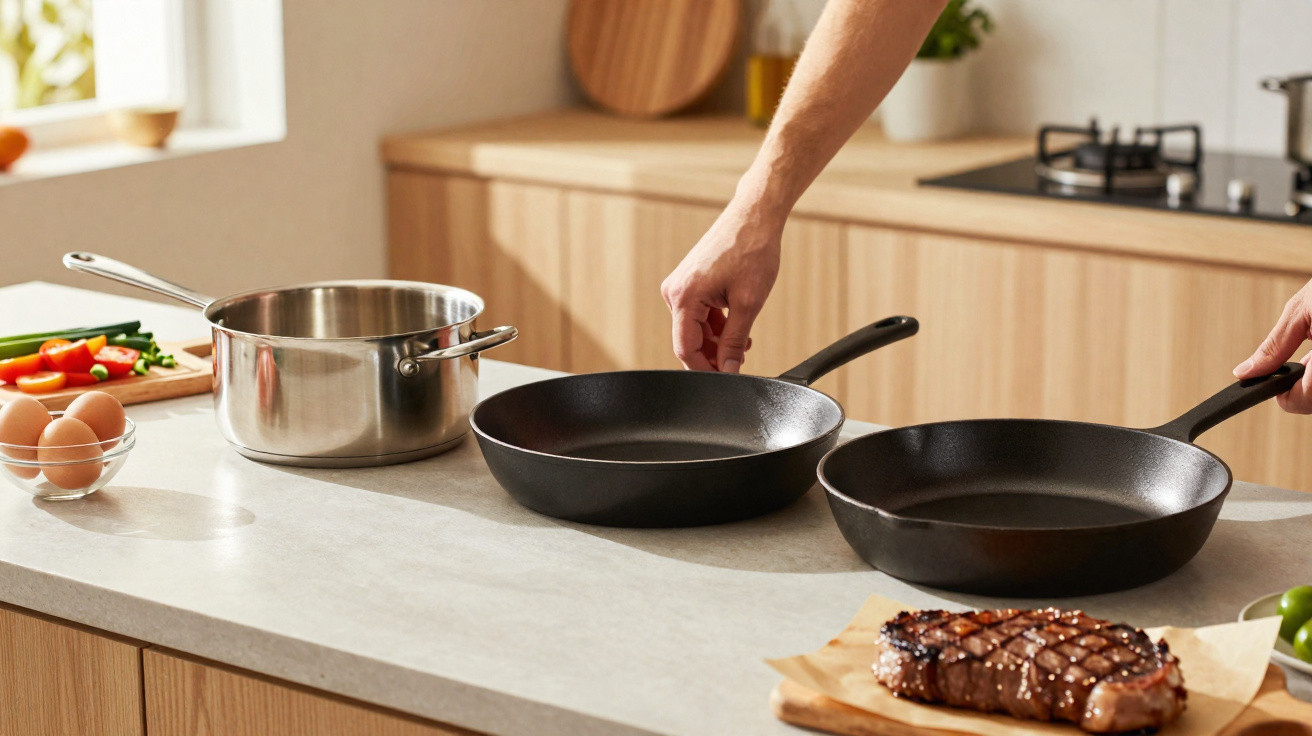
Choosing the right pan for everyday use depends on what you cook, your kitchen routine and the care required by each material. Stainless steel, non-stick and cast-iron pans can all be excellent choices, but they do not perform in the same way. One may excel at quick cooking, while another is better suited to grilling, sauces or recipes requiring intense heat.
What is the difference between stainless steel, non-stick and cast-iron pans?
A stainless-steel pan is strong, long-lasting and well suited to sautéing, making sauces, cooking meat and everyday use without concern about rapid wear. Models with a triple-layer base distribute heat more evenly and generally do not retain odours or flavours.
A non-stick pan makes low-fat cooking easier and helps stop food from sticking, although it needs more careful handling. A cast-iron pan, meanwhile, holds a great deal of heat, browns food effectively and can last for decades. However, it is heavier and must be dried thoroughly to prevent rust.
Which cooking methods suit each pan best?
Every material has its own strength. Matching the pan to the recipe improves the result and prevents unnecessary wear, particularly with non-stick cookware.
- Stainless steel: excellent for rice, sauces, seared meat, sautéed vegetables and stews.
- Non-stick: ideal for eggs, pancakes, tapioca, delicate fish and quick meals.
- Cast iron: particularly good for grilled foods, steaks, chicken, charred vegetables and recipes that need high heat.
- Stainless-steel pans with a thick base lower the likelihood of food burning.
- Cast-iron pans work best when heated gradually before cooking.
Which mistakes shorten the lifespan of pans?
Many people damage good pans by using excessively high heat, unsuitable utensils or harsh cleaning methods. Even durable materials have limits that need to be respected.
- Non-stick: avoid metal cutlery, abrasive scouring pads and overheating an empty pan.
- Stainless steel: do not allow food to burn because there is too little fat or liquid, or because the temperature is not controlled.
- Cast iron: dry it straight after washing to avoid rust.
- Avoid thermal shock, such as pouring cold water into a very hot pan.
- Check the manufacturer’s guidance before using a pan in the oven, dishwasher or on an induction hob.
What are the advantages and disadvantages of each material?
A stainless-steel pan is versatile, attractive and highly durable, but food may stick if it is not heated properly or if the heat is too high. A non-stick pan is convenient and easy to clean, yet it has a shorter lifespan and should be replaced once it becomes scratched or starts to peel.
A cast-iron pan provides flavour, intense heat and excellent durability, but it is heavier and needs maintenance. For those who cook every day, the most effective approach is usually to own more than one type, using each pan for the cooking tasks where it performs best.
How do you choose the best pan for your routine?
For a basic kitchen, a stainless-steel pan is usually the most balanced option for everyday use because it copes well with a range of recipes and lasts a long time. A non-stick pan is useful for delicate foods, while a cast-iron pan is ideal for people who enjoy grilling and more intense cooking.
The best choice does not have to be a single pan. A sensible set can include a good stainless-steel pan for most recipes, a non-stick frying pan for quick cooking and a cast-iron pan for browning meat and vegetables. This allows each material to support the food properly and last longer.
Comments
No comments yet. Be the first to comment!
Leave a Comment