
Putting laundry straight into the washing machine without any preparation risks more than a few creases. Fibres can suffer, colours fade sooner and buttons may come off. The good news is that five straightforward habits before starting a wash can help clothes look better cared for, hold their shape for longer and feel less ‘washed out’. These tips take hardly any time, yet can significantly extend the life of your wardrobe.
Turn laundry inside out: an invisible shield against friction
The first step comes before a single drop of water enters the machine: turn garments inside out. Inside the drum, everything constantly rubs against everything else. When the outer surface of fabrics scrapes directly against the drum and other garments, visible signs of wear appear more quickly.
Turning T-shirts, blouses and jumpers inside out shifts that strain to the inside. The smooth outer surface has less contact with hard edges, buttons and zips from other items. This keeps surfaces more even, slows down the formation of small bobbles and helps the material look ‘fresh’ for longer.
Taking a moment to turn a shirt inside out saves money in the long run – because fewer items need replacing.
The difference is especially noticeable with delicate textiles:
- prints and graphics on T-shirts
- embroidery and sequins
- fine blouse fabrics, viscose and silk blends
- knitwear that tends to bobble easily
These details are often what make an item a favourite, yet they are also the parts most affected by direct contact with the drum. Consistently turning such pieces inside out reduces rubbing, tears and faded designs.
Fasten buttons: retain the shape rather than stretching it
The next habit may seem minor, but it has a major effect: fasten buttons. Open shirts, blouses and cardigans are more likely to become tangled, catch on other garments and come under tension. As a result, collars, button plackets and hems can lose their shape, eventually leaving everything hanging unevenly.
Fastened buttons give a garment more stability. It holds a more compact shape and does not spin so wildly around the drum. This reduces the risk of:
- overstretched buttonholes
- stretched chest areas
- split seams around the placket
- torn-off buttons
The same principle applies to bed linen with button fastenings. Closing duvet covers prevents smaller items, such as socks or underwear, from collecting inside and forming a heavy ‘bundle’ that does not wash properly.
Close zips: avoid metal traps during the spin cycle
Zips matter just as much as buttons. An open zip behaves like a small pair of pincers in the washing machine. Its hard teeth can catch delicate fabrics, pull threads and leave visible marks.
Pulling every zip fully closed removes much of this risk. Jackets, trousers and skirts move more smoothly through the water without ‘biting’ other items. Coarse metal zips on jeans or outdoor jackets are particularly risky, as they can act like files against fine blouses or T-shirts.
Open zips are one of the overlooked causes of mysterious holes in a favourite T-shirt.
One further tip is to close the zips on hoodies or jackets before turning the item inside out. This protects both the fabric and the zip itself, as it is less likely to knock directly against the drum.
Empty pockets: small items, major damage
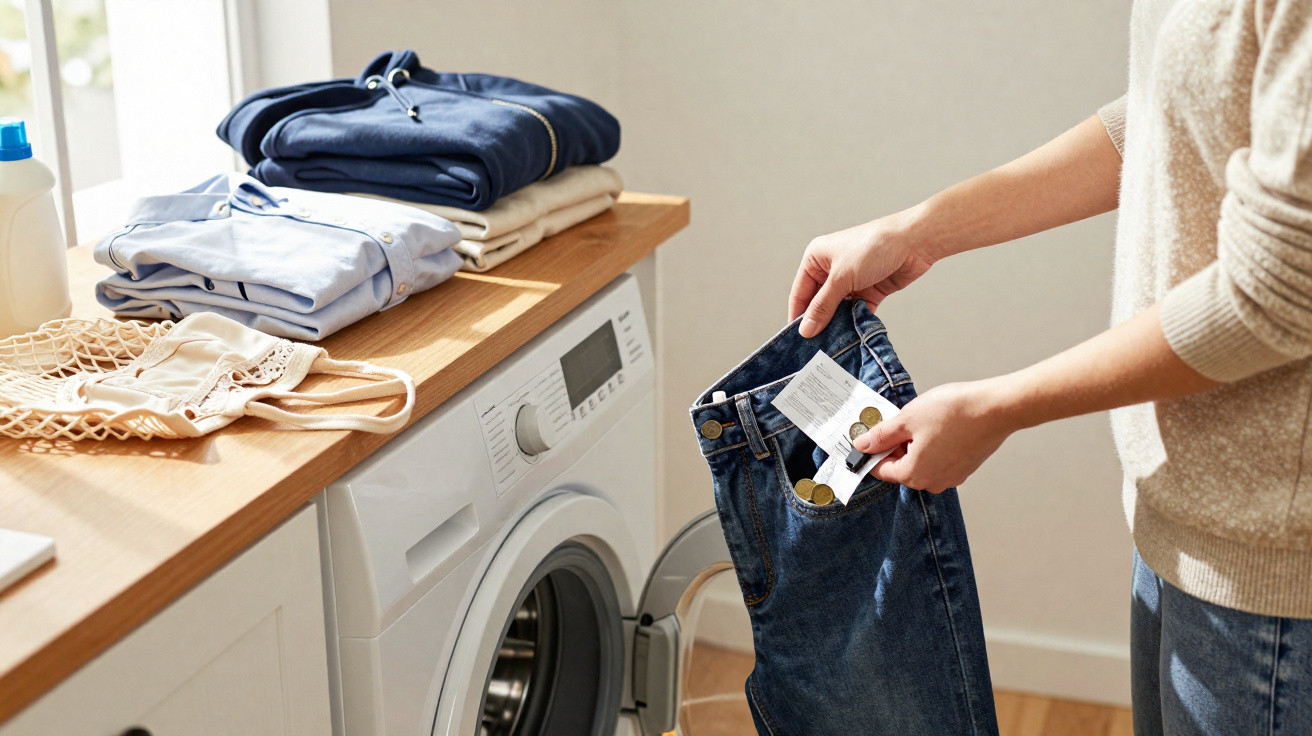
The third habit sounds obvious, but it can save both laundry and the machine: empty every pocket completely. Tissues, chewing gum, parking tickets, coins and screws are all easily forgotten during the day, but can have a substantial impact in the drum.
Paper tissues break down into thousands of tiny pieces that cling to every fibre. The result is a greyish film across the whole load, along with extra work removing the debris. Adhesives from chewing gum or stickers can bond with heat and cause stains that are very difficult to remove.
Hard objects such as keys, coins or screws are even more troublesome. Not only can they strike the sensitive walls of the drum, they can also:
- bend zips
- damage the glass door of front-loading machines
- block the filter and pump
- lead to costly repairs
Getting into the habit of quickly checking every pair of trousers and every jacket greatly reduces this risk. Many households keep a dedicated spot beside the washing machine; a small bowl for items found in pockets is enough.
Jeans and dark colours: protect colour and preserve their finish
Jeans may be regarded as hard-wearing, but they can quickly lose their appearance if washed incorrectly. Common issues include pale friction marks on the thighs, knees and seat, as well as an overall duller shade after a few washes.
Turning them inside out helps here too. The inside of the denim takes most of the friction, leaving the outside calmer and better protected. This means fewer pale streaks and rings develop. The effect is particularly noticeable on black and dark blue jeans.
It also lowers the chance of colour transferring to other garments. Dye pigments released during washing are more likely to remain in the water around the inside of the jeans rather than directly affecting lighter laundry. New jeans should initially be washed separately or only with similarly dark items.
Jeans washed inside out from the start often still look wearable after years – rather than looking old after months.
The same approach works for brightly coloured shirts, sportswear and dark towels: turn them inside out, choose a suitable detergent for coloured laundry and use the lowest possible temperatures.
The hand rule in the drum: fewer creases, better cleaning
Load size is a crucial factor in the condition of laundry. Many machines are packed to the brim for convenience. In that case, textiles have little room to move, water circulates less effectively and everything emerges heavily creased and sometimes only partly clean.
The so-called hand rule offers a simple guide: once the drum is loaded, a flat hand should still fit easily between the laundry and the drum wall. If there is barely any room, the load is too large.
Leaving enough space in the drum offers several benefits:
- detergent is distributed more evenly
- dirt is released from fibres more effectively
- spinning is more balanced, without severe creases
- seams and fibres are placed under less tension
Anyone who irons regularly will notice the difference straight away. A moderately filled drum produces far fewer deep creases, especially in shirts, blouses and bed linen. Many items can even be worn without ironing after drying if they are shaken out well and hung up smoothly.
Five routines, one major everyday effect
Together, these five steps – turning items inside out, fastening buttons, closing zips, emptying pockets and following the hand rule – form a kind of safety check before starting the washing machine. Making them routine automatically protects your wardrobe with every wash.
A practical approach is to spread the individual actions across the laundry-sorting process: check pockets while collecting clothes, turn items inside out while sorting by colour, then fasten buttons and close zips straight away, before keeping an eye on the load size as you fill the machine. This avoids creating extra time pressure in everyday life.
When laundry bags are worthwhile
Alongside these five habits, laundry bags help protect especially delicate items. Underwear, lace bras, tights and thin tops are best placed in a bag. This softens friction and stops straps or underwires from becoming tangled or catching on the edges of the drum.
Garments with lots of metal details or decorative stones also benefit from a laundry bag. At the same time, it protects the other items in the machine, which might otherwise rub against these hard features.
Why gentler laundry care saves real money
Treating laundry with care does not only extend the life of clothing. The machine itself runs more smoothly, filters clog less quickly and repairs become less likely. Fewer damaged favourite garments also mean fewer replacement purchases.
Especially at a time of rising prices and growing awareness of sustainability, it is worth taking a closer look at your own laundry routine. Small actions before pressing ‘Start’ determine whether T-shirts, shirts and jeans look tired after only a few months – or continue to serve reliably for many years.



Comments
No comments yet. Be the first to comment!
Leave a Comment