
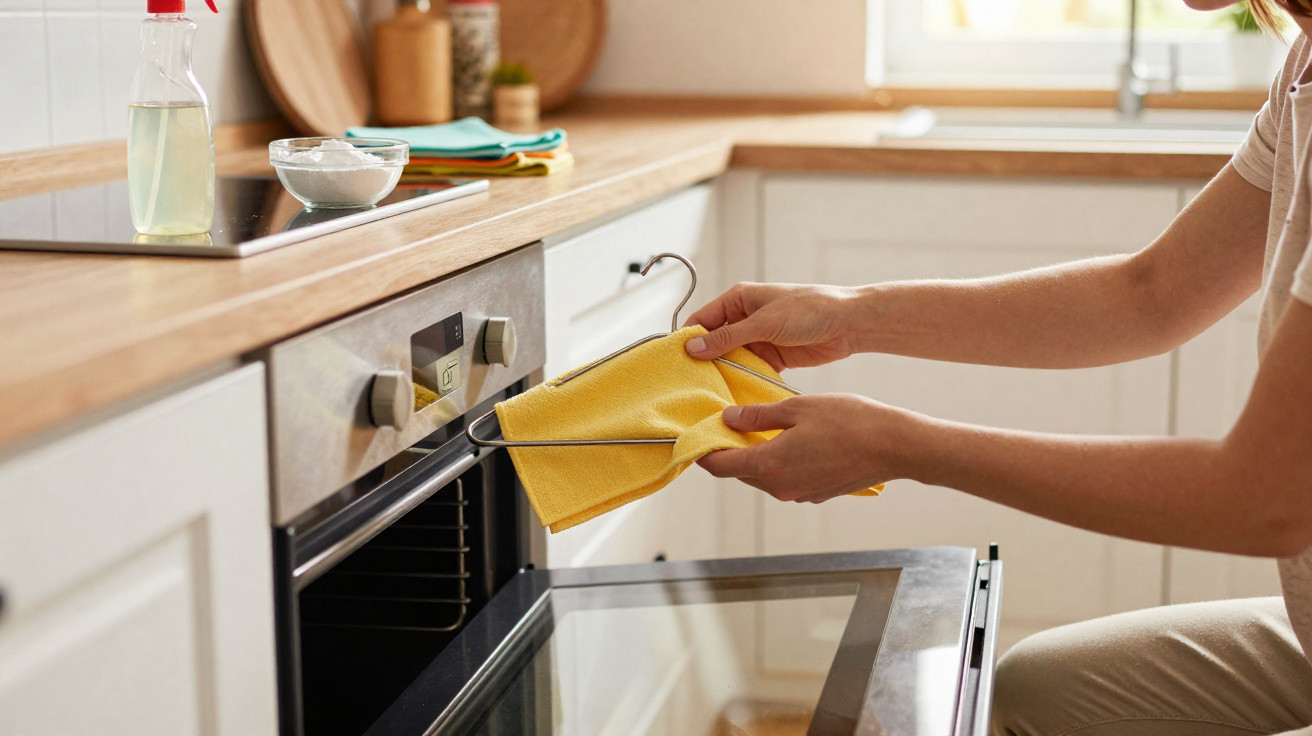
Many households know the problem: with a little time and cleaner, the oven itself can be cleaned fairly well, but the door – especially the space between its two glass panes – remains a frustrating mystery. Anyone attempting to clean it soon encounters screws, clips and, in the worst case, a broken pane. Yet a simple item from the wardrobe is enough to reach these gaps without dismantling anything.
Why the oven door is so difficult to clean
When roasting, grilling or baking pizza, grease splashes onto the inner pane. Heat practically bakes these marks into the glass. There are also sugary residues from cakes, cheese from bakes and the usual layer of cooking fumes that builds up over time.
One area is particularly troublesome: the cavity between the two glass panes. Many modern ovens have double glazing in the door, and some even have three panes. This helps to keep the outside relatively cool. Cleaning, however, becomes a nightmare because the following can find their way into these gaps:
- Grease splashes that travel through ventilation slots
- Fine dust and cooking fumes
- Evaporated liquids that leave streaks behind
These marks sit precisely where neither a cloth nor a sponge can reach. At this point, many people consider taking the door apart – a risky and irritating task, particularly with older models.
Clean oven glass without removal: the principle behind the trick
“A simple wire clothes hanger and a cloth can be used to clean the space inside an oven door – with no screws or specialist tools required.”
The idea is as straightforward as it is clever: rather than laboriously removing the door, simply extend your “cleaning hand”. A metal object is turned into a long, slim cleaning aid that can be pushed through the existing ventilation openings.
A thin metal hanger, of the type commonly supplied by dry cleaners, is especially suitable. It is both sturdy and easy to shape. Combined with a microfibre cloth and a basic household remedy, it becomes a surprisingly effective miniature glass cleaner for the space between the panes.
Step by step: make an oven “windscreen wiper”
1. Prepare the metal hanger
Have a metal clothes hanger that is as thin as possible ready. Dry-cleaning hangers work best because they bend slightly without immediately kinking.
- Unbend the hanger completely until it forms a metal rod that is as straight as possible.
- Shape a small, flat hook at one end, roughly 2–3 cm long.
- Make sure that no sharp edges protrude, as these could scratch the glass.
2. Attach the cleaning cloth
A microfibre cloth or a sturdy cleaning wipe does the actual dirt removal. Microfibres are very effective at lifting grease without damaging the glass.
Proceed as follows:
- Cut a piece of cloth that can be wrapped easily around the hook.
- Place the cloth around the bent section to create a small “padded surface”.
- Secure it with a household elastic band, adhesive tape or a piece of wire so that it cannot slip.
The result is a narrow, padded tip that can later be guided between the panes.
3. Mix the cleaning liquid
For baked-on grease residue, a simple mixture from the kitchen and cupboard will usually do:
- Around two-thirds hot water
- One-third clear household vinegar
Lightly dip the cloth on the hanger tip into the solution, then wring it out thoroughly. It should be damp rather than dripping wet, so that no liquid runs into inaccessible parts of the door.
How to reach between the oven door panes
Many oven doors have small openings along the bottom edge or at the top. Officially, these are intended for ventilation and temperature balancing. They are now the entry point for your homemade cleaning tool.
- Allow the oven to cool completely; ideally, it should only be slightly warm inside.
- Open the door wide and check where the ventilation openings or gaps are located.
- If necessary, pull out or empty the drawer or cupboard beneath the oven to gain better access to its underside.
- Carefully push the hanger with its cloth through the opening and slowly guide it between the panes.
- Wipe back and forth in calm, even movements without applying pressure.
Work in strips, much as you would with a window wiper. Pull the hanger out from time to time, rinse the cloth in the cleaning solution and begin again.
Common mistakes to avoid when cleaning oven glass
Despite its simplicity, it is worth keeping a few points in mind to prevent damage to the appliance:
- Do not use tools with sharp edges: Use only smooth metal hangers or comparable aids, never screwdrivers or knives.
- Do not force it: If the gap is too narrow, stop rather than putting strain on the glass.
- Use limited moisture: Too much liquid can run into the door and reach seals or electrical components.
- Avoid aggressive cleaners: Oven sprays containing strongly caustic ingredients do not belong between the panes.
“Anyone who works carefully avoids having to remove the door and extends the appliance’s service life instead of putting it at risk.”
When professional servicing is still worthwhile
With some ovens, the spaces between the panes are barely accessible or cannot be reached at all, for example when the ventilation slots are extremely narrow or the panes are sealed several times over. Some manufacturers also fit doors with special-head screws designed specifically to discourage non-professionals from dismantling them.
In these cases, there are only two options: live with the streaks or call customer service. A certified technician can dismantle, clean and reassemble the door properly. It costs money, but it is considerably safer than handling springs, hinges and glass panels yourself.
How often the oven door should be cleaned
Those who use their oven regularly should clean the door lightly at short intervals instead of planning an intensive clean only every few years. Many marks are far easier to remove while they are still fresh.
- Light grease splashes: wipe away shortly after cooling with a damp microfibre cloth
- Heavier discolouration: clean more thoroughly every one to two months
- Space between the panes: check roughly once or twice a year, depending on use
One tip: using baking paper, lidded oven dishes or a splatter guard more often when roasting produces significantly less dirt on the glass.
Why vinegar and a microfibre cloth work so well
Vinegar removes limescale and light grease residue, neutralises odours and evaporates comparatively quickly. Unlike strongly alkaline oven cleaners, it is generally well tolerated by glass and metal, provided it is not left to work for hours.
Microfibre cloths have extremely fine fibres that effectively “collect” grease and dirt particles. They clean efficiently without abrasion. This is exactly why they are ideal for sensitive surfaces such as oven glass. Together, they offer a low-cost, environmentally friendly solution that makes many specialist products unnecessary.
More simple tricks for a cleaner oven
While you are at it, the rest of the oven can be maintained as well. Many households rely on a few additional techniques:
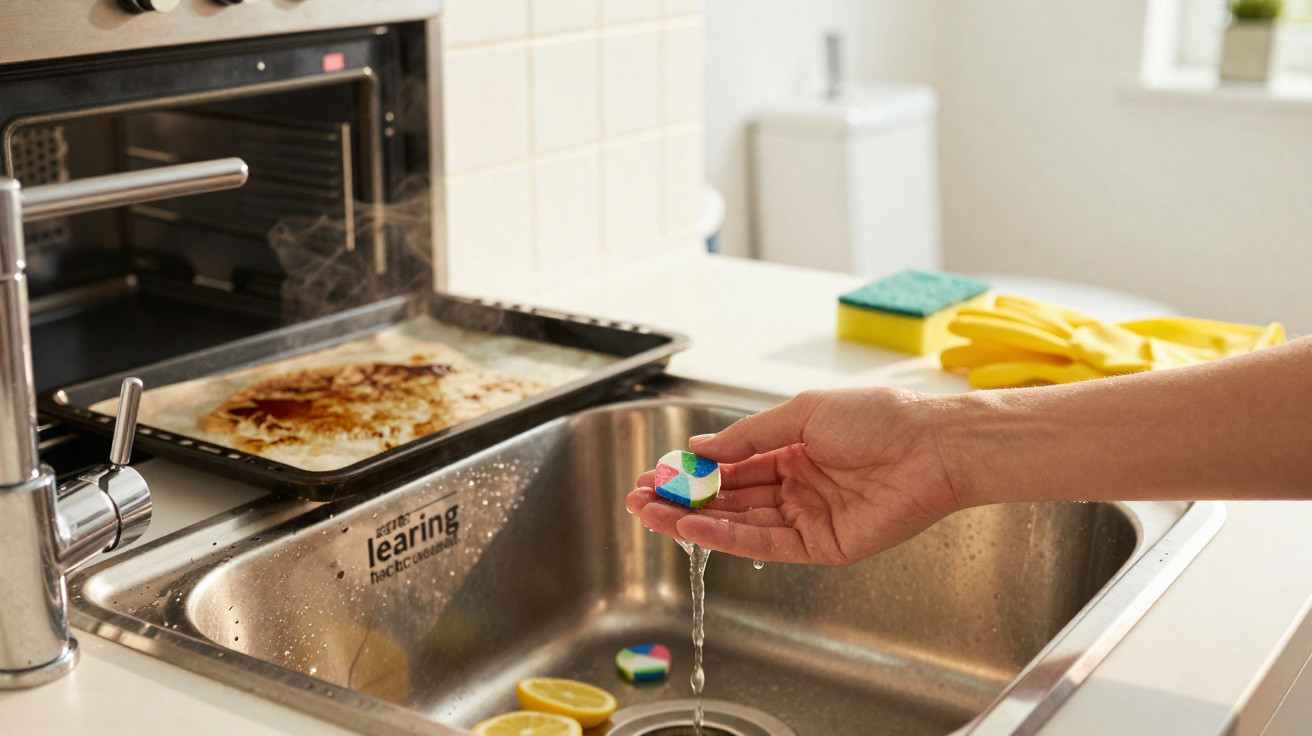
- Sodium bicarbonate (baking powder or soda): Mixed with water into a paste and spread over baked-on areas, it loosens stubborn deposits after being left to work for a while.
- The water-steam method: Put an ovenproof bowl containing water and a little vinegar in the oven, heat it briefly, then wipe away the loosened residue.
- Soak baking trays as soon as they have cooled: This prevents crusted-on residue from becoming embedded over several weeks.
Combining these simple measures means you need to consider a major deep clean much less often – and the metal-hanger trick for the oven glass remains an occasional quick job rather than an all-evening chore.


Comments
No comments yet. Be the first to comment!
Leave a Comment