
On a gloomy weeknight, I looked at my disappointing, rubbery leftovers and realised that the microwave’s hum was not the comforting convenience I had imagined.
What happened next was neither an extreme health campaign nor a decluttering exercise. I unplugged the microwave, moved it into a corner and made myself find other ways to heat meals. This apparently minor kitchen change gradually altered the way I eat, the aromas in my flat at mealtimes and the amount of time I am prepared to spend waiting for food that is actually enjoyable.
Why I stopped using the microwave
For years, I followed the same reflexive routine: remove the plastic lid, put the plate inside, shut the door firmly and press 1:30. Lunch was ready. It seemed efficient, but the results repeatedly let me down. Crisp food became limp, pasta was dry around the rim yet oddly cold at its centre, and stews seemed to lose their richness.
There was a quieter problem too: meals had ceased to be occasions and turned into administration. Eat fast, return to work. Food became fuel rather than enjoyment.
Giving up the microwave was less about rejecting technology and more about reclaiming a sense of pace, smell and texture at the table.
When winter arrived and I wanted slow roasts, creamy gratins and richly flavoured soups, the difference felt especially stark. Those “comfort” dishes deserved more than a burst of patchy heat. I therefore adopted a slightly old-fashioned approach: warming food on the hob or in the oven, even when it added a few minutes.
The frying pan: giving leftovers a second life
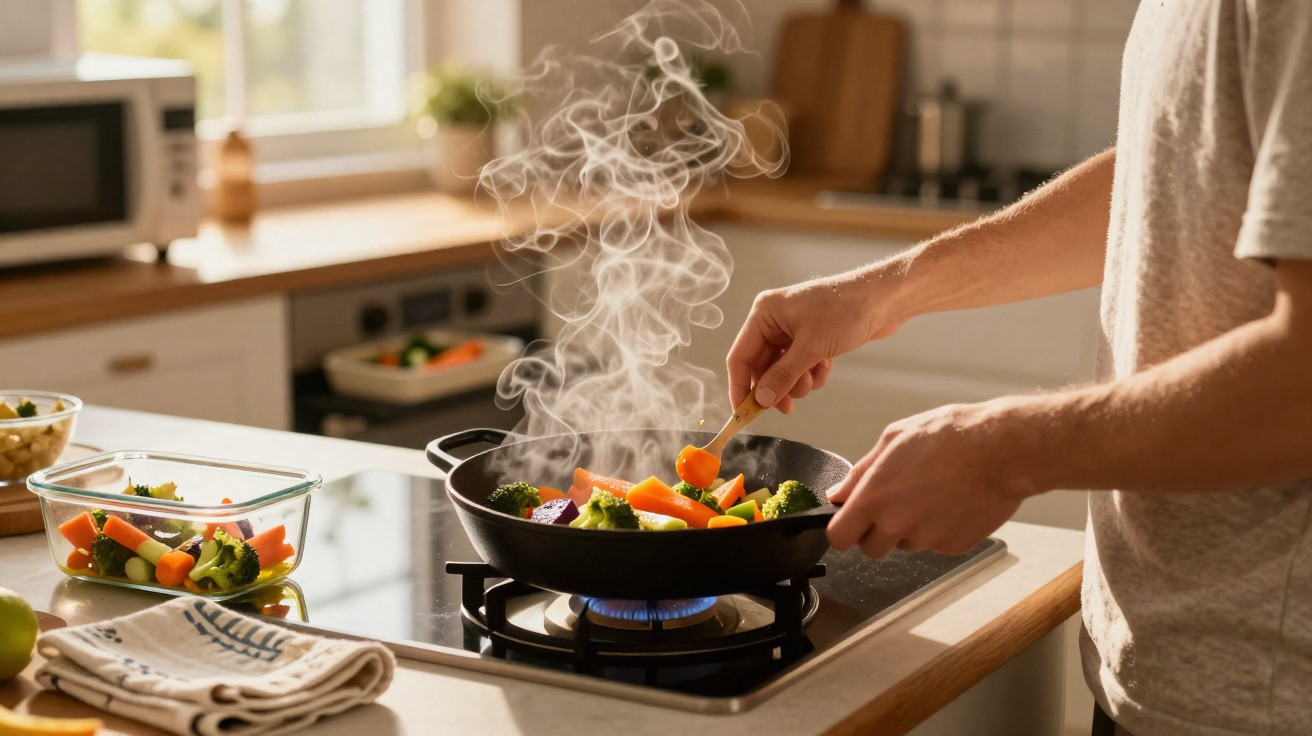
The frying pan has proved to be my most useful tool for nearly anything other than soup. I use it for roast vegetables, pasta, rice dishes, curries, stir-fries and even leftover pizza.
How I reheat food in a pan rather than a microwave
- Warm a teaspoon of oil or butter, or a splash of sauce, over a low to medium heat.
- Spread the leftovers in an even layer in the pan.
- Add one or two spoonfuls of water or stock so the food does not dry out.
- Put on a lid, allowing steam to warm the middle gently.
- End with a brief uncovered burst of heat to restore crisp edges.
This achieves what the microwave never could: it preserves texture. Leftover roast potatoes develop their golden crust again, vegetable bakes retain their shape rather than slumping into mush, and cold pasta fried with a little olive oil and garlic tastes like a new meal instead of a reheated concession.
The lid is a quiet hero here: it traps steam, speeds up reheating and keeps food moist while the bottom crisps.
The process becomes sensory once more. I can hear a soft sizzle, smell garlic or spices coming alive again and watch the colours intensify as the meal heats through. It does mean staying beside the hob for several minutes, but that short interval has become a useful reset during my day.
The low oven: gentle warmth for slow-cooked dishes
Certain meals are simply better suited to the oven, particularly baked, layered or sauce-heavy dishes. Lasagne, shepherd’s pie, ratatouille, gratins, baked rice dishes and roasted meat in sauce all belong in this category.
My gentle oven-reheating method
I heat the oven to between 120°C and 150°C, place the dish inside and allow it to warm gently for 20–30 minutes.
- I loosely cover the dish with baking paper or a lid to retain moisture.
- If leftovers are particularly dry, I add a splash of stock, milk or tomato sauce before covering them.
- For pies, quiches and gratins, I take off the cover for the final 5–10 minutes so the surface can turn crisp.
Low-temperature reheating takes longer, but every bite tastes like it belongs to the original meal, not the “day after”.
Lasagne is the clearest example. A microwave often leaves it hot around the outside and lukewarm at the centre, while making the pasta sheets tough. In a low oven, each layer warms evenly, the cheese melts afresh without scorching and the sauce remains smooth. It resembles a second newly baked lasagne rather than leftovers you are reluctantly trying to get through.
Texture: the microwave’s overlooked casualty
Microwaves work by agitating the water molecules in food. It is ingenious, but not forgiving. Areas with more water heat faster than drier sections. Fibres tighten, moisture shifts, and a tender chicken thigh can become leathery in two minutes while its surrounding sauce begins to boil.
Heat behaves differently on the hob and in the oven. It travels from the exterior towards the centre, either through direct contact in a pan or circulating warm air in an oven. This slower progression allows food to heat more uniformly without abruptly damaging its structure.
Stews stay silky, vegetables don’t collapse, and pastries regain their bite instead of toughening at the edges.
For meat, gentle reheating with a little additional sauce helps it remain tender. With grains such as rice or couscous, a spoonful of water and a covered pan avoid the dry, chalky consistency that many people regard as unavoidable.
Flavour that can genuinely improve overnight
I also discovered that some meals are better the following day when they are reheated properly. Curries, chillies, tomato-based sauces and spiced stews all develop deeper flavours overnight as their ingredients continue to combine.
When I slowly bring a vegetable curry back to temperature in a pan, something almost magical occurs. Its aromas emerge gradually rather than arriving in one abrupt, synthetic cloud. The spices taste rounder and less aggressive, while the sauce coats the vegetables more generously.
Time is part of the seasoning: slow reheating lets aromas unfold instead of blasting them in one confused burst.
Beneath the grill, a leftover slice of quiche or tart can recover a crisp base and lightly browned top, transforming a forlorn piece from the fridge into something I would gladly offer guests.
A straightforward winter dish: reheated vegetable pan
One meal has become my preferred test: a substantial winter vegetable pan that I cook once and eat two or three times.
I put potatoes, carrots, leeks, mushrooms, onions and garlic into a pan with a spoonful of olive oil and a little vegetable stock. Thyme and bay leaf lend it a rustic, cosy character. Once covered and gently simmered, the vegetables soften and absorb flavour without disintegrating.
Reheating could scarcely be simpler: I return the leftovers to the pan over a low heat, add a splash of water or stock, cover them for around 10 minutes, then finish with chopped parsley. It remains comforting and fragrant, and still feels unmistakably like food rather than food’s faded echo.
Planning, safety and practicalities
Giving up the microwave does require some forethought. Before eating, you need an additional 10–20 minutes. That may sound indulgent in a busy home, but there are practical ways to make it fit.
- Put leftovers in the oven as soon as you come through the door.
- Warm food on the hob while laying the table or sorting school bags.
- Cook larger batches of meals that respond well to gentle reheating, including soups, stews, grains and roasted vegetables.
Food safety also matters. Leftovers should cool promptly, go into the fridge within two hours and be reheated until they are steaming hot all the way through. A covered pan or low oven can still do this, although it takes a little more time. Stirring once or twice, or testing the middle of thicker dishes, helps prevent lukewarm sections.
When using the microwave less changes more than lunch
When reheating is no longer a 90-second button press, a subtle shift takes place. The meal acquires an introduction: you hear the simmering, smell the sauce and watch steam collect beneath the lid. Children come into the kitchen more quickly when a pan is quietly crackling than when a microwave beeps.
For some people, abandoning the microwave may seem needless or impractical. But even reducing its use and keeping it for genuine emergencies can change how you treat food. You plan a little more carefully and show ingredients a little more respect. Leftovers stop feeling like a penalty and instead become another opportunity for the same dish to shine.
Reheating differently isn’t about perfection; it’s about small, repeatable choices that make everyday meals calmer, tastier and strangely more human.
In my kitchen, the microwave is now a silent box on a shelf. The pans are within reach, the oven light comes on more regularly, and Sunday’s leftovers finally receive the second life they deserve.
Comments
No comments yet. Be the first to comment!
Leave a Comment