
The kitchen has barely woken up.
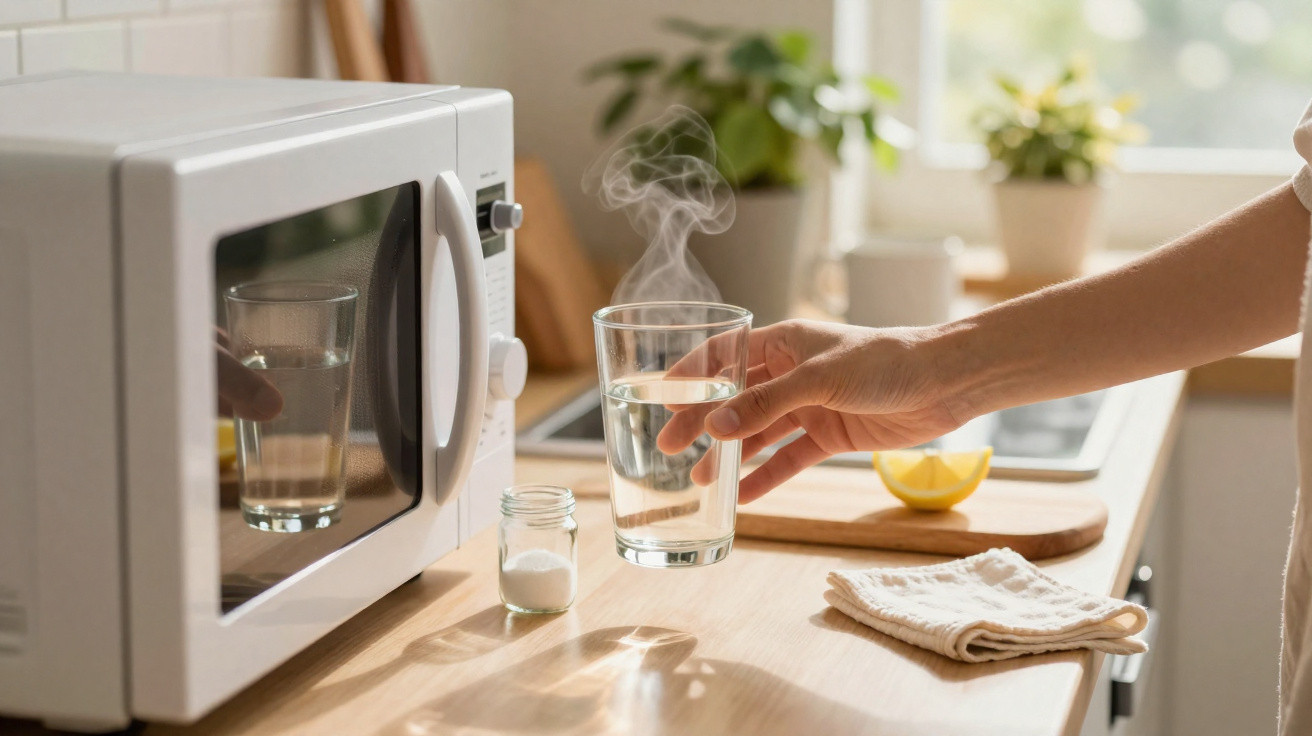
There is only the pale early-morning light, the fridge’s low hum and the soft snap of the microwave door. You reach for your mug, open the door and find it: one forgotten cup of water, sitting there lukewarm and slightly strange. You left it there last night. Again.
As you lift it out, a smell reaches you. The microwave no longer smells of last night’s pasta; instead, it carries a blend of steam, stale air and something difficult to identify. It is not quite revolting, just… wrong. The scent is subtle, yet enough to make your morning coffee seem a little less appealing.
Some people insist that leaving water in the microwave overnight “resets” odours, while others believe it locks them in. The reality is far less magical, but much more interesting. That little cup of water can influence the atmosphere in your morning kitchen more than you might expect.
Why a forgotten cup of water alters the smell of your microwave
When you open the microwave door, the air is the first thing you notice. It feels heavier and faintly damp, rather like a bathroom that has not been properly aired. The water has gone cold, perhaps with a fine layer of dust or minuscule food particles floating on its surface if you look closely. The microwave interior smells unlike the rest of the kitchen, as though it has spent the night living a small private life while you slept.
For many people, the scent feels oddly recognisable. They warmed soup at 11 pm, boiled water for tea, became distracted, scrolled through their phone and headed to bed. By morning, the microwave has acquired a mild smell of being used without seeming dirty. It is not the powerful stench of burnt popcorn or fish, but something gentler: echoes of meals held in steam. At 7:15 am on a Monday, even a faint odour can feel like too much.
The process itself is straightforward. Heating water in a microwave produces steam, which settles as condensation on the walls, roof and glass. Leaving that cup inside means the cavity remains slightly more humid overnight. Molecules from previous meals respond well to that moisture. They attach themselves to damp surfaces, dissolve into tiny droplets of water and remain there rather than dispersing into the kitchen. Rather than neutralising odours, the cup can subtly help them remain.
How to use water properly against morning microwave odours
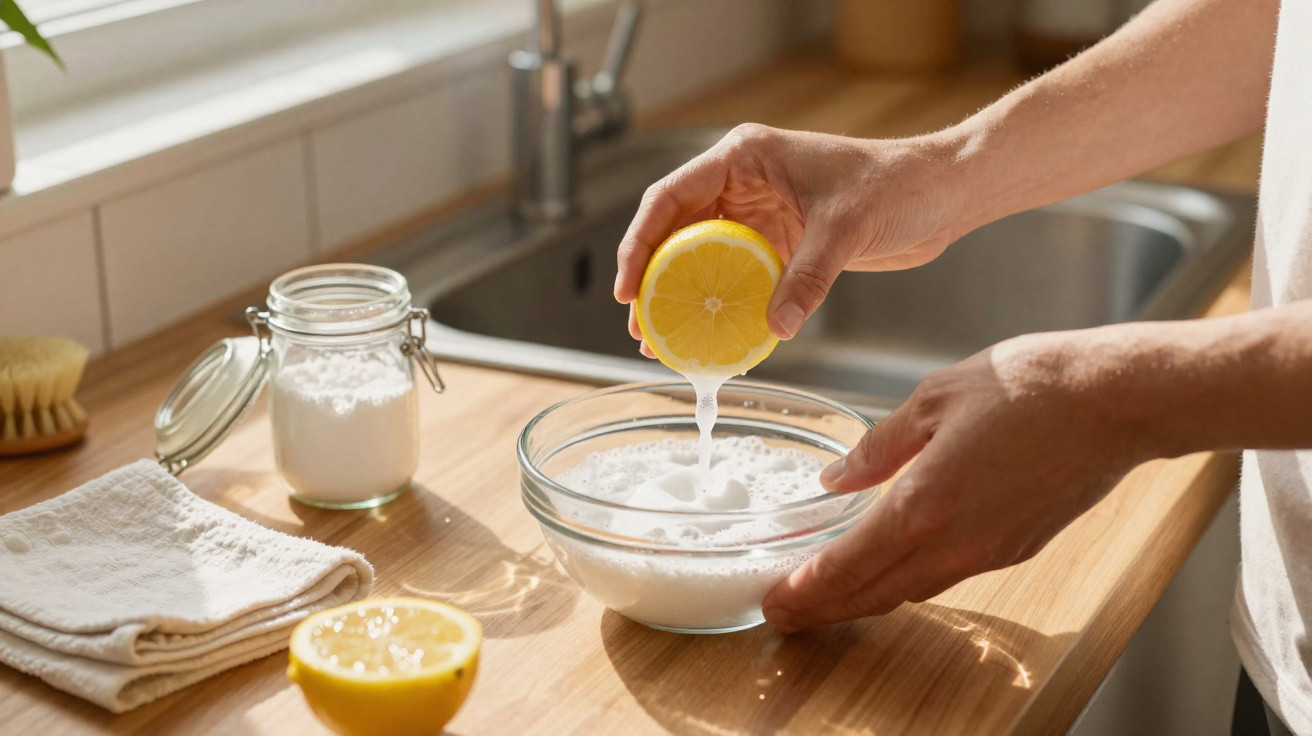
To make that water work in your favour rather than against you, use it deliberately. Put water in a microwave-safe bowl or large mug, then add a slice of lemon, a spoonful of bicarbonate of soda or a splash of white vinegar. Heat it for 3 to 5 minutes, until the water is nearly boiling and steam has misted up the microwave interior. Keep the door shut for at least 5 more minutes afterwards.
Within that confined, steamy space, lemon oils or vinegar vapour combine with the hot moisture. They do more than cover up unwanted scents: they help release the greasy layer in which odours tend to linger. Once you open the door, wipe the walls, roof and turntable with a clean cloth or kitchen towel. That wiping stage is where the real difference happens. Without it, you merely shift the smells about; with it, you remove the material carrying the odour in the first place.
This final part is what most people miss. They heat the water, notice the warm lemon scent and decide the microwave is “clean enough”. Let’s be honest: nobody genuinely does this every day. Still, doing it even once a week can alter the feel of your mornings. A steam clean and wipe changes the microwave from a container for yesterday’s lingering traces into something closer to neutral air. Before your first coffee, neutral air is exactly what you need.
Microwave odour myths, traps and useful kitchen rituals
A low-key myth online claims that simply leaving a cup of plain water in the microwave overnight will “absorb” odours like a sponge. It sounds reassuring, almost poetic. Yet ordinary water is mainly a carrier rather than a miraculous filter. It can dissolve some odour molecules, certainly, but those molecules can also remain on the damp walls and plastic, ready to return with the next heating cycle.
The more realistic picture is this: regularly leaving water in the microwave without cleaning it can lead to a lasting smell of “humid leftovers”. Use additions such as lemon or vinegar, heat the water, allow it to steam, then properly wipe the interior, and you create a brief period of genuine freshness. On an ordinary weekday, that is sufficient. You do not need perfection; you simply need less of that stale, unexplained funk when warming up your first breakfast.
“Odors in a microwave are rarely about one dramatic event,” explains an appliance technician I spoke with. “They’re about layers. Steam, grease, small spills that dry and get reheated again and again. Water alone doesn’t fix layers. A hot wipe does.”
For an easy morning routine that does not feel burdensome, try the following:
- Once a week, heat a bowl of water with lemon for 3 minutes, leave it to stand, then wipe the interior.
- After cooking strongly scented food, leave the microwave door slightly ajar for several minutes.
- Wash the turntable in hot, soapy water when doing the washing-up in the evening.
- Avoid leaving plain water inside overnight unless you are heating it for a specific reason.
- For persistent odours, such as fish or garlic, run two steam cycles rather than one.
What a forgotten cup of water reveals about how we live
Microwaves are not something we discuss very often. They quietly hum away at the edge of daily life, reheating soup between meetings and defrosting dinners we had forgotten about. But the small habits surrounding them, including leaving a cup of water inside overnight, can reveal curious things about our routines, shortcuts and the exhaustion of 11:32 pm, when we intended to have tea but simply gave up.
At a deeper level, those morning smells are a faint replay of the day before: fish reheated for lunch, leftover curry, milk warmed for hot chocolate. Each leaves invisible traces, and water can either help those traces loosen and disappear or help them settle in further. The distinction rarely comes down to cleaning products or costly tricks. It comes down to minor actions we take, or fail to take, in that delicate space between “I’ll sort it now” and “Tomorrow me will deal with it”.
During a busy week, “tomorrow me” is always under strain. That is why the microwaved-water myth is so appealing: a passive solution requiring no effort, where you leave it there and hope for the best. The most dependable approach sits in the middle instead: heat, steam, a 30-second wipe and a door left ajar so air can circulate. These are small, human-scale habits rather than flawless routines. On a drowsy morning, opening the door to air that smells of… nothing at all can already make the day feel a little easier.
| Key point | Detail | Why it matters to the reader |
|---|---|---|
| The real role of water | Steam keeps the interior damp and may retain odour molecules instead of “absorbing” them. | It explains why a forgotten glass of water alone does not remove unpleasant smells. |
| An effective action | Water with lemon or vinegar, heated in the microwave, left to stand, then followed by wiping the interior surfaces. | It provides a practical, quick and repeatable way to freshen the microwave’s smell. |
| A light routine | Weekly cleaning, leaving the door ajar after pungent meals and rinsing the turntable with the evening washing-up. | It offers realistic habits that improve morning odours without creating extra mental load. |
FAQ:
- Does leaving a cup of water in the microwave overnight actually remove odours? Not really. Plain water may dissolve a few odour molecules, but the added humidity also helps smells stick to the interior. By itself, it is not a dependable deodoriser.
- Is it safe to leave a cup of water in the microwave overnight? After the microwave has been switched off, the water simply cools. It is generally safe provided the container is stable and you do not reheat it to extremely high temperatures without stirring.
- What should I put in the water to really neutralise smells? Slices of lemon, a spoonful of bicarbonate of soda or a splash of white vinegar are classic choices. They work best when heated, allowed to steam and followed by wiping the inside.
- Why does my microwave still smell even after steaming water with lemon? Odours attach themselves to grease and dried-on spills. If you do not wipe the walls, roof and turntable, that layer remains in place. Using a soft cloth or kitchen towel immediately after steaming makes a considerable difference.
- How often should I clean my microwave to avoid bad morning odours? For most households, a quick steam-and-wipe once a week is enough. After especially pungent food, an additional short cycle that day helps stop odours building up.
Comments
No comments yet. Be the first to comment!
Leave a Comment